
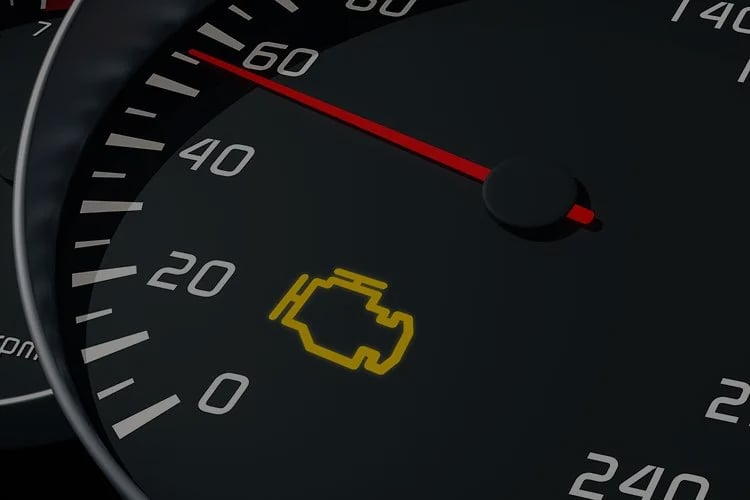
A flashing check engine light is not a routine warning.
In most modern vehicles, a flashing (not solid) check engine light indicates an active engine misfire severe enough to potentially damage the catalytic converter. This is considered a high-priority condition.
If this just happened while driving, here is the immediate guidance:
Stop driving as soon as it is safe to do so if the engine is shaking a lot.
If the light flashes only during hard acceleration then reduce RPM and load immediately.
If the light continues flashing even at idle then arrange professional diagnosis promptly.
I’ll walk you through what is happening mechanically and how to make a safe, informed decision.
1. What a Flashing Check Engine Light Actually Means Inside the Engine
Modern vehicles monitor combustion quality by measuring crankshaft speed fluctuations. When a cylinder fails to burn its air-fuel mixture properly, the crankshaft slows slightly during that firing cycle. If this misfire happens repeatedly, the engine control module (ECM) detects it.
A solid check engine light often relates to emissions faults or sensor irregularities.
A flashing check engine light typically indicates ongoing misfire activity that could overheat the catalytic converter if driving continues under load.
When unburned fuel enters the exhaust system, it can ignite inside the catalytic converter. This raises internal temperatures significantly above normal operating levels. Sustained overheating can damage the converter substrate and increase repair costs.
The flashing light is the vehicle’s warning that the issue is active and should not be ignored.
2. Can You Drive With a Flashing Check Engine Light?
Safety depends on severity and engine behavior.
If the engine is running extremely rough, losing power significantly, or vibrating strongly, continued driving increases the risk of catalytic converter damage and further mechanical stress. In this situation, it is safer to stop and seek assistance.
If the vehicle runs relatively smooth but the light flashes under heavy acceleration, reduce engine load immediately. Avoid high RPM, aggressive throttle input, and highway speeds until diagnosis is performed.
Driving short distances at low load may sometimes be possible, but it should not be considered a long-term solution.
The smoother the engine feels, the lower the immediate risk, but diagnosis should still be performed as soon as possible.
3. Continuous Flashing vs Intermittent Flashing: Why It Matters
Not all flashing patterns are identical.
A continuously flashing light usually indicates ongoing misfire regardless of load or RPM. This suggests a persistent issue that requires prompt attention.
A flashing light that appears only under acceleration may indicate a load-dependent misfire, such as an ignition weakness or fuel delivery imbalance under higher demand.
A light that flashes briefly and then returns to solid may indicate intermittent misfire events that occurred during specific operating conditions.
Understanding this pattern helps guide urgency and diagnostic focus.
Flashing Check Engine Light but Car Runs Fine
In some cases, the light may flash even though the engine feels relatively smooth. This can happen when the misfire is mild or occurs only under specific conditions such as heavy acceleration.
Even if the vehicle feels normal, the engine control module has detected irregular combustion. The issue may not be obvious yet, but diagnostic scanning is still recommended.
Ignoring mild symptoms can allow the condition to worsen over time.
Flashing Check Engine Light That Stops Blinking
If the light flashes briefly and then stops, it may indicate an intermittent misfire event.
The engine control module often stores a fault code even if the light is no longer flashing. This means the event was detected but may not be occurring constantly.
Even when the flashing stops, retrieving diagnostic codes helps identify what triggered the warning.
Flashing Check Engine Light When Accelerating
If the light flashes primarily during acceleration, it often indicates a load-dependent misfire. Under higher engine load, ignition components and fuel delivery systems are stressed more heavily.
Weak ignition coils, worn spark plugs, or fuel delivery imbalances may not show symptoms at idle but can misfire during acceleration.
Reducing throttle input may stop the flashing temporarily, but the underlying cause should still be diagnosed.
4. Why Engine Misfires Can Damage the Catalytic Converter
During normal combustion, fuel burns inside the cylinder and exits as controlled exhaust gases.
During a misfire, fuel may not burn completely. That unburned fuel enters the exhaust system and can ignite within the catalytic converter. Repeated overheating can degrade the internal catalyst material.
While short-term exposure may not immediately destroy the converter, prolonged or severe misfires significantly increase the risk of:
- Catalyst substrate damage
- Oxygen sensor stress
- Increased exhaust backpressure
- Higher repair costs
Early intervention is key to preventing secondary damage.
5. How to Diagnose a Flashing Check Engine Light Step by Step
Once the vehicle is safely stopped or operating under reduced load, the next step is retrieving diagnostic trouble codes using an OBD-II scanner.
Most vehicles built after 1996 support standardized diagnostic codes.
The most common codes related to flashing check engine lights include:
P0301–P0308 – Misfire detected in a specific cylinder
P0300 – Random or multiple cylinder misfire
The last digit corresponds to the cylinder number. For example, P0302 indicates cylinder 2 misfire.
At this stage, avoid clearing the code. The stored data helps determine what happened and when.
6. Understanding Freeze Frame Data (What It Tells You)
When a fault code is stored, the engine control module often records “freeze frame” data. This is a snapshot of engine conditions at the moment the misfire was detected.
Freeze frame data may include:
- Engine RPM
- Throttle position
- Engine load
- Coolant temperature
- Fuel trim values
For example, if freeze frame shows high RPM and heavy load, the misfire likely occurred during acceleration. If coolant temperature was low, the issue may have appeared during cold start.
This information helps technicians determine when and how the misfire occurs.
While interpretation can vary, reviewing freeze frame data provides valuable context before repairs are performed.
7. Live Misfire Counters and Advanced Scan Data
Some scan tools can display live misfire counters or cylinder-specific misfire activity in real time.
This allows technicians to observe whether a specific cylinder consistently misfires under certain conditions.
Live data can help confirm the affected cylinder before replacing components. However, interpretation of advanced scan data may require professional diagnostic experience.
If live misfire counts increase steadily on one cylinder, that cylinder becomes the focus of inspection.
8. Most Common Causes of a Flashing Check Engine Light
In real-world repairs, the most common causes include:
- Worn spark plugs
- Failing ignition coils
- Fuel injector malfunction
- Vacuum leaks
- Low fuel pressure
Less common but more serious causes may include:
- Low engine compression
- Valve issues
- Timing-related mechanical problems
Accurate diagnosis prevents unnecessary replacement of working components.
9. Solid or Flashing Check Engine Light – Which Is Worse?
A flashing check engine light is generally more urgent than a solid one.
A solid light often indicates an emissions-related issue or sensor fault that does not immediately threaten engine components. A flashing light, on the other hand, usually signals active misfire that can increase exhaust system temperatures if driving continues under load.
While both require attention, a flashing light should be treated with greater urgency.
10. A Real-World Diagnostic Example
Imagine a vehicle displays code P0302 and runs rough at idle.
A technician may inspect the spark plug in cylinder 2 and evaluate the ignition coil. In some diagnostic processes, coils may be swapped between cylinders to see whether the misfire moves.
If the misfire follows the coil, that suggests the coil is faulty.
This structured approach reduces guesswork and limits unnecessary part replacement.
Professional diagnosis ensures safe and accurate testing.
11. What Happens If You Ignore a Flashing Check Engine Light?
Ignoring a flashing check engine light increases risk over time.
Short term, you may notice rough running or decreased fuel efficiency.
Extended driving under misfire conditions increases the chance of catalytic converter overheating.
Over longer periods, repeated overheating can damage exhaust components and raise repair costs significantly.
12. Why Is My Check Engine Light Flashing and My Car Shaking?
If your check engine light is flashing and the engine is shaking, it strongly suggests active misfire in one or more cylinders.
Shaking occurs because one cylinder is not contributing power properly, creating an imbalance in engine operation. This uneven combustion can cause noticeable vibration, reduced power, and unstable idle.
When shaking is present along with a flashing light, it indicates a more severe condition that should not be ignored.
13. Flashing Check Engine Light – Severity Range
| What You Notice | Risk Level | What It Indicates | What You Should Do |
|---|---|---|---|
| Light flashing continuously + strong shaking | Critical | Active severe misfire; high risk of catalytic converter damage | Pull over safely and stop driving. Do not continue operating the vehicle. |
| Light flashing continuously + rough running | High | Ongoing misfire under most conditions | Reduce RPM immediately. Avoid highway driving. Arrange prompt diagnosis. |
| Light flashes during acceleration only | Moderate | Load-related misfire (ignition or fuel weakness likely) | Ease off throttle. Drive gently at low RPM. Schedule inspection soon. |
| Light flashes briefly, then turns solid | Moderate | Intermittent misfire event recorded | Drive cautiously. Retrieve diagnostic codes as soon as possible. |
| Flashing light + fuel smell or overheating | Critical | Unburned fuel entering exhaust; elevated converter stress | Stop driving if safe. Continued operation may increase damage risk. |
How to Use This Table
- Critical – Continuing to drive increases risk of exhaust damage. Stop as soon as safely possible.
- Moderate – Reduce load immediately and arrange diagnosis without delay.
14. When Should You Tow the Vehicle?
Towing is recommended if:
- The engine shakes severely
- Power loss is substantial
- The light flashes continuously
- You smell strong fuel odors
- You hear unusual knocking or metallic sounds
If the vehicle runs relatively smooth and the flashing occurs only under load, cautious low-speed driving to a nearby repair facility may be possible. However, this should not be prolonged.
When in doubt, choosing the safer option reduces risk.
15. What You Should Avoid Doing
Avoid these common mistakes:
- Clearing the code without diagnosing the cause
- Disconnecting the battery to reset the light
- Replacing parts randomly
- Continuing high-speed driving to “see if it goes away”
Preserving diagnostic data improves repair accuracy.
16. When You Should Visit a Mechanic Immediately
You should seek professional diagnosis without delay if:
- The engine shakes violently or struggles to stay running
- The light flashes continuously (not intermittently)
- You smell strong fuel from the exhaust
- There is significant power loss
- The engine stalls or hesitates repeatedly
- Engine temperature begins rising unusually
Even if the vehicle seems drivable, a flashing light should not be postponed for days.
17. When Repairs Are Typically Needed and What They May Cost
Actual repair decisions should be based on proper diagnosis. The ranges below are general U.S. estimates for context only.
| Condition Found During Diagnosis | When Repair Is Usually Needed | General Cost Range (USD) |
|---|---|---|
| Worn spark plugs | Misfire traced to aged or fouled plugs | $100 – $300 |
| Faulty ignition coil | Misfire follows a specific coil or cylinder | $150 – $400 per coil |
| Fuel injector malfunction | Cylinder shows fuel delivery imbalance | $250 – $900 |
| Vacuum leak | Lean condition or unstable idle confirmed | $150 – $600 |
| Fuel pressure issue | Misfire under load with low pressure readings | $400 – $1,200 |
| Catalytic converter damage | Confirmed efficiency failure after prolonged misfire | $900 – $2,500+ |
How to Think About Repair Decisions
A flashing check engine light does not automatically mean the most expensive repair.
In many cases, ignition components such as spark plugs or coils are the underlying cause. These are common wear items and relatively manageable when addressed early.
More expensive repairs, such as catalytic converter replacement, usually become necessary only when misfires continue for extended periods without correction.
The key is this:
- Diagnose first.
- Confirm the root cause.
- Repair only what testing supports.
Acting early often keeps the repair simpler and prevents secondary damage.
18. TheCarLane Take
A flashing check engine light is a protective warning from your vehicle. It signals that combustion instability is happening now.
If the engine runs rough, stop and seek professional diagnosis.
If the vehicle remains relatively smooth, reduce load and retrieve diagnostic codes as soon as possible.
Address misfires promptly to prevent secondary exhaust damage.
Taking action early typically results in simpler, less expensive repairs.
When approached methodically, most flashing check engine light cases can be resolved without long-term damage.
Last Updated: February 2026
19. FAQs
In most cases, yes. A flashing check engine light usually indicates active engine misfire, which can increase exhaust system temperatures if driving continues under load. If the engine is shaking or losing power, driving should be minimized and diagnosis should be arranged promptly.
It may stop flashing if engine conditions change, such as reduced throttle or lower load. However, the underlying issue typically remains stored in the vehicle’s computer. A diagnostic scan is recommended even if the light stops flashing.
Continued driving during active misfire can increase the risk of catalytic converter overheating. While short, gentle driving may not cause immediate damage, prolonged operation under load can lead to more expensive repairs. Early diagnosis helps reduce that risk.
No. A flashing light most commonly indicates engine misfire, often related to ignition or fuel system components. Catalytic converter damage typically occurs only if misfires are ignored for an extended period.
Clearing the code may temporarily turn off the light, but it does not fix the underlying problem. If the misfire condition continues, the warning will return. Diagnosis should focus on identifying and repairing the root cause.

Founder of TheCarLane | Automotive Enthusiast
Ayush shares practical automotive knowledge based on real-world ownership and hands-on experience. His work focuses on diagnostics, engine systems, common car problems, and clear explanations that help everyday drivers understand their vehicles better.