
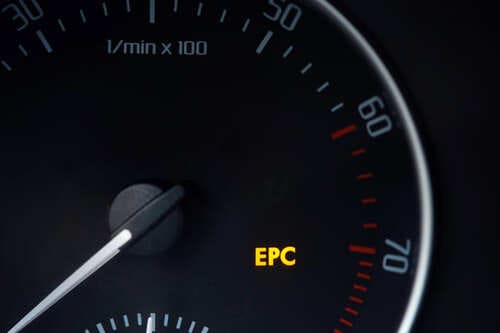
When the EPC light comes on accelerating, it’s natural to panic. The car may feel different, and your first thought is often that something serious has gone wrong.
In most cases, this warning is not an immediate emergency. The EPC system is designed to alert you early when the engine or throttle control doesn’t respond as expected under load. It’s a safety feature meant to reduce risk, not a sign that the car has already failed.
This guide explains what the EPC light means when it appears during acceleration and helps you decide what to do next, calmly and safely.
1. The Moment The EPC Light Comes On, Here’s What You Should Know First
When the EPC (Electronic Power Control) light turns on during acceleration, it usually means the car noticed something wasn’t responding correctly when power was demanded.
That’s important, but it’s not instant disaster.
In most cases:
- The car is still protecting itself
- The warning is early, not late
- You usually have time to react properly
The EPC system is designed to step in before damage happens, not after.
The EPC light is part of the car’s electronic throttle and engine management safety system. If you want a simple, beginner-friendly explanation of what EPC is and how it works overall, you can read the full guide here: What is the EPC light?
2. Can You Keep Driving, or Should You Pull Over Right Now?
You can usually keep driving if:
- The car still moves normally, just with less power
- The EPC light stays on steadily (not flashing)
- There are no violent jerks, loud bangs, or burning smells
- The engine isn’t shaking badly
In this situation, drive calmly, avoid hard acceleration, and plan to check the issue soon.
You should stop driving and get help if:
- The car suddenly loses most of its power
- The engine stalls or struggles to stay running
- The EPC light flashes
- A flashing check engine light appears with it
- The car lurches badly when you press the accelerator
That usually means the car has entered limp mode or detected a fault serious enough to limit driving.
3. What If The EPC Light Is On But The Car Drives Fine?
It’s common for an EPC light to appear even when the car still drives normally. This usually means the system detected an irregular signal but hasn’t yet limited performance. While the car may feel fine now, continuing to drive without diagnosis can allow the issue to worsen or trigger sudden power reduction later.
4. The EPC Light Turned Off After Restarting, Should You Still Be Concerned?
It’s common for the EPC light to turn off after you stop the car and restart it. This usually means the system detected a fault temporarily and reset once conditions changed.
However, a warning light that turns off does not always mean the problem is gone. In many cases, the fault is still stored in the system and may return the next time the car is under load, such as during acceleration or uphill driving.
If the EPC light comes back, appears repeatedly, or only shows up during acceleration, it’s a sign the issue should still be checked. Treat a recurring warning as an early signal, not a false alarm.
5. What It Really Means When The EPC Light Comes On When Accelerating
Acceleration puts the most stress on the engine’s control systems.
When you press the pedal, several things must happen instantly:
- The accelerator pedal sensor sends a signal
- The throttle body opens
- Airflow and fuel are adjusted
- Ignition timing responds
- On turbo cars, boost pressure increases
The EPC light comes on if any part of that chain doesn’t match what the system expects.
That’s why many people notice:
- The EPC light only appears when accelerating
- The car feels fine at steady speed
- The problem shows up under load
It’s not random; the system is doing exactly what it was made to do.
6. Why This Often Shows Up In Traffic, Heat, or Specific Conditions
Some drivers notice the EPC light comes on more often in heavy traffic, hot weather, or stop-and-go driving. These conditions increase engine temperature and demand more frequent throttle adjustments, which can make existing issues more noticeable.
This doesn’t mean the conditions caused the problem , they simply make it easier for the system to detect it. If the EPC light appears consistently under similar conditions, it’s another useful clue for diagnosis.
7. The Most common Reasons This Happens (from most likely to less common)
7.1) Throttle body or throttle response issues
Modern cars use electronic throttles, not cables.
If the throttle body is:
- Dirty
- Sticky
- Not responding smoothly
The system detects a mismatch during acceleration and triggers the EPC light.
You might notice: hesitation, delayed response, or sudden power reduction.
7.2) Accelerator pedal sensor problems
- Your gas pedal has sensors that tell the car how much you’re pressing it.
- If those sensors send conflicting or unstable signals, the EPC system intervenes for safety.
Common signs: EPC light appears when pressing harder, but the car feels normal otherwise.
7.3) Misfires that only show up under load
- Worn spark plugs or failing ignition coils often behave fine at idle but fail when accelerating.
- Acceleration demands more from the ignition system — that’s when weak components show their problems.
You may feel: slight shaking, hesitation, or rough acceleration.
7.4) Airflow or boost issues (especially on turbo cars)
On turbocharged vehicles, acceleration increases boost pressure.
If there’s:
- A boost leak
- Faulty boost control
- Incorrect airflow readings
The EPC system limits power to protect the engine.
7.5) Loose wiring or sensor communication faults
It’s not always the part; it’s the connection.
Loose plugs, moisture, or aging wiring can cause intermittent EPC warnings, especially when the engine shifts under acceleration.
8. What You Can Safely Check Yourself (and what you should not touch)
Safe things you can do:
- Pay attention to when the EPC light appears
- Notice whether power loss is mild or severe
- Look for obviously loose hoses or disconnected plugs
- Check if the check engine light is also on
Things you should not do:
- Don’t unplug sensors randomly
- Don’t clean the throttle body unless you know the correct procedure
- Don’t keep accelerating hard “to test it”
- Don’t ignore the warning if it keeps returning
9. Did Accelerating Cause This, Or Was It Already There?
Acceleration did not cause the problem.
Think of it like this:
- The fault was already present
- Acceleration simply revealed it
- The warning is early, not late
10. Will This Problem Get Worse If It’s Ignored?
Sometimes EPC-related issues stay the same for a while, especially if they’re sensor- or signal-related. In other cases, the warning can appear more frequently or begin affecting drivability as components continue to wear.
Ignoring a recurring EPC warning can lead to:
- more frequent power reduction
- additional warning lights
- reduced fuel efficiency
- increased strain on related components
Addressing the issue early usually keeps the fix simpler and prevents secondary problems. Waiting rarely makes it cheaper or easier.
11. What To Do Next If The EPC Light Keeps Coming Back
Here’s a simple procedure:
Step 1: Drive gently for now
Avoid hard acceleration and aggressive driving.
Step 2: Scan the car for fault codes
A basic OBD2 scan can identify:
- Throttle issues
- Pedal sensor faults
- Misfires
- Airflow or boost problems
These codes remove confusion.
Step 3: Decide urgency based on symptoms
- Light stays on constantly then diagnose soon
- If Power is heavily limited then stop driving
- If Light comes and goes then still check, but less urgent
12. When It’s Time To Stop Driving And See A Mechanic
You should book professional diagnosis if:
- The EPC light returns repeatedly
- The car feels unsafe to accelerate
- Power loss affects daily driving
- Multiple warning lights appear together
Early diagnosis is often much cheaper than waiting.
13. How Serious Is This, Really?
Sometimes it’s minor:
- Dirty throttle body
- Sensor calibration issue
- Weak ignition component
Sometimes it’s more involved:
- Throttle failure
- Sensor replacement
- Wiring repair
What matters most is not ignoring it.
14. TheCarLane Takeaway
When the EPC light comes on during acceleration, it’s easy to assume the worst. In most cases, though, this warning appears before serious damage happens, not after.
The EPC system is designed to limit risk by reducing power when something doesn’t respond as expected. That doesn’t automatically make the car unsafe, but it does mean the issue should be taken seriously and not ignored.
If the car still drives normally, continue only with light, cautious driving and plan a proper diagnostic check. If power is heavily reduced, the engine feels unstable, or other warning lights appear, it’s safest to stop driving and have the car inspected professionally.
Avoid hard acceleration or repeated testing, as modern throttle and engine systems are electronically controlled and sensitive to ongoing faults. Accurate diagnosis and repair are best handled with proper diagnostic tools.
Noticing the warning early and responding calmly is the right approach. With timely attention, most EPC-related issues can be resolved before they turn into larger problems.

Founder of TheCarLane | Automotive Enthusiast
Ayush focuses on engines, tuning, diagnostics, and real-world driving knowledge to bring accurate, easy-to-understand car content to readers.