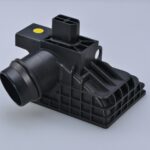

AFR – air-fuel ratio – is the mix of air and fuel your engine burns, measured by weight. The perfect mix for petrol is 14.7:1: fourteen-and-a-bit parts air to one part fuel. Run more air than that and you’re “lean.” Run more fuel and you’re “rich.” Both have a place, your engine actually wants different ratios depending on what it’s doing.
Important note: AFR values vary between engines, tuning levels, and driving conditions. The data shared here is from my personal 1.0 TSI on a stage 1 map and is provided for educational reference only. Always consult a qualified tuner or mechanic for diagnosis specific to your car.
What Is Air Fuel Ratio?
Air-fuel ratio is the balance of air and fuel your engine mixes before combustion. For petrol engines the chemically perfect balance — called stoichiometric or stoich — is 14.7:1. That means 14.7 parts of air for every 1 part of fuel.
This balance matters because combustion efficiency, power output, engine temperature, fuel economy, and long-term reliability all depend on getting it right. Too much fuel and the mixture is rich. Too much air and it’s lean. Neither extreme is harmless over time.
Your car’s ECU continuously adjusts AFR using the oxygen sensor, MAF sensor, and MAP sensor to keep the mixture correct for whatever the engine is doing at that moment.
AFR Values Across Different Driving Conditions
AFR isn’t a fixed number — it changes constantly based on throttle input, engine load, and RPM. Here’s what normal looks like across real driving conditions:
| Driving Condition | Normal AFR Range |
|---|---|
| Idle / light throttle | 14.5 – 15.0 |
| Cruising | 14.7 |
| Moderate acceleration | 12.5 – 13.5 |
| Full throttle / WOT | 11.5 – 12.5 |
| Deceleration / lift off | 15.0 – 35.0 |
The deceleration range surprises most people. When you lift off the throttle the ECU cuts fuel injection almost entirely — the ratio goes extremely lean, sometimes up to 25-35 AFR. This is completely normal and intentional. The ECU does this to reduce emissions, protect the catalytic converter, and keep the turbo safe during overrun.
A Note on Diesel Engines
Diesel engines work differently from petrol. The stoichiometric ratio for diesel is approximately 14.5:1 but diesel engines almost always run lean — AFR ranges from 18:1 at full load up to 70:1 or higher at idle. Unlike petrol engines diesel doesn’t need a precise stoichiometric mixture because combustion happens through compression not spark ignition. Power in a diesel is controlled by how much fuel is injected not by maintaining a specific air-fuel balance. If you drive a diesel the AFR values and rich/lean thresholds in this article apply to petrol engines specifically — your engine’s normal operating range is intentionally much leaner than what’s described here.
Real AFR Data From My Remapped 1.0 TSI
Live OBD recording from my 1.0 TSI on a Quantum Red stage 1 map — watch the Fuel/Air combustion ratio value specifically.
This is what the data actually shows on a turbocharged engine under real conditions.
During acceleration from 2000 RPM upward with moderate throttle the AFR drops into the 12.5-13.2 range as the ECU enriches the mixture to protect the engine under boost. At full throttle the mixture drops further toward 11.5-12.0 — the ECU is prioritising engine safety over efficiency at this point, using the richer mixture to keep cylinder temperatures controlled.
The most dramatic reading is on deceleration. When I lift off completely at speed the AFR spikes to 25-35 — the ECU has cut fuel injection almost entirely. The value normalises within two to three seconds as the engine returns to idle. This lean spike during overrun is normal behaviour on any modern turbocharged petrol engine. If you see it on your own OBD scan it doesn’t indicate a problem.
If you want to check your own car’s AFR values, here’s the complete guide on how to scan your car with an OBD2 device.
Rich vs Lean — What Actually Goes Wrong
Understanding rich and lean matters because the symptoms are different and the consequences are different.
A rich mixture — AFR below 14.7 — means more fuel than the engine can burn completely. The symptoms are a strong fuel smell from the exhaust, black sooty deposits on spark plugs, lower fuel economy, and rough idle. Over time a consistently rich mixture damages the catalytic converter and fouls injectors. Common causes include a failing O2 sensor, faulty MAF sensor, or leaking fuel injectors.
A lean mixture — AFR above 14.7 at the wrong time — is more dangerous than running rich. The symptoms are engine knocking, higher than normal engine temperature, hesitation under throttle, and misfires. On a turbocharged engine a lean condition under boost is particularly serious because the combination of high cylinder pressure and insufficient fuel cooling can damage pistons. Common causes include vacuum leaks, a dirty or failing MAF sensor, or fuel delivery problems.
The lean condition that matters is lean under load — not the normal lean spike during deceleration which is intentional and harmless.
AFR in Turbocharged Cars
Turbocharged engines need richer mixtures under boost because increased cylinder pressure generates more heat. Running stoichiometric AFR at full throttle on a turbo engine risks detonation — uncontrolled combustion that damages pistons and rings.
Safe AFR targets for turbocharged petrol engines at full throttle are typically 11.5-12.2. The richer mixture serves two purposes — it provides more fuel energy for combustion and the excess fuel acts as a cooling agent for the cylinder and exhaust gases.
On a stage 1 remapped engine like my 1.0 TSI the ECU targets slightly richer mixtures earlier in the throttle range than stock — the boost comes in sooner and the fuelling responds to it earlier. This is visible in the OBD data and is one of the reasons the remapped car feels more responsive at partial throttle rather than just at full throttle.
For anyone running a remapped turbo engine, monitoring AFR through an OBD2 app periodically is a straightforward way to confirm the tune is working correctly and the engine is fuelling safely.g fuel to protect itself, reduce emissions, and keep the turbo safe.
How to Check AFR in Your Car Using OBD2 Device
You don’t need specialist equipment to monitor AFR. Any OBD2 scanner paired with an app like Torque Pro, Car Scanner ELM, or OBD Fusion will show you fuel trim values and lambda readings that reflect what AFR is doing in real time.
What to look for specifically — short-term fuel trim and long-term fuel trim values. Both should sit close to zero under normal driving. Values consistently above plus 10% indicate the engine is compensating for a lean condition. Values consistently below minus 10% indicate a rich condition. Either reading sustained over time warrants investigation before it becomes a more expensive problem.
A wideband AFR gauge gives more precise readings and is worth considering for anyone running a modified engine where monitoring accuracy matters more than convenience.
Is AFR Wrong — What the Symptoms Actually Look Like
Most AFR problems announce themselves before they become serious if you know what to look for.
A suddenly worse fuel economy without any change in driving habits is often the first sign of a rich condition developing. A fuel smell from the exhaust that wasn’t there before points the same direction. Black deposits on spark plugs at a service interval confirm the engine has been running rich consistently.
Knocking or pinging sounds under acceleration — especially at low RPM or under load — are the clearest warning sign of a lean condition. On a turbocharged engine any knocking sound under boost should be taken seriously and investigated immediately rather than ignored.
In both cases an OBD2 scan is the right first step before replacing any parts. Fuel trim data will tell you which direction the AFR problem is running and whether the ECU is already compensating for it.
FAQs
You can tell AFR is incorrect if your engine shows symptoms like rough idle, sudden drop in mileage, hesitation during acceleration, knocking, misfires, or a strong fuel smell.
A failing O2 sensor or MAF sensor are the most common causes. Vacuum leaks cause lean conditions. Leaking injectors or a weak fuel pump cause rich conditions. Dirty injectors can cause either depending on how they’re failing.
Yes. Sustained lean conditions under load cause overheating and knocking that damages pistons over time. Sustained rich conditions damage the catalytic converter and foul spark plugs. Neither is harmless if left unaddressed.
You can check AFR indirectly using fuel trims (STFT/LTFT) and O2 sensor readings in apps like Torque Pro, Car Scanner, or OBD Fusion.
AFR changes based on throttle input, load, RPM, temperature, and ECU corrections. Engines never run at one fixed ratio — they constantly adjust AFR for power, efficiency, and safety.

Founder of TheCarLane | Automotive Enthusiast
Ayush shares practical automotive knowledge based on real-world ownership and hands-on experience. His work focuses on diagnostics, engine systems, common car problems, and clear explanations that help everyday drivers understand their vehicles better.