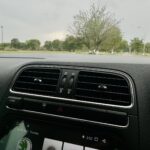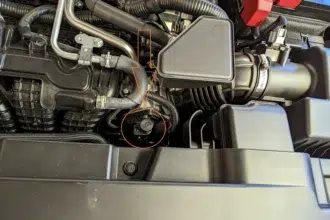

If your car AC is blowing hot or warm air when it should be cooling, it usually means the AC system is running, but cooling is not happening.
This is a very common problem, especially in hot weather, and in many cases it’s fixable without replacing major parts.
If your AC shows other symptoms beyond ac blowing hot air, you may want to check this complete guide on car AC not working, which covers common causes and next steps in detail.
Before assuming the worst, follow this simple diagnosis flow.
First, understand what “AC blowing hot air” actually means
Your car AC system has two jobs:
- Blow air into the cabin (fan + blower)
- Cool that air (compressor + refrigerant + condenser)
When hot air is coming out, it means:
- The fan is working ✔
- The cooling part is not working ❌
So we focus only on why cooling stopped, not airflow.
2. Observe The Behavior (this matters more than tools)
Before touching anything, answer these questions:
- Does the AC blow hot air all the time, or only sometimes?
- Does it cool when driving fast but not in traffic?
- Did it stop suddenly, or slowly over days?
- Is there any clicking, hissing, or unusual noise?
- Did cooling reduce before completely stopping?
These answers help narrow the cause instantly.
3. Check The Simplest Things First (many people skip this)
1. Check AC settings (yes, really)
- Make sure AC is ON (not just fan)
- Turn temperature to the coldest
- Turn recirculation ON
This sounds basic, but it fixes more cases than you’d expect.
2. Look under the hood – is the AC compressor engaging?
With the engine running and AC ON:
- Open the hood
- Look at the AC compressor pulley
- You should hear or see it click ON
If the compressor never engages, the AC cannot cool.
Possible reasons:
- Low refrigerant
- Electrical issue
- AC pressure sensor blocking it
- Blown fuse or relay
This already tells you where the problem is, not just that “AC isn’t working”.
4. Most Common Reasons AC Blows Hot Air
1. Low refrigerant (most common cause)
Refrigerant doesn’t get “used up”.
If it’s low, there is a leak somewhere.
Signs:
- AC worked earlier, slowly got weaker
- Now blows warm or hot air
- Compressor clicks on and off rapidly
What you should do:
- Get system pressure checked
- Fix leak before refilling
❌ What NOT to do:
- Do not keep refilling gas repeatedly
- Do not ignore leaks (it damages the compressor)
2. AC compressor not working
If the compressor doesn’t engage, cooling cannot happen — no matter how much gas is in the system.
What you can safely check (DIY)
- Listen for the click
Turn the AC ON with the engine running.
A healthy compressor usually makes a small click when it engages.
If there’s no sound at all, it may not be turning on. - Check AC fuse and relay
A blown fuse or bad relay can stop the compressor from engaging.
This is a simple visual check in the fuse box. - Observe engine behavior
When AC turns ON, idle RPM usually rises slightly.
No RPM change can indicate the compressor isn’t engaging.
What NOT to do
- ❌ Do not keep turning AC ON and OFF repeatedly
- ❌ Do not try to “force” AC by revving the engine
- ❌ Do not add refrigerant blindly
(Low gas is only one of many reasons a compressor won’t engage)
When to go to a mechanic
- Compressor makes loud grinding or knocking noise
- Compressor engages but air never gets cold
- AC cuts off immediately after turning ON
- Visible oil or refrigerant leakage near compressor
➡️ This is not DIY territory.
Compressors work under high pressure and incorrect handling can cause damage or injury.
3. Condenser problem (very common in hot climates)
The condenser sits in front of the radiator.
If it is:
- Blocked with dust or debris
- Overheating due to fan failure
The AC will blow hot air, especially:
- In traffic
- At idle
- During very hot weather
What you can safely do (DIY)
- Visually inspect the condenser
- Located in front of the radiator
- Look for dust, mud, leaves, plastic covers, or bent fins
- Clean gently
- Use low-pressure water (never high-pressure)
- Spray from top to bottom
- Avoid bending fins
- Check airflow
- Make sure nothing is blocking the front grille
- Remove number plate frames or aftermarket covers if blocking airflow
What NOT to do
- ❌ Do not use pressure washers directly
- ❌ Do not poke fins with metal objects
- ❌ Do not apply chemicals meant for household ACs
When to go to a mechanic
- AC cools while driving but blows hot air in traffic
- Condenser fins are severely bent or damaged
- Cooling fan is not running (see next section)
➡️ Condenser issues are very common in summers and often misdiagnosed as “low gas”.
4. Cooling fan not working
Your AC depends on cooling fans — especially at idle and in traffic.
What you can safely check (DIY)
- Turn AC ON and watch the fan
- Fan should start within a few seconds
- Especially when engine temperature rises
- Observe driving pattern
- Cold air while driving
- Hot air when stopped or in traffic
→ This is a classic cooling fan symptom
- Check fuses
- Cooling fan fuse or relay failure is common
What NOT to do
- ❌ Do not keep AC ON in traffic if fan isn’t running
- ❌ Do not ignore engine temperature warnings
- ❌ Do not pour water on hot radiator or condenser
When to go to a mechanic
- Fan never turns ON
- Fan runs very slowly
- Fan cuts off randomly
- Engine temperature rises with AC ON
➡️ A failed fan can damage both AC and engine if ignored.
5. Blend door or climate control issue
Sometimes the AC is cooling properly — but hot air mixes inside the dashboard.
What you can safely check (DIY)
- Change temperature from cold to hot
- Listen for movement behind the dashboard
- No sound may indicate a stuck blend door actuator
- Check left vs right air temperature
- One side hot, one side cold = blend door issue
- Turn off auto climate (if equipped)
- Switch to manual mode and test again
What NOT to do
- ❌ Do not refill gas again if AC cooling hasn’t improved
- ❌ Do not ignore temperature fluctuations
- ❌ Do not dismantle dashboard without experience
When to go to a mechanic
- Temperature changes randomly
- AC never stabilizes
- No improvement after gas refill
- Clicking or ticking sounds behind dashboard
5. Is It Safe To Drive When Car AC is Blowing Hot Air?
Yes, in most cases — but with conditions.
It is generally safe to drive if:
- Engine temperature is normal
- No warning lights are ON
- AC is the only issue
Be cautious or stop driving if:
- Engine temperature starts rising
- AC fan is not working and car overheats in traffic
- You smell burning or hear grinding noises
- AC causes engine RPM drops or stalling
➡️ AC problems alone won’t damage your car, but cooling system problems can.
6. Is It Safe To Idle The Car With AC Blowing Hot Air?
Idling with AC ON is not recommended if:
- Cooling fan is not working
- AC blows hot air only when stationary
- Engine temperature increases at idle
Why?
At idle, airflow depends fully on the cooling fan.
If the fan fails, heat builds up quickly.
✔️ Best practice:
If AC blows hot air at idle, turn AC OFF in traffic until inspected.
7. What You Can Safely Do Yourself (DIY-friendly)
You can safely:
- Check AC fuse and relay
- Visually inspect condenser for dirt or blockage
- Clean condenser gently with low-pressure water
- Observe cooling fan operation
- Switch climate control from auto to manual and test
These checks do not require tools or dismantling.
8. What NOT to do (very important)
- ❌ Do not refill AC gas repeatedly
- ❌ Do not ignore overheating signs
- ❌ Do not run AC continuously in traffic if fan isn’t working
- ❌ Do not dismantle dashboard or AC lines yourself
Repeated gas refills often hide the real problem and increase repair cost later.
9. Repair vs Replace – How To Know The Difference
Repair is usually enough if:
- Cooling fan relay or fuse failed
- Condenser is dirty but not damaged
- Blend door actuator is stuck
- Electrical issue is detected early
Replacement may be needed if:
- Compressor makes loud mechanical noise
- Compressor doesn’t build pressure
- Condenser is leaking or severely damaged
- Fan motor has failed completely
➡️ Many AC issues are repairable, not replacement-level but if you hear loud mechanical noise from compressor itself and it doesn’t build pressure then you can check the detailed guide on AC compressor replacement cost.
10. Approximate AC Repair Cost Guide (General Reference)
⚠️ Important:
Costs vary widely by car model, country, labor rates, and damage severity.
This table is meant to help you understand scale, not act as a quote.
| Issue / Part | Typical Action | Cost Range (Relative) | Notes for Owners |
|---|---|---|---|
| AC gas recharge (no leak) | Refill only | Low | Only helps if system is leak-free |
| AC gas refill with leak | Leak detection + refill | Low → Moderate | Leak must be fixed first |
| Condenser cleaning | Cleaning | Very Low | Often restores cooling in dusty/hot climates |
| Condenser replacement | Part replacement | Moderate | Needed if bent, leaking, or blocked internally |
| Cooling fan relay / fuse | Electrical fix | Very Low | Common and inexpensive failure |
| Cooling fan motor | Replacement | Low → Moderate | AC fails mainly at idle/traffic |
| Blend door actuator | Repair or replacement | Moderate | Common in automatic climate control cars |
| AC pressure sensor | Replacement | Low → Moderate | Can disable compressor as safety |
| Compressor clutch | Repair | Moderate | Sometimes repairable without full replacement |
| AC compressor (complete) | Replacement | High | Only when internal failure is confirmed |
How to read this table (very important)
- Low / Moderate / High refers to relative cost, not exact currency
- Many AC problems do not require compressor replacement
- Always confirm diagnosis before approving high-cost repairs
- Repeated gas refills without fixing leaks increase long-term cost
Quick decision tip for you
- Low or Moderate cost issues → Usually worth repairing
- High cost repairs → Get a second opinion before proceeding
11. Final Takeaway
If your car AC is blowing hot air, it doesn’t automatically mean a major failure.
In most cases, the cause is something simple—like airflow issues, a cooling fan not working, a dirty condenser, or a control-related problem.
Start with basic checks, avoid repeated gas refills without diagnosis, and pay attention to when the problem happens (idle, traffic, highway, or one side only). Those clues matter more than guesswork.
If the AC still doesn’t cool after basic checks, get a proper inspection before approving expensive repairs. Many high-cost fixes are suggested too early when the real issue is smaller.
Last Updated: January 2026
12. FAQs
The most common reasons are low refrigerant, cooling fan not working, blocked condenser, or AC compressor not engaging. Sometimes, the AC system is cooling properly but hot air is mixing inside the dashboard due to a blend door issue.
This usually happens when cooling fans aren’t pulling enough air over the condenser at low speeds. While driving, airflow improves cooling, but at idle the system overheats and blows warm air.
Yes, it’s generally safe to drive, but don’t keep forcing the AC ON if it’s not cooling. Running a faulty AC system can stress the compressor and engine, especially in hot weather.
Only if the system is genuinely low on refrigerant. If the AC blows hot air again after a refill, the real issue is likely a leak, fan failure, condenser blockage, or control problem—not low gas.

Founder of TheCarLane | Automotive Enthusiast
Ayush focuses on engines, tuning, diagnostics, and real-world driving knowledge to bring accurate, easy-to-understand car content to readers.