
Finding an oil stain under your car after it’s been sitting overnight is unsettling. Your mind immediately goes to worst-case scenarios — engine failure, a repair bill you weren’t expecting, whether the car is even safe to drive. The reality is more nuanced than that. Some oil leaks are genuinely serious. Others are minor seepage that can wait a few days. Knowing which one you’re dealing with makes all the difference between a calm, informed decision and an expensive panic.
How Serious Is Your Leak? Start Here.
Everything else in this guide depends on this assessment. Look at the spot under your car right now and match it to one of these three categories.
Category 1 — Minor (Monitor, Don’t Ignore)
A few drops or a faint stain after the car has sat for several hours. No warning lights on the dashboard. Your oil level is dropping very slowly — we’re talking a noticeable difference over weeks, not days. In this category you can drive short distances, but you shouldn’t keep putting off an inspection. Minor leaks don’t stay minor.
Category 2 — Moderate (Drive Carefully, Book a Repair)
Fresh oil spots are appearing most mornings. There’s a faint oil smell when you get out of the car after driving. You’re topping up the oil more often than you used to. The car is still driveable right now, but every week you delay makes the repair more expensive and the risk higher.
Category 3 — Serious (Stop Driving)
A proper puddle is forming under the car — not drops, a puddle. The oil warning light or check engine light is on. There’s smoke or a burning smell coming from the engine bay. Your oil level is dropping visibly between short drives. Do not drive this car until it’s been inspected. Running an engine with critically low oil causes damage that no mechanic can undo.
Not sure it’s engine oil? Fresh engine oil is light amber and slightly translucent. Old engine oil is dark brown to black. If the fluid is red, it’s transmission or power steering fluid. Green or orange is coolant. Clear and oily is brake fluid. Each of these tells a different story. Here is the detailed guide on finding what colour is oil under your car.
Why Does It Only Leak When You’re Parked?
When your engine is running, oil moves through the system under pressure — constantly circulating, constantly moving. The moment you switch the engine off, that pressure drops to zero. The oil then follows gravity and settles at the lowest points inside the engine. Any weak point in the system — a seal that’s starting to go, a gasket that’s dried out, a drain plug that isn’t quite tight — gets exposed by that pooled, static oil sitting against it with nowhere else to go.
That’s why the spot appears overnight and wasn’t there when you drove away yesterday. The leak exists while you’re driving too, but the oil is moving too fast and burning off too quickly on hot surfaces to leave a visible trace on the ground.
Understanding this also tells you something important: if the leak only shows up after the car sits for a long time, the underlying fault is likely minor. If the spot appears within an hour of parking, the fault is more significant.
What’s Actually Causing It — Component by Component
Vague answers like “a worn seal” aren’t useful when you’re trying to understand your situation. Here are the actual components that cause oil leaks when parked, in order of how commonly they fail.
Valve Cover Gasket This is the single most common cause of oil leaks on older cars. The valve cover sits at the top of the engine and its gasket hardens and shrinks over time. When it fails, oil seeps down the sides of the engine and pools underneath. You’ll often see oil staining on the upper sides of the engine block, and the leak is usually worse after the engine has been hot and then cooled down overnight.
Oil Pan Gasket The oil pan sits at the very bottom of the engine and holds most of the oil when the engine is off. Its gasket is subjected to constant heat cycling and road debris. When it goes, oil drips directly down from the lowest point of the engine — which is exactly where you’d find the stain on the ground. Slope-related leaks (more on that below) often originate here.
Rear Main Seal This is the seal that sits where the crankshaft exits the back of the engine. It’s one of the more expensive fixes because of labour hours involved, but it’s also one of the more common on high-mileage engines. A failing rear main seal tends to drip toward the back of the engine and can be mistaken for a gearbox leak.
Oil Filter A loose or improperly fitted oil filter is one of the most underappreciated causes of oil leaks. The filter is designed to be hand-tight plus a quarter turn — overtighten it and you crush the gasket; undertighten it and oil weeps around the seal. If the leak started after an oil change, start here.
Drain Plug Same principle as the oil filter. If the drain plug washer wasn’t replaced, or the plug wasn’t torqued correctly after a service, it will seep. This is a five-minute fix — but only if it’s caught early.
Cam Cover / Rocker Cover Gasket Particularly common on European and Japanese engines after 80,000–100,000 km. Similar symptoms to the valve cover gasket leak but specific to engines with a separate cam cover design.
Where Is the Leak Coming From?
The position of the stain on your driveway tells you more than you’d think. Oil at the front of the engine points to the oil filter, front crankshaft seal, or timing cover gasket. Streaking down the sides means valve cover or cam cover gasket — you’ll usually see baked brown residue along the cover edges too. A drip from the very bottom is almost always the oil pan gasket or drain plug. Oil toward the rear suggests the rear main seal, though it often travels forward and gets misidentified. And if you’re seeing oily residue near a wheel rather than under the engine, that’s an axle seal — a different system entirely.
How to Find the Exact Source
Oil travels under a moving car, which means the stain on the ground is rarely sitting directly below the fault. The reliable fix for this is to degrease the engine, run it for ten minutes, then park on clean cardboard for two to three hours. The fresh drip lands much closer to the true source.
For slow seeps that don’t produce a clear drip, UV dye is the professional method. Add a small bottle to the engine oil, run the car, then scan with a UV torch — any leak point glows yellow-green. Workshops use this exact method and you can do it yourself at home for very little cost.
Oil Under Your Car But No Active Leak?
If you’re seeing a stain but can’t find any dripping or active seepage, don’t assume the worst. The most common explanation is old residue — oil that dripped previously, spread along the underside, and is still working its way off. If it was a one-time drip that has since stopped, the spot on the ground can persist for weeks even after the source is fixed or self-sealed.
The other possibility worth checking first: if the fluid is colourless or slightly oily and appears after the car has been stationary for a while, it’s almost certainly condensation from the air conditioning drain. This is completely normal and not oil at all.
To confirm whether it’s an active leak, wipe the underside clean, place fresh cardboard underneath, and check after 24 hours. No new drip means no active leak — just old residue clearing itself.
Car Leaking Oil When Parked on an Incline
If you’ve noticed the leak is significantly worse after parking on a slope, that’s actually useful diagnostic information rather than just an inconvenience. When the car sits at an angle, oil shifts toward the low end of the engine and loads pressure onto whichever seal or gasket sits on that side. A seal that holds perfectly on level ground can seep noticeably when gravity is working against it.
The practical test: park on completely level ground overnight and see what happens. If the leak reduces substantially or disappears, the fault is minor — a seal that’s borderline but not yet fully failed. If it still leaks on flat ground but more on a slope, you’ve confirmed there’s a real fault and the slope is just amplifying it.
In the meantime, avoid parking on slopes where possible, check the oil level every morning, and book an inspection before it deteriorates further.
Did the Leak Start After an Oil Change or Service?
If you’ve connected the timing of the leak to recent workshop work, the diagnosis becomes much simpler — and the fix is usually free.
When a leak appears within two or three days of an oil change, the most likely causes are a drain plug that wasn’t properly torqued down, an oil filter that was cross-threaded or fitted with the old gasket still stuck to the housing (creating a double-gasket that won’t seal), or the engine being slightly overfilled, which pushes oil past seals under pressure.
None of these are engine problems. They’re service errors. Go back to the shop, tell them when the leak started, and ask them to put it on the ramp. Any reputable workshop will rectify this at no charge.
If the leak started after a broader service rather than specifically an oil change, it may be something simpler still — residual oil that spilled during work dripping off the underside over the following days. The way to tell the difference: park on clean ground, wait 48 hours, and watch whether fresh spots continue to form. If they stop and the oil level stays stable, it was residual. If fresh oil keeps appearing, something was disturbed and needs attention.
What to Check Before Driving a Car That’s Leaking Oil
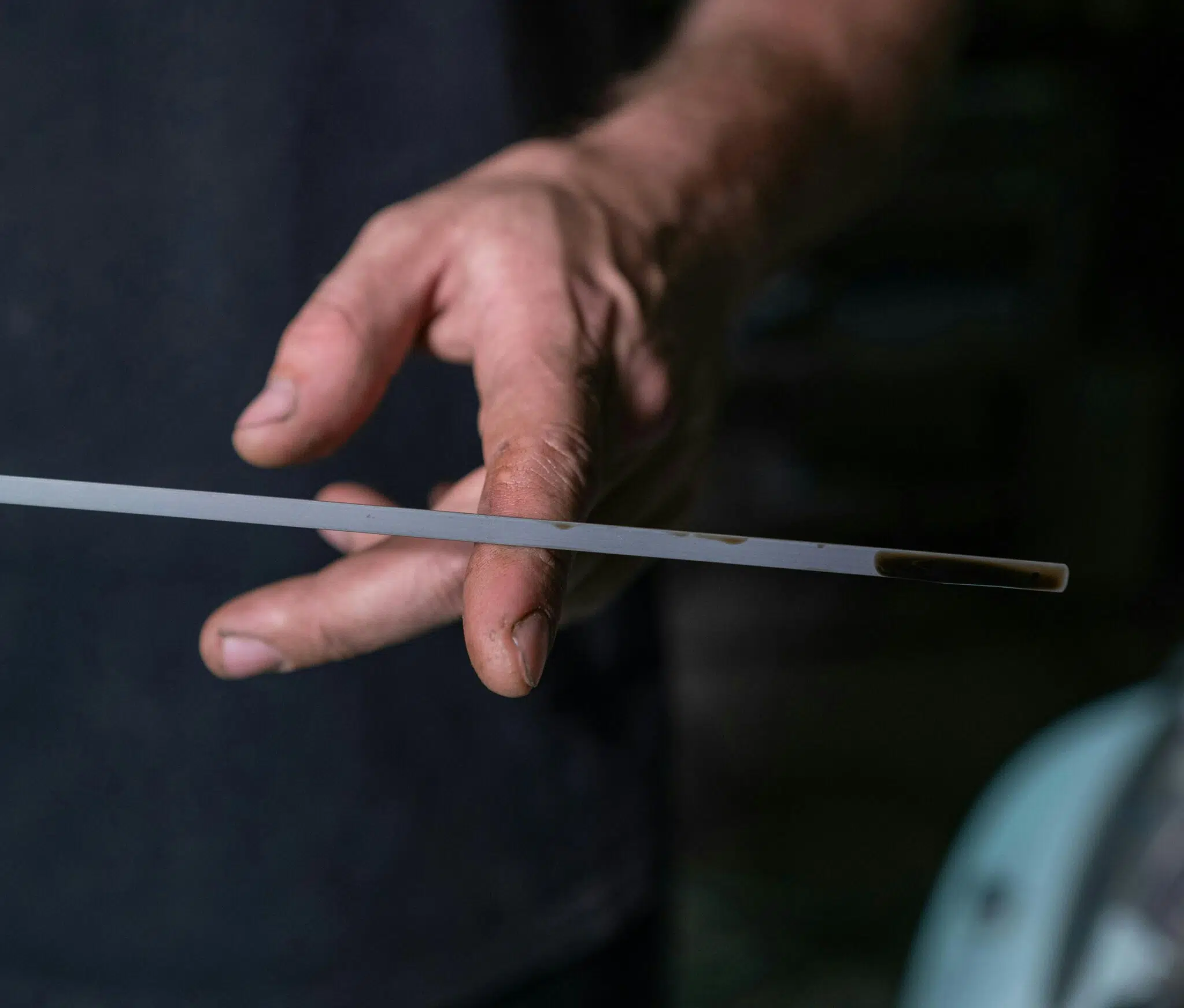
If you know there’s a leak and you need to make a judgment call about whether it’s safe to drive today, work through this list before you start the engine:
- Pull the dipstick — if the oil level is at or below the minimum mark, don’t drive. Top up first, then reassess
- Check the dashboard — an oil pressure warning light means stop, full stop. Check engine light alongside an oil smell means the same
- Look at the ground — drops are manageable; a puddle or oil actively dripping from the car is not a drive-today situation
- Use your nose — a burning oil smell means oil is reaching hot engine components, which is a fire risk and a sign the leak is more than minor
- Listen on startup — ticking, tapping, or knocking sounds on a cold start are your engine telling you oil pressure is low
If even one of these gives you pause, don’t drive. A tow is inconvenient and costs money. An engine rebuild costs fifteen to thirty times more.
Should You Use an Oil Stop Leak Product?
These are more legitimate than their reputation suggests, within honest limits. They work by conditioning aged rubber seals, causing them to swell slightly and recover some flexibility. On a high-mileage car with slow seepage from hardened seals, a quality additive can genuinely reduce the leak.
What they can’t do is fix a mechanically failed gasket, a cracked component, or a worn-out rear main seal. If you have an active drip or a known failure, it won’t solve anything. The right use case is slow seepage on an older car where a full repair doesn’t make financial sense — as a management tool, not a cure.
What a Repair Will Actually Cost You
Drain plug washer and oil filter leaks are the cheapest fixes in motoring — parts cost almost nothing and labour is minimal. Valve cover and cam cover gaskets sit in the low-to-moderate range, though labour varies depending on how accessible your engine is. Oil pan gaskets cost more because the pan needs to be dropped. The rear main seal is where bills climb — the seal itself is cheap, but accessing it usually means separating the engine from the gearbox, and that labour adds up fast regardless of the car.
The pattern holds consistently: catch it early and it’s cheap. Leave it and surrounding components absorb oil damage, turning a simple gasket job into something larger.
What to Do Next
Check your dipstick today, identify your category, and let that set your urgency. Minor leak — book an inspection at your convenience, but don’t keep pushing it back. Moderate — this week, not next month. Serious — don’t drive it until a mechanic has seen it.
Most oil leaks caught early are quick, inexpensive repairs. The ones that turn into engine stories are almost always leaks that were noticed and ignored. You’ve already done the hard part.
Last Updated: March 2026
FAQs
It depends entirely on the rate of the leak. Slow seepage with stable oil levels and no warning lights — short distances are generally fine. An active drip, a puddle forming, or any dashboard warning means you shouldn’t drive it until it’s been inspected. Always check the dipstick first and let that reading make the decision for you.
Yes, an oil leak can indirectly cause engine overheating.
Engine oil helps reduce friction and carry heat away from moving parts. If oil level drops too low due to a leak, friction increases, which can raise engine temperature. While coolant is the main cooling medium, low oil can still contribute to overheating and engine stress.
No, it isn’t normal — but it’s very common, particularly on cars past 80,000 km. Seals and gaskets harden and shrink over years of heat cycling, and slow seepage is a natural consequence of age. Normal or not, no oil leak should be left unmonitored.
Yes. Escaping oil doesn’t only affect the engine itself.
Leaking oil can damage rubber hoses, belts, engine mounts, and wiring insulation. It can also contaminate sensors and create smoke or burning smells if oil drips onto hot exhaust components.
Oil leaks are often more noticeable overnight because the engine is off and oil has time to settle and pool at the lowest points. During the day, oil may burn off on hot surfaces, evaporate slightly, or spread thinly, making leaks less visible. Cooler nighttime temperatures can also make leaks easier to spot.
Topping up oil can be a temporary solution, but it’s not a long-term fix.
Regularly adding oil helps prevent engine damage, but it doesn’t stop the leak from getting worse. Fixing the leak early is usually safer and cheaper than waiting until oil loss causes additional damage.

Founder of TheCarLane | Automotive Enthusiast
Ayush shares practical automotive knowledge based on real-world ownership and hands-on experience. His work focuses on diagnostics, engine systems, common car problems, and clear explanations that help everyday drivers understand their vehicles better.