

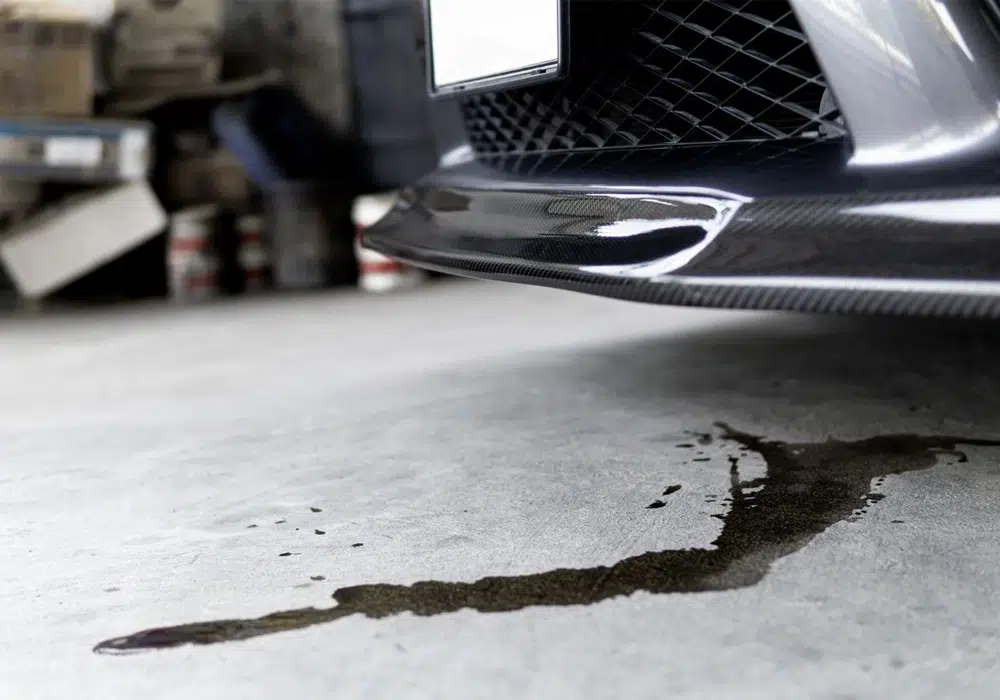
Seeing oil under your car when it’s been parked can be stressful. If your car is leaking oil when parked, it’s natural to panic and assume the worst, engine failure, huge repair bills, or that the car is unsafe to drive.
The truth is: not all oil leaks are emergencies, but some are.
This guide explains why your car leaks oil when parked, when it’s safe to drive, and when you should stop immediately.
1. Quick Decision Guide: What This Oil Leak Likely Means
If you notice oil leaking only when your car is parked, the situation usually falls into one of three categories. Knowing which one you’re dealing with helps you decide what to do next without panic.
Likely Minor (Monitor, Don’t Ignore)
- A few drops or a small stain after long parking
- No warning lights
- Oil level drops very slowly over days or weeks
You can usually drive short distances, but the leak should be checked soon.
Moderate (Drive Carefully, Plan a Repair)
- Fresh oil spots appear overnight
- Oil smell after driving
- Oil level drops noticeably between checks
Driving is possible for now, but delaying repair increases risk and cost.
If you’re seeing a puddle but aren’t completely sure it’s engine oil, this guide on what color is the oil under my car can help you confirm what fluid you’re dealing with before making a decision.
Serious (Stop Driving)
- A growing puddle under the car
- Oil warning light or check engine light comes on
- Burning oil smell or smoke
- Oil level drops quickly
Continuing to drive can cause engine damage. A professional inspection is needed immediately.
If you’re unsure which category your situation fits, the sections below will help you narrow it down step by step.
2. Is It Safe to Drive When Oil Leaks Only While Parked?
This is the most common concern, and the answer depends on how fast the oil is leaking, not just whether it’s leaking.
You can usually drive short distances if:
- The leak is slow (drops, not puddles)
- The oil level stays within the safe range
- No warning lights are on
- There is no burning oil smell
You should avoid driving if:
- Oil forms a puddle within hours
- The oil level drops after a short drive
- The oil pressure or check engine light turns on
- Smoke or strong oil smell appears
If you drive with low oil, it can hurt the engine without you even knowing it. It’s a sign that the problem needs to be fixed if you check the oil more often than the gas.
3. Why Is My Car Leaking Oil When Parked?
When your car is running, oil is constantly circulating inside the engine.
When you park and switch the engine off, the oil settles and pools at the lowest points.
If there is:
- a worn seal
- a loose bolt
- a cracked gasket
oil can slowly drip out only after parking, which is why you don’t see it while driving.
This is one of the most common reasons oil leaks are noticed overnight.
In most cases, an oil leak that appears only after parking is slow and not immediately dangerous.
However, even small leaks can grow over time, so it’s important to monitor the oil level and get the source checked. Catching it early can prevent bigger repairs later.
4. Car Leaking Oil When Parked on an Incline
If oil leaks more when the car is parked on a slope, gravity is usually the cause.
On an incline:
- Oil shifts inside the engine
- Weak seals are exposed
- Small leaks become visible
This often points to minor seepage from areas such as valve cover gaskets, oil pan gaskets, or rear engine seals.
What to do if the leak appears only on a slope:
- Park on level ground overnight and observe
- If the leak reduces or disappears, it’s likely minor
- Check oil level before driving
- Avoid parking on slopes until inspected
A slope-only leak is usually not an emergency, but it should still be checked before it worsens.
5. Car Leaking Oil After an Oil Change
Oil leaks after an oil change are common and usually easy to fix.
Possible reasons include:
- Drain plug not tightened properly
- Old washer reused
- Oil filter not seated correctly
- Double gasket on the oil filter
- Engine oil overfilled
These are typically service-related issues. If the leak started shortly after maintenance, see our detailed guide on oil leak after oil change for step-by-step diagnosis.
6. Car Leaking Oil After Service
If oil appears after general service but not specifically an oil change, the cause may be different.
Other types of service can sometimes disturb engine components or leave residue behind.
Examples include:
- Underbody panels not reinstalled properly
- Small amounts of oil spilled during unrelated repairs
- A seal or gasket disturbed during nearby work
- Engine components loosened during access
In these cases, the leak may not start immediately. It may show up after the engine heats up or after the car sits overnight.
One important distinction: oil from general service is often residue dripping from engine crossmembers or splash shields rather than an active pressure leak. If the spots stop forming after a day or two and the oil level remains stable, it was likely leftover oil rather than an ongoing issue.
However, if fresh oil continues to appear consistently, a disturbed seal or gasket should be inspected.
If the oil looks clean and light amber, similar to fresh oil and the leak began right after service, returning to the shop for re-inspection is the safest next step.
7. Car Dripping Oil When Parked – Is This Serious?
There’s a difference between seepage and dripping.
- Light seepage: Slight oil stain, slow spread, not urgent
- Active dripping: Drops forming and falling, more serious
If you see drops forming every few minutes, it’s no longer “minor.”
8. Is It Normal for a Car to Leak Oil When Parked?
Short answer: No, it’s not normal, but it is common.
Many older cars develop:
- minor gasket leaks
- seal aging
- small oil sweating
While it may not be dangerous immediately, no oil leak should be ignored long-term.
9. How Much Oil Leak Is Acceptable?
Technically:
- Zero oil leak is acceptable
Realistically:
- Very slow seepage over weeks is not immediately dangerous
- Oil loss between oil changes should not exceed a small amount
If you need to top up oil frequently, the leak is no longer minor.
10. What to Check Before Driving a Car That’s Leaking Oil
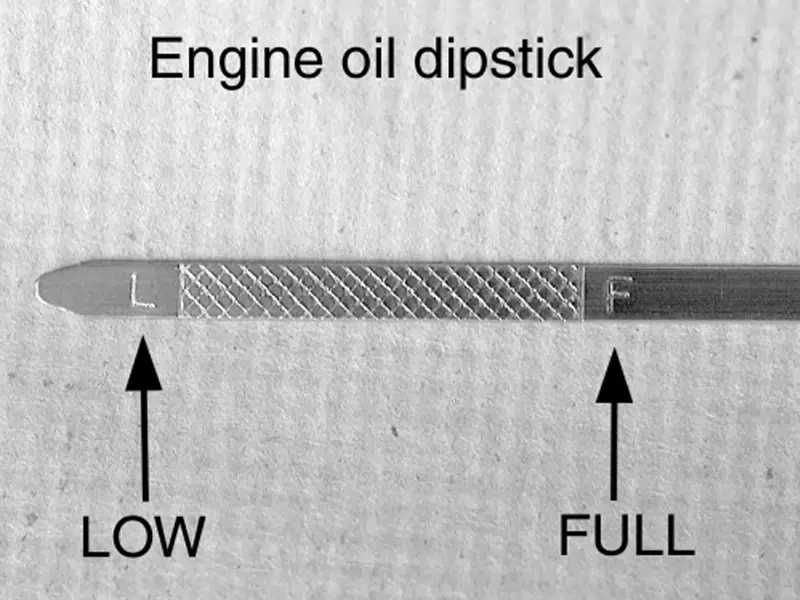
Before driving, take a few minutes to assess risk:
- Check oil level: below minimum then do not drive
- Look for warning lights: oil or oil-pressure light, stop driving
- Check oil spot size: puddles or active dripping are serious
- Smell for burning oil: indicates oil on hot engine parts
- Listen to engine: ticking or knocking suggests low oil
If anything feels off, delaying the drive is safer.
11. Precautions to Take If Your Car Has an Oil Leak
If you must use the car for short trips while dealing with an oil leak, taking precautions can reduce the risk of damage.
- Check engine oil every day
- Carry extra engine oil in the car
- Avoid high speeds and high RPMs
- Drive gently and avoid hard acceleration
- Avoid parking on slopes when possible
- Keep trips short and essential only
These steps don’t fix the leak, but they help buy time safely until repairs are done.
12. When Should You Stop Driving Immediately?
Stop driving and turn the engine off if:
- Oil warning light turns on
- Oil pressure warning appears
- Engine starts knocking or ticking
- Oil is dripping heavily
- Smoke comes from engine bay
Continuing to drive in these conditions can cause irreversible engine damage.
13. Final Takeaway
If you’ve noticed oil leaking when your car is parked, here’s what to do next:
- Check oil level using dipstick
- Look under the car after parking
- Note oil color and drip rate
- Avoid long drives
- Get it inspected soon
An oil leak when parked doesn’t always mean disaster, but ignoring it can turn into one.
Small leaks give warnings.
Listening early saves:
- money
- engine life
- stress
If you treat it calmly and early, most oil leaks are manageable and repairable.
Last Updated: January 2026
14. FAQs
Yes, an oil leak can indirectly cause engine overheating.
Engine oil helps reduce friction and carry heat away from moving parts. If oil level drops too low due to a leak, friction increases, which can raise engine temperature. While coolant is the main cooling medium, low oil can still contribute to overheating and engine stress.
Yes, it can.
Low oil levels increase internal friction, making the engine work harder. This can slightly reduce performance and fuel efficiency over time. In some cases, oil leaks can also affect sensors or cause warning lights, which may put the engine into a reduced-performance or “safe” mode.
Yes. Escaping oil doesn’t only affect the engine itself.
Leaking oil can damage rubber hoses, belts, engine mounts, and wiring insulation. It can also contaminate sensors and create smoke or burning smells if oil drips onto hot exhaust components.
Oil leaks are often more noticeable overnight because the engine is off and oil has time to settle and pool at the lowest points. During the day, oil may burn off on hot surfaces, evaporate slightly, or spread thinly, making leaks less visible. Cooler nighttime temperatures can also make leaks easier to spot.
Topping up oil can be a temporary solution, but it’s not a long-term fix.
Regularly adding oil helps prevent engine damage, but it doesn’t stop the leak from getting worse. Fixing the leak early is usually safer and cheaper than waiting until oil loss causes additional damage.

Founder of TheCarLane | Automotive Enthusiast
Ayush shares practical automotive knowledge based on real-world ownership and hands-on experience. His work focuses on diagnostics, engine systems, common car problems, and clear explanations that help everyday drivers understand their vehicles better.