

If you’re looking for “symptoms of a bad timing belt,” you’ve probably heard a sound, felt a vibration, or noticed a change in how your car feels. That’s a fair worry, bu...

A timing belt is a reinforced rubber belt inside a car’s engine that keeps the engine’s pistons and valves moving in perfect sync. Its job is to make sure the valves open and close at the right time d...
A CVT (Continuously Variable Transmission) behaves differently from traditional automatic gearboxes, which often leads to confusion about what is normal and what is an actual problem. This guide expla...

A Continuously Variable Transmission (CVT) is a type of automatic transmission that does not use fixed gears like a traditional automatic or manual gearbox. Instead of shifting between gears (1st, 2nd...
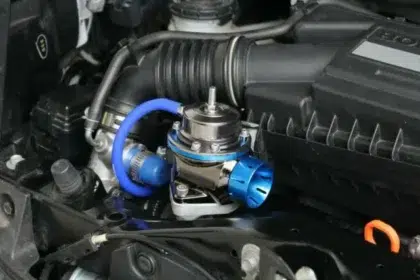
If you are new to turbocharged cars, you may have heard the term BOV or blow-off valve and wondered what it actually does. Some people associate it only with a loud “psshh” sound, while others say it ...
The LS engine is one of the most famous and widely used V8 engines in the automotive world. Known for its strong performance, compact design, reliability, and massive tuning potential, the LS engine h...
A HEMI engine is a type of internal combustion engine that uses a hemispherical combustion chamber to improve airflow, fuel burning, and power output. The name “HEMI” comes from the word hemisphere, w...
Air-fuel ratio (AFR) is the balance of air and fuel your engine mixes before combustion. Getting this balance right is what gives your car smooth power, good mileage, and long engine life.In simple wo...
Torque vs Horsepower — Why It Matters Torque is the force that moves your car, and horsepower is the speed at which that force works.In this article, you’ll learn how both affect acceleration, overtak...

If you’ve ever stood at a fuel pump or compared car models and wondered, “diesel vs gasoline — what’s better?”, you’re not alone. People compare terms like diesel vs gas, diesel fuel vs gas, and diffe...