

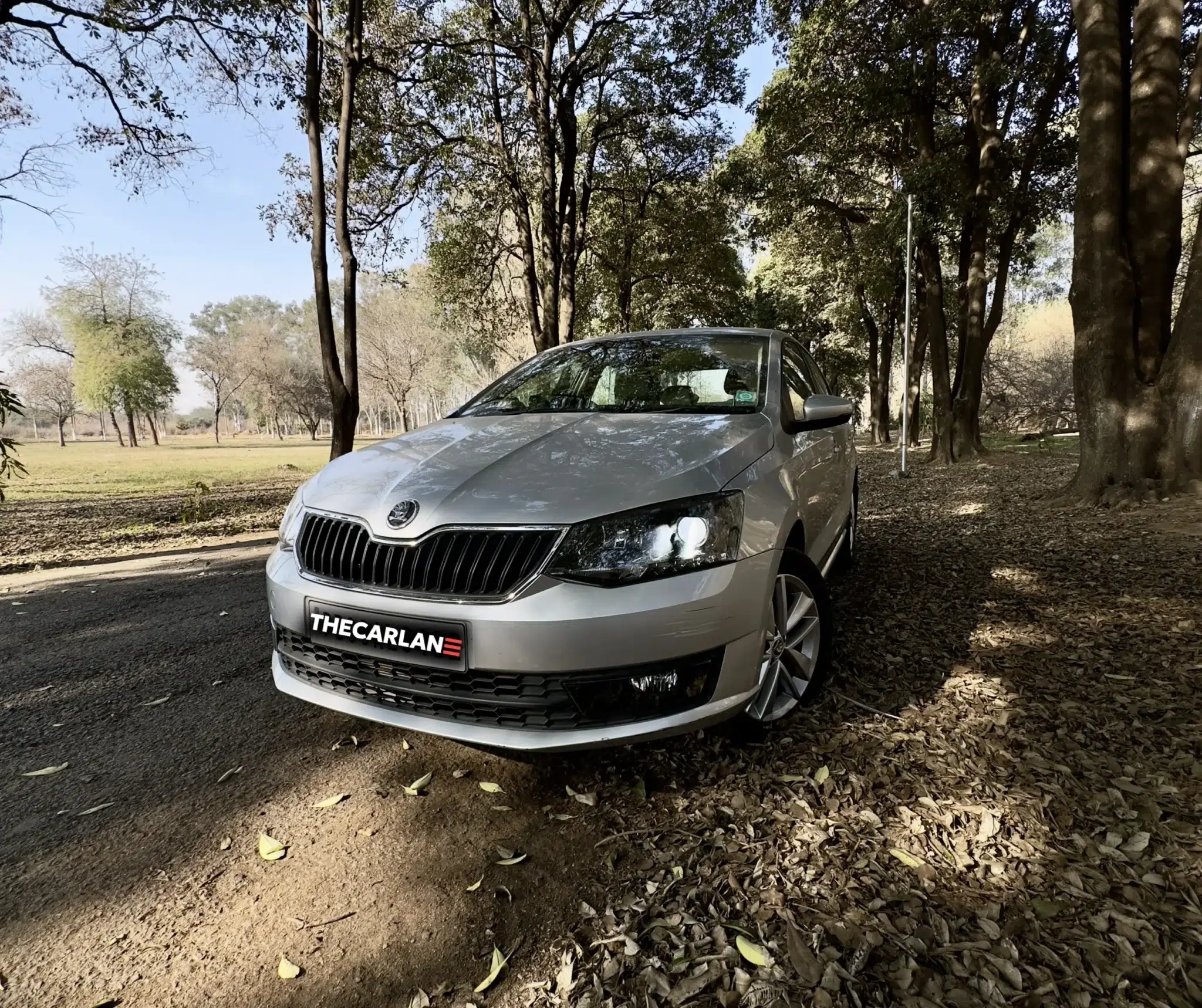
A Stage 1 remap is the most popular tuning upgrade for turbo-petrol cars — but how much difference does it actually make in the real world? This is my complete Stage 1 remap review, based on 11 months of daily driving, highway runs, hills, OBD logs, and real acceleration clips. While this review includes my experience with the 1.0 TSI engine, everything I share applies to any turbocharged petrol car getting a Stage 1 tune. You’ll see real boost logs, AFR behavior, mileage changes, throttle response, pros/cons, reliability, and whether Stage 1 is worth it for a daily driver.
Important note: ECU tuning and performance modifications can affect reliability, emissions compliance, warranty coverage, and road legality depending on your location. This article is for informational purposes only and is based on personal experience and general principles, always consult a qualified professional and follow local laws before making any modifications.
1. What Exactly Is a Stage 1 Remap?
A Stage 1 remap is the safest and simplest form of car tuning. It’s when the tuner updates your car’s ECU software to make the engine run better — without changing any hardware. Think of it as unlocking the performance your engine was already capable of but held back from the factory. It gives you quicker throttle response, stronger mid-range pull, smoother power delivery, and 15–30% more torque while keeping everything else stock.

✔ Safe tune for stock turbo, stock injectors, stock clutch
✔ Changes ECU parameters like boost, ignition timing, AFR targets
✔ Adds 15–30% torque depending on engine
✔ Designed for reliability on daily-driven cars
No hardware changes — stock turbo, intercooler, and clutch stay.
2. My Honest Stage 1 Remap Review (For Any Turbo Petrol Car)
Throttle Response
Stage 1 immediately removes throttle lag. The car responds earlier, pulls with less hesitation, and feels lighter at low speeds.
Mid-Range Punch
The biggest difference. Stage 1 increases mid-range torque by 20–30%, making overtakes effortless in 2nd/3rd gear.
Highway Performance
Cars hold speeds with less throttle input. Half-throttle overtakes that needed a downshift earlier now happen in the same gear.
City Driveability
Less gear shifting, smoother low-RPM pull, and more usable torque at 1500–2500 RPM.
Fuel Efficiency (Realistic)
If driven calmly → almost same as stock
If pushed → mileage drops 3-5 km/l
Is Stage 1 Safe?
Safe for stock engines when tuned properly and fuel quality is good.
3. What About Diesel Engines?
Stage 1 remaps work brilliantly on diesel engines as well. Diesel cars usually see even bigger torque gains compared to petrol engines because diesels run higher compression and boost from the factory. The driving feel changes similarly — quicker throttle response, stronger mid-range pull, smoother acceleration, and easier overtakes.
The main difference is that diesel engines make more low-RPM torque, so Stage 1 feels even stronger in the lower revs. As long as the tune is safe and fuel quality is good, Stage 1 is reliable for long-term diesel use too.
4. My Stage 1 Remap Review Of Rapid 1.0 TSI (Real Data + Logs)
1. Stage 1 Remap Power Gains — Quantum Red Map Example
| Parameter | Stock (1.0 TSI EA211) | Quantum Red Stage 1 |
|---|---|---|
| Power | 110 PS (109 bhp) | 130 – 135 PS (132 – 134 bhp) |
| Torque | 175 Nm | 210 – 220 Nm |
| 0 – 100 km/h | ~10.8 s (manual) | ≈ 9.2 s (–1.5 s gain) |
| Top Speed (indicated) | 240 km/h | 180 km/h |
That’s roughly a 20–25 % torque increase.

2. Real OBD Logs: Boost, AFR, Trims, IAT
OBD Live Log Clip – RPM, MAP, AFR (1.0 TSI Stage 1)
Recorded using OBD2 scanner during a 3rd-gear pull on a 1.0 TSI Stage 1 remap. Shows RPM rise, MAP boost pressure, and AFR changes under acceleration.
3. Parameter Explanations
1. Power (Fuel) – hp
This shows the estimated horsepower based on how much fuel the engine is using.
It isn’t exact like a dyno, but it gives a good real-time idea of how hard the engine is working.
2. MAP – psi (Manifold Absolute Pressure)
MAP shows how much pressure is inside the intake manifold.
For turbo cars:
- Low MAP = idling / cruising
- High MAP = turbo building boost
This value rises as the turbo spools.
3. Intake Air Temperature (IAT) – °C
This shows the temperature of the air entering the engine.
Cooler air = more oxygen = better performance
Hot air = reduced performance
During acceleration, IAT usually rises slightly.
4. Speed – km/h
This simply displays your current vehicle speed.
Helpful to correlate engine behavior with acceleration.
5. Engine RPM – rpm
RPM shows how fast the engine is spinning.
Higher RPM = more power being made
During pulls, this rises quickly as you accelerate.
6. Fuel/Air Composition Ratio (AFR)
This tells you how much air is mixed with fuel.
- 14.7 = ideal balance
- Lower number = rich (more fuel)
- Higher number = lean (more air)
During acceleration, AFR goes richer to make power.
During deceleration, it can spike lean (fuel cut).
4. What’s Happening in the Clip
This clip shows your engine parameters changing in real time as the car accelerates:
- RPM rises as you press the throttle.
- MAP increases as the turbo starts building boost.
- AFR drops slightly (rich mixture) to make more power.
- Power (hp) reading increases because the engine is using more fuel.
- IAT may rise a bit from heat generated during the pull.
- Speed climbs steadily as acceleration happens.
Overall, the clip gives a clear, real-world view of how a stage 1 remap turbo-petrol engine behaves under load — showing boost buildup, throttle response, AFR changes, and engine load increasing as the car picks up speed.
5. Real-World Clip – 20 to 80 km/h Acceleration (2nd Gear)
Here is a real 2nd-gear 20–80 km/h pull after Stage 1, so you can see the actual difference instead of reading theory.
In 2nd gear Turbo started spooling around 1700 RPM and gets activated after 2000 RPM with 70% throttle response otherwise it would have been touch 100 kmph in no time.
6. Stage 1 Remap Cost in India (2025 Update)
| Tuner | Map Type | Approx Price | Highlights |
|---|---|---|---|
| Quantum Tuning India | Stage 1 / Quantum Red | ₹ 22 000 – ₹ 28 000 | Upper-tier map, lifetime backup |
| Code6 Tuning | Stage 1 | ₹ 18 000 – ₹ 25 000 | Linear, mild mid-range |
| Wolf Moto | Stage 1 | ₹ 20 000 – ₹ 25 000 | Popular South India |
| Pete’s Performance | Stage 1 | ₹ 25 000 + | Premium after-sales |
Expect labour/tax to vary by city (Delhi, Punjab, Bangalore, Kerala).
If you’re new to the tuning world, here’s how ECU remapping actually works — from stock limits to tuning logic.
7. Popular Stage 1 Tuners Worldwide (For Any Car)
Include brands like:
USA / Global
- APR (VW/Audi specialist)
- Unitronic
- Cobb Tuning (Subaru, Ford, etc.)
- EQT – Equilibrium Tuning (MQB, Gen3 engines)
Europe
- Revo
- RaceChip
- MRC Tuning
- ABT (for high-end VAG cars)
Australia
- Tunehouse
- EuroMechanic
| Tuner | Region | What They’re Known For | Approx Stage 1 Gains |
|---|---|---|---|
| APR | USA/Global | Safe, factory-like tunes | 15–30% |
| Revo | Europe | Aggressive mid-range | 18–35% |
| Unitronic | USA/Canada | Smooth linear power | 15–25% |
| Cobb | USA | Subaru/Ford tuning | 20–40% |
8. Daily Usability: City, Highway, Hills
In stop-go traffic the car holds 2nd without judder and pulls clean from ~1,400 rpm. The throttle is less “rubber band” and more linear, so small pedal inputs give predictable motion—handy for parking and speed bumps. On highways the mid-range is the star: you plan overtakes earlier but execute them with less throttle and fewer downshifts. In the hills, short corners in 2nd are easier; you ride torque instead of chasing revs. The character changes from “adequate” to “eager,” yet remains easy to drive calmly.
9. Highway Performance & Mileage
On open roads the engine wakes up around 1 800 rpm and pulls clean till 6 000.
Overtakes that needed a downshift before can be done in the same gear with half throttle.
Real-world fuel efficiency took a toll
| Condition | Stock | Stage 1 (Quantum Red) |
|---|---|---|
| City | 11 – 12 km/l | 10 – 11 km/l |
| Highway | 18 – 21 km/l | 15 – 18 km/l |
After Stage 1 remap, you can expect fuel economy on highway around 15-18 km/l if you keep it under 2000 RPM on cruise and in city you can get around 9-12 km/l depending on your driving style and don’t expect much fuel economy if you drive aggressively.
You can deep dive in this article of Turbochargers vs Superchargers to know how these works and their tuning potential.
10. Reliability & Maintenance
After nearly two years and ~25,000 km of Stage 1 use, this has been my experience from a reliability and maintenance perspective:
- No check engine lights or ECU-related errors so far
- Clutch has remained healthy in my usage, without unusual slipping or issues
- Engine oil changes done at regular service intervals
- Spark plugs replaced as part of routine maintenance based on recommended intervals
- Consistent use of good-quality fuel to keep injectors clean
One thing that has mattered consistently is fuel quality.
Lower-octane fuel can lead to timing pull or knock correction in tuned cars, so I’ve personally avoided regular 91 RON and stuck to higher-octane fuel (XP95 / 97) wherever available.
It’s also worth mentioning that a common question I get after sharing this experience is whether a Stage 1 remap is safe in the long run, especially for daily driving and ownership over several years.
11. Stage 1 Remap Pros & Cons (For All Cars)
Pros
- Strong mid-range
- Faster overtakes
- Better throttle mapping
- More usable torque
- Smoother power delivery
Cons
- Slightly more heat
- Lower mileage when driven hard
- 95 RON recommended
- Warranty void
12. Risks & Precautions
| Risk | What It Means | How to Avoid |
|---|---|---|
| Warranty Void | ECU checksum change detectable | Flash back to stock before service |
| Knock on poor fuel | Detonation = timing pull | Use XP95 / octane booster |
| Higher EGT | Turbo heat rises | Idle 1 min after spirited run |
| Clutch stress | +40 Nm torque load | Gentle launches & proper gear oil |
| Insurance disclosure | Technically a mod | Avoid mention unless required |
For a daily driver, Stage 1 remains within safe hardware limits.
13. Stage 1 vs Stage 2 — Is the Upgrade Worth It?
| Parameter | Stage 1 (Quantum Red) | Stage 2 (Typical Setup) |
|---|---|---|
| Power | 130 – 135 PS | 150 – 160 PS |
| Torque | 210 – 220 Nm | 240 – 260 Nm |
| Hardware | Stock | Downpipe + Intake + Intercooler |
| Cost | ₹ 22 k – ₹ 28 k | ₹ 70 k – ₹ 1.2 L |
| Reliability | High | Moderate (heat mgmt needed) |
Pick Stage 1 if you daily the car, drive mixed city/highway, and want effortless mid-range with stock-like manners. Choose Stage 2 only if you’re willing to add a high-flow downpipe, intake and preferably a better intercooler, plus budget for extra maintenance and heat management. Stage 2 shines during repeated highway pulls or track days, not in bumper-to-bumper traffic. If you’re undecided, run Stage 1 for six months—you’ll learn exactly what, if anything, you still miss.
If you’re wondering whether it’s worth moving to Stage 2, I’ve covered a complete Stage 1 vs Stage 2 Tuning Guide for TSI Engines with power, cost, and reliability differences.
14. Supporting Mods That Enhance Stage 1 Remap
- BMC / K&N Panel Filter (₹ 6 k – ₹ 8 k) — improves airflow.
- Synthetic Oil 5W-40 (Liqui Moly / Motul) — protects under heat.
- Turbo Muffler Delete (₹ 5 k – ₹ 6 k) — faster spool, slightly louder whistle.
- OBD2 Monitor (₹ 1 k – ₹ 2 k) — track boost, IAT, timing.
- XP95 fuel only — ensures consistency and smooth timing advance.
15. My Own Take
| Aspect | Average Rating | Notes |
|---|---|---|
| Performance Gain | 4.8 / 5 ⭐ | Mid-range kick is addictive. |
| Reliability | 4.5 / 5 ⭐ | Zero failures on stock hardware. |
| Fuel Efficiency | 4 / 5 ⭐ | Slight drop if driven hard. |
| Value for Money | 5 / 5 ⭐ | ₹25 k feels cheap for the transformation. |
16. Owner Profiles: Will You Enjoy It?
- Commuter with weekend runs: Yes—less shifting, easy overtakes.
- Highway tourer: Yes—safer, shorter passes and calmer cruising.
- Track/autocross: Consider Stage 2 + cooling.
- Fuel-price watcher: Drive gently and economy stays close to stock.
17. Verdict — Is Stage 1 Remap Worth It?
Absolutely.
The Stage 1 remap transforms the car from a brisk commuter into a genuinely quick and responsive engine, without sacrificing drivability or reliability.
Whether you drive any car, the difference is night-and-day.
For under ₹ 30 000, you gain ~25 PS and 45 Nm while keeping the same comfort and service schedule.
Unless you’re building a full performance project, Stage 1 is the sweet spot.
What’s Coming Next (Real-World Updates)
I am using an OBD2 scanner to log all of my car’s data and I will be publishing new updates every few months.
In upcoming updates, I’ll be adding:
- Real OBD2 logs (boost, IAT, timing, AFR, trims) – Added
- Fuel efficiency tests (city, highway, AC on/off)
- Fuel type used (91 vs 93 vs XP95 behavior)
- Tyre condition & grip changes
- Long-term reliability (after 45000 km)
- 0–100 timings (hot weather vs cold, AC on/off)
- In-gear acceleration pulls (2nd & 3rd gear) – 2nd Gear Pull Added
- Engine health updates (oil temps, knocks, heat soak)
Last Updated: February 2026
FAQ
Not if tuned professionally and maintained well.
Detection depends on the manufacturer, diagnostic depth, and service procedures. While some remaps may not be immediately flagged during routine servicing, ECU modifications are technically detectable.
Generally. Stage 1 tuning is commonly available for many turbo-petrol engines, but results vary based on engine design, hardware limits, and tuning approach.
Most Stage 1 remaps are designed for higher-octane fuel than stock. Using premium fuel (typically 95 RON / 91 AKI or higher, depending on region) helps maintain stable ignition timing and reduces knock correction.
Mileage changes depend heavily on driving style. In normal driving, fuel consumption often remains close to stock. Under harder use, it’s common to see a small drop.
Yes, as long as the tune is reliable and fuel quality is good. Thousands of cars worldwide run Stage 1 for years without issues. Just follow regular maintenance.
Yes. Stage 1 usually cuts 0–100 km/h (0–60 mph) times by 0.5 to 1.5 seconds, depending on the car, traction, and tuner.

Founder of TheCarLane | Automotive Enthusiast
Ayush shares practical automotive knowledge based on real-world ownership and hands-on experience. His work focuses on diagnostics, engine systems, common car problems, and clear explanations that help everyday drivers understand their vehicles better.