
Before I remapped my 2021 Skoda Rapid 1.0 TSI I spent weeks trying to understand what ECU remapping actually does, not the marketing version but the real version. Most articles told me it unlocks hidden power. None of them showed me what actually changes inside the engine.
After 26,000km on a Quantum Red stage 1 map and dozens of OBD data logs later, here’s what I actually know about how remapping works and whether it’s worth it.
Important note: ECU tuning and performance modifications can affect reliability, emissions compliance, warranty coverage, and road legality depending on your location. This article is for informational purposes only and is based on personal experience and general principles, always consult a qualified professional and follow local laws before making any modifications.
What Is ECU Remapping?

Every modern car has an Engine Control Unit, a small computer that controls how the engine behaves. Fuel injection timing, turbo boost pressure, throttle sensitivity, rev limits, torque management, all of it is governed by software parameters called a map.
Manufacturers write conservative maps deliberately. They need one calibration to work across different fuel qualities globally, meet emissions targets in multiple markets, and survive varied maintenance habits across millions of owners. That conservatism leaves headroom, particularly on turbocharged engines where boost targets, fuel delivery, and ignition timing all have room to be optimised without exceeding the hardware’s actual limits. Unlike supercharged systems, turbos respond especially well to remapping because boost is controlled by the ECU rather than mechanical drive.
ECU remapping is the process of reading that factory map, modifying the parameters within safe limits, and writing the new map back to the ECU through the OBD port. No mechanical changes. No parts replaced. Just software.ame port mechanics use for diagnostics), making it a non-invasive but powerful upgrade.
How ECU Remapping Works
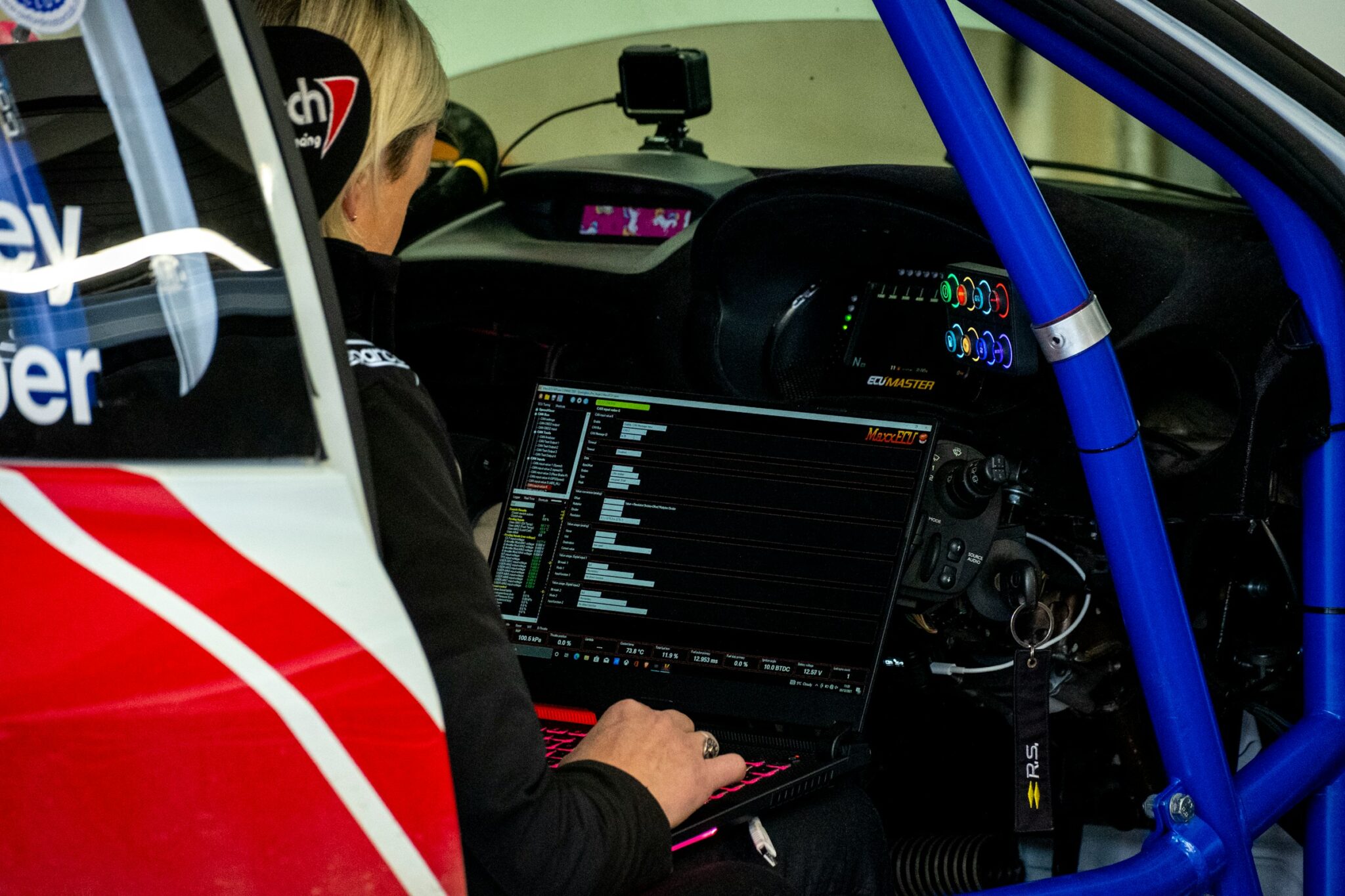
The tuner connects to your ECU through the OBD port and downloads the factory calibration file. They analyse the existing parameters, how boost builds, where fuel delivery peaks, how ignition timing is set across the RPM range and identify where the conservative factory settings leave genuine performance headroom.
The modified map is then written back to the ECU. On a stage 1 remap with no hardware changes, a good tuner works within the engine’s mechanical limits rather than pushing against them. The result is a recalibration that uses what the engine is already capable of rather than forcing it beyond its design.
Done properly the process is completely reversible. The stock map can always be restored through the same OBD port.
Real Driving Example – Live OBD Data During Acceleration (My Skoda Rapid 1.0 TSI)
This is the actual OBD screen recording of my Skoda Rapid 1.0 TSI on a hard acceleration pull after the Stage 1 remap.
The video shows MAP pressure rising rapidly, RPM climbing faster than stock, engine load spiking at full throttle, and IAT staying controlled throughout. This is real data from my actual car, not a stock illustration.
Live OBD recording from my remapped 1.0 TSI: MAP reaches 30psi, RPM climbs to 4713, and engine load spikes during full-throttle acceleration.
What the data shows compared to stock:
Boost builds approximately 200 RPM earlier, spooling starts around 1800 RPM versus stock 2000 RPM
Peak boost arrives sooner and holds longer through the mid-range
Engine load curve is steeper in the 2000-3000 RPM range where most real-world driving happens
Torque delivery front-loads into the range where you actually use it rather than peaking high and dropping off
This is why the remap feels different in everyday driving rather than just at full throttle. The mid-range is where the change is most noticeable, not the peak power figure.
If you want to scan your own car and see your live data, here’s the complete guide on how to use an OBD2 scanner.
Why Do Manufacturers Limit Engines?
The factory map isn’t the most this engine can do, it’s the most Toyota, Volkswagen, or whoever built it is willing to guarantee across every market, every fuel quality, every climate, and every maintenance standard globally. That means a car sold in a market with premium 97 RON fuel runs the same conservative map as one sold where 91 RON is the best available. The safety margin built in for the worst case scenario is the headroom a stage 1 remap uses in the best case scenario.
Is ECU Remapping Good or Bad?
The honest answer is neither by default. It becomes one or the other based on how it’s done, who does it, and what you expect from it.
A stage 1 remap on a mechanically healthy car with a reputable tuner using quality fuel is generally safe. The parameters being adjusted are within the engine’s hardware limits. The turbo, internals, and drivetrain were built with headroom that a conservative stage 1 map uses without exceeding. On my own 1.0 TSI after 26,000km on the Quantum Red performance map, no fault codes, no reliability issues, one brake disc and pad change that comes with spirited driving regardless of the map.
Where remapping goes wrong is predictable and consistent across every owner community that discusses it. Aggressive maps chasing peak power figures rather than drivability. Cheap generic maps not written for the specific engine. Poor fuel quality on a map calibrated for premium fuel. Existing mechanical issues that the additional load exposes. None of these are problems with remapping itself, they’re problems with how remapping was executed.
Remapping makes sense when:
- The car is mechanically healthy and properly serviced
- The goal is better daily drivability not maximum power
- A reputable tuner with platform-specific experience is doing the work
- You’re using the correct fuel specification
- Stage 1 with stock hardware is the plan
Avoid remapping when:
- The goal is maximum power at minimum cost
- The car has existing engine, sensor, or transmission issues
- You’re unwilling to maintain slightly higher service awareness
Risks and Considerations
Warranty is the most immediate risk. Most manufacturers consider ECU modification a warranty violation. If the car is still under manufacturer warranty the decision needs to weigh the performance gain against the warranty coverage you’re giving up.
Fuel quality matters more after a remap than before. A map calibrated for 95-97 RON fuel on regular 91 RON will cause knock, the ECU retards timing to compensate and the performance gain disappears along with the fuel economy. Use the fuel specification your tuner recommends consistently.
A bad map is worse than no map. Generic maps not written for your specific engine variant can cause detonation, poor fuelling, or turbo strain. The tuner matters as much as the remap itself. Research their reputation on owner forums for your specific car before committing.
Insurance implications vary by location. Some insurers require declaration of performance modifications. Check your policy before remapping.
ECU Remap vs Piggyback Tuning Box
Most people researching remaps encounter tuning boxes as a cheaper alternative. Here’s the honest difference.
| Feature | ECU Remap | Piggyback Tuning Box |
| How it works | Rewrites ECU software directly | Tricks ECU sensor signals |
| Control level | Full control over parameters | Limited control |
| Safety | Safer when professionally done | Can cause inconsistent fueling |
| Reversibility | Can restore stock map easily | Can be unplugged but less precise |
| Performance Gain | Tailored to your engine | Generic performance bump |
A proper remap integrates seamlessly with your car’s electronics and sensors — it’s smarter and safer than plug-in alternatives.
Stage 1 ECU Remap vs Stage 2
Most owners considering a remap face one decision early, stage 1 with stock hardware or stage 2 with supporting modifications. If you want a full breakdown of what changes at each level, this guide to car tuning stages covers all three in detail.
- Stage 1 ECU Remap:
Works with stock hardware (no major engine mods). It’s safe, reversible, and focuses on optimized software tuning. - Stage 2 ECU Remap:
Designed for cars with supporting hardware upgrades, like a performance exhaust, high-flow intake, or intercooler. It pushes the ECU parameters further to utilize the improved airflow and cooling.
| Feature | Stage 1 | Stage 2 |
|---|---|---|
| Hardware Required | None | Intake + Downpipe |
| Power Increase | Moderate | Big |
| Safety | High | Medium |
| Warranty | Void | Void |
| Cost | Low | Higher |
Is ECU Remapping Worth It?
For a car enthusiast who daily drives a turbocharged car and wants the engine to feel like it was always meant to feel, yes. The stage 1 remap on my 1.0 TSI transformed the mid-range completely. Not just at full throttle but at the 60-70% throttle inputs that make up 90% of real driving. That transformation costs less than most service bills and is reversible if you change your mind.
The people who regret remapping almost always fall into one category, they expected maximum power from a conservative map or they chose a cheap generic tune. Manage expectations correctly and choose the right tuner and the remap delivers exactly what it promises.
For the complete breakdown of what the stage 1 remap actually felt like, the before and after data, and 11 months of daily driving observations, read the complete 1.0 TSI Stage 1 Remap Review.
Last Updated: April 2026
FAQs
Not if done properly. A professional tune stays within safe limits of your engine’s components.
Yes. The stock map can always be restored through the OBD port. A reputable tuner will keep a copy of your original map before making any changes.
On my 1.0 TSI city economy dropped from 13-15 KMPL (approximately 37-43 MPG) stock to 9-12 KMPL (approximately 25-34 MPG) on the performance map driven enthusiastically.
In most countries a stage 1 remap is legal provided the car still meets emissions standards. Laws vary by region, check local regulations and inform your insurer before proceeding.
Stage 1 remaps typically cost $150-500 globally depending on the car, tuner, and whether custom dyno mapping is included. Off-the-shelf maps for common platforms sit at the lower end. Custom dyno-mapped tunes for specific builds sit higher.
If done incorrectly, remapping can cause engine knocking, clutch wear, or turbo stress. Always use a reputable tuner and high-octane fuel to stay within safe limits.
A professional remap typically takes 1-2 hours including diagnostics, map flashing, and basic testing. Custom dyno sessions take longer.

Founder of TheCarLane | Automotive Enthusiast
Ayush shares practical automotive knowledge based on real-world ownership and hands-on experience. His work focuses on diagnostics, engine systems, common car problems, and clear explanations that help everyday drivers understand their vehicles better.