
The LS engine is one of the most famous and widely used V8 engines in the automotive world. Known for its strong performance, compact design, reliability, and massive tuning potential, the LS engine has become a favorite among car enthusiasts, racers, and custom builders around the globe.
Originally developed by General Motors (GM), LS engines power everything from sports cars and muscle cars to trucks and custom engine swap projects. Whether someone wants a reliable daily driver, a high-horsepower build, or an affordable engine swap, the LS engine is often the first choice.
In this guide, you’ll learn what an LS engine is, its history and origin, which cars come with LS engines, engine sizes, why LS engines are so popular for tuning and swaps, and how they compare to newer engines.
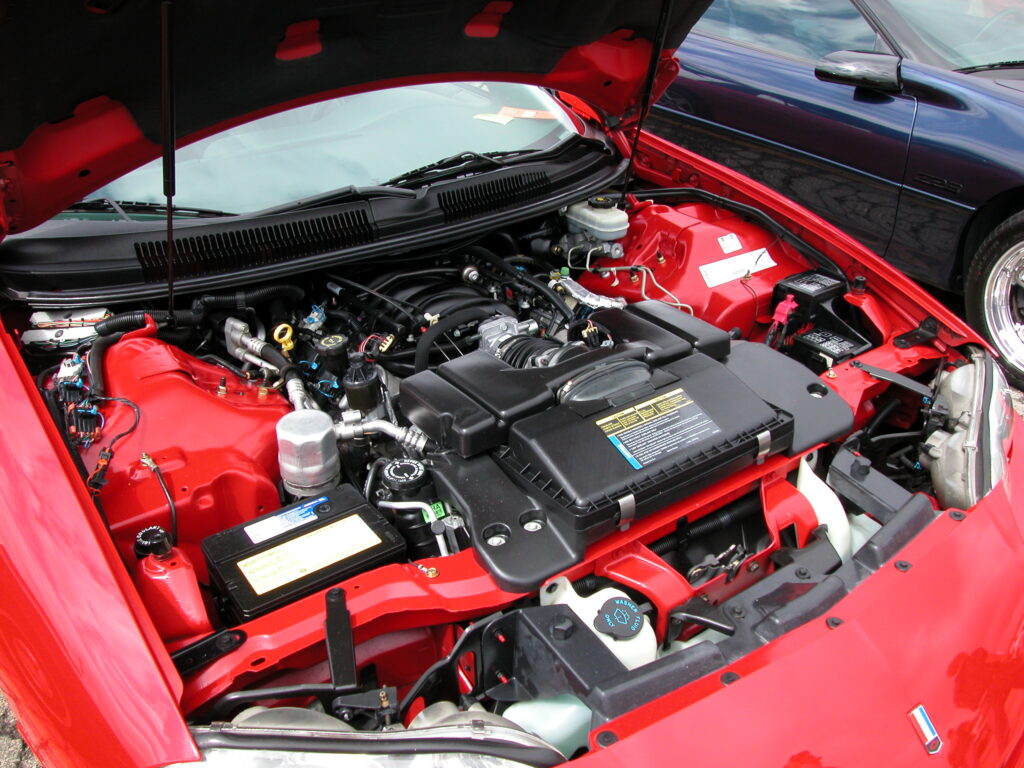
1. What Is LS Engine?
The LS engine is a family of V8 engines developed by General Motors (GM) that became famous for being powerful, compact, reliable, and extremely easy to modify.
The LS engine is widely used in:
- performance cars
- engine swaps
- motorsports
- custom builds
Today, the LS engine is considered one of the most successful and influential V8 engine platforms ever made.
2. How Does an LS Engine Work?
The LS engine works by turning air and fuel into power through a simple, reliable process that repeats continuously while the engine is running.
2.1 Step-by-Step Working of an LS Engine
- Air enters the engine
The engine pulls fresh air into its cylinders. - Fuel is added
Fuel injectors spray the right amount of fuel into the air. - Air and fuel are compressed
The mixture is squeezed tightly inside the cylinder. - A spark creates power
The spark plug ignites the mixture, creating a small explosion. - Power is produced
This explosion pushes the engine parts, creating power and torque. - Exhaust gases exit
Burned gases are pushed out through the exhaust. - The cycle repeats
This process happens thousands of times per minute while driving.
2.2 Why the LS Engine Produces Strong Power
- It has 8 cylinders, so more power is made each cycle.
- The design focuses on strong low-RPM torque.
- Power delivery feels smooth and consistent.
2.3 Why the LS Engine Design Is Simple and Reliable
- Uses a pushrod (OHV) design with fewer moving parts.
- Compact layout makes it easier to fit and maintain.
- Strong internal components handle daily driving and tuning.
2.4 Role of the ECU in LS Engine Working
The Engine Control Unit (ECU) manages:
- fuel delivery
- spark timing
- engine behavior
This is why LS engines respond very well to ECU tuning and Stage 1 upgrades.
3. History of the LS Engine
3.1 Who Invented the LS Engine?
The LS engine was developed by General Motors engineers as a modern replacement for GM’s older small-block V8 engines.
Instead of creating an entirely complex new design, GM focused on:
- improving reliability
- reducing engine size and weight
- increasing efficiency and power
The goal was to build a modern V8 that could meet emissions rules while still delivering strong performance.
3.2 When Was the LS Engine Launched?
The first LS engine (LS1) was officially launched in 1997.
It debuted in:
- the Chevrolet Corvette C5
- later in the Chevrolet Camaro
This launch marked the beginning of the LS engine era, which continues even today.
4. What Are LS Motors?
LS motors refers to the entire family of LS engines, not just one engine.
Instead of a single model, LS includes:
- multiple engine sizes
- different power outputs
- engines designed for cars and trucks
All LS engines share the same core design principles, which is why parts and knowledge are easily interchangeable.
5. What Is So Special About the LS Engine?
Compact and Lightweight Design
Despite being a V8, the LS engine is:
- smaller than many V6 engines
- easier to fit into different vehicles
- ideal for engine swaps
This compact size is one of the biggest reasons LS engines are so popular.
Strong Power and Tuning Potential
Even in stock form, LS engines produce strong power.
With basic modifications and tuning:
- 400–500 horsepower is common
- higher power is possible with forced induction
The LS engine responds very well to:
- ECU tuning
- camshaft upgrades
- intake and exhaust modifications
Reliability and Longevity
LS engines are known for:
- handling high mileage
- surviving hard driving
- maintaining reliability even after tuning
Many LS engines easily cross 200,000 miles with proper maintenance.
6. What Is the LS1 Engine?
The LS1 is the first and most iconic LS engine.
LS1 Key Specifications:
- Engine size: 5.7 liters
- Configuration: V8
- Block material: Aluminum
- Factory power: ~345–350 horsepower
The LS1 helped prove that a modern V8 could be:
- lightweight
- powerful
- emissions-compliant
- highly tunable
7. What Cars Come with LS Engines?
LS engines were installed in many GM vehicles, including cars and trucks.

Common LS-Powered Cars
- Chevrolet Corvette (C5, C6)
- Chevrolet Camaro
- Pontiac GTO
- Cadillac CTS-V
LS Truck Engines
- Chevrolet Silverado
- GMC Sierra
- Chevrolet Tahoe
- GMC Yukon
Truck LS engines are extremely popular for swaps because they are:
- affordable
- durable
- easy to find
8. What Size Is an LS Engine?
LS engines come in several sizes.
Common LS Engine Sizes:
- 4.8L – small, reliable truck engine
- 5.3L – most popular swap engine
- 5.7L (LS1) – classic performance version
- 6.0L – stronger internals
- 6.2L – high-performance variants
Each size has its own advantages depending on:
- budget
- power goals
- usage type
9. What Is LS Engine Swap?
An LS engine swap means installing an LS engine into a vehicle that did not originally come with one.
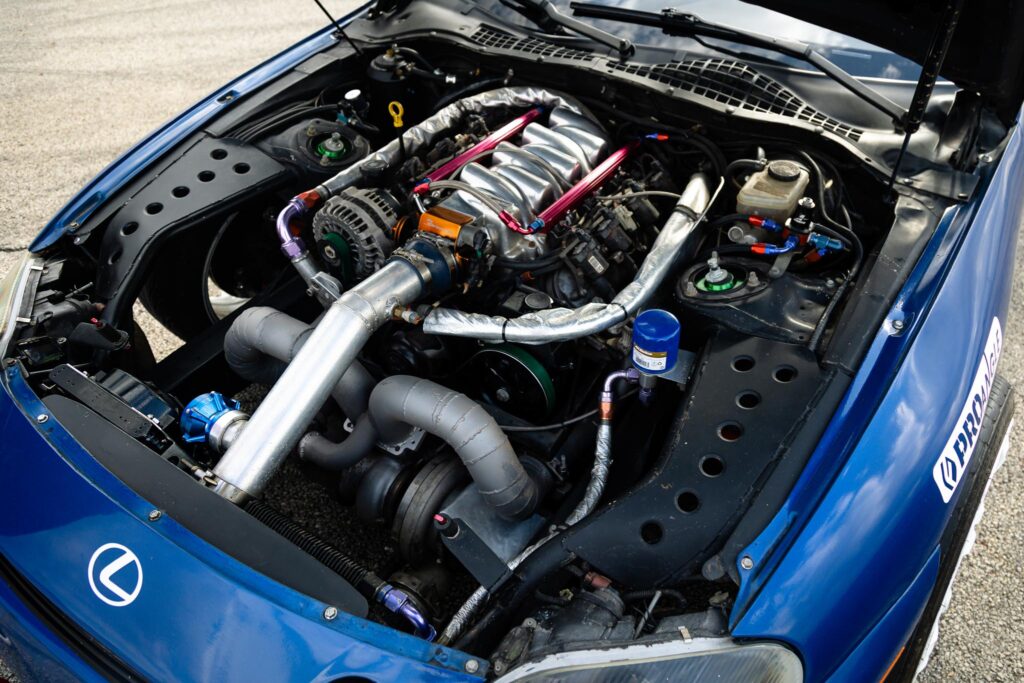
Why LS Swaps Are So Popular:
- compact engine size
- strong aftermarket support
- massive power gains
- excellent cost-to-performance ratio
LS swaps are commonly done in:
- older muscle cars
- Japanese cars
- drift cars
- project builds
10. LS vs LT Engine – Which Is Better?
LS Engine
- Older but proven design
- Easier to modify
- Cheaper parts
- Massive tuning support
LT Engine
- Newer GM V8 generation
- Direct fuel injection
- Better efficiency
- More complex and expensive
Final Verdict:
- LS engines are better for swaps, tuning, and budget builds
- LT engines are better for modern factory performance
For most enthusiasts, LS remains the preferred choice.
11. Why LS Engines Are Famous for Custom Builds and Tuning
LS engines are ideal for custom builds because:
- engine internals are strong
- tuning is predictable
- parts are widely available
- ECU support is excellent
This makes LS engines perfect for:
- Stage 1 tuning
- Stage 2 builds
- turbo or supercharger setups
12. Are LS Engines Reliable for Daily Driving?
Yes. When properly maintained:
- LS engines are very reliable
- suitable for daily use
- capable of long-term ownership
Reliability is one of the biggest reasons LS engines are trusted worldwide.
13. Pros and Cons of LS Engines (Advantages, Disadvantages & Common Problems)
LS engines are loved by enthusiasts, but like any engine platform, they come with both strengths and weaknesses. Understanding these helps you decide whether an LS engine is right for your use case — daily driving, tuning, or custom builds.
1. Advantages of LS Engines (Why They Are So Popular)
1.1 Strong Power-to-Size Ratio
One of the biggest advantages of LS engines is how much power they make relative to their size.
- Compact V8 design
- Easier to fit into many cars
- Delivers high torque and horsepower
This makes LS engines ideal for engine swaps and performance builds.
1.2 Excellent Reliability
LS engines are known for being:
- mechanically simple
- durable under stress
- capable of high mileage
Many LS engines run reliably even after:
- tuning
- performance upgrades
- long-term daily use
Reliability is one of the main reasons LS engines are trusted worldwide.
1.3 Huge Aftermarket Support
LS engines have one of the largest aftermarket ecosystems of any engine.
You can easily find:
- replacement parts
- performance upgrades
- tuning support
- swap kits
This keeps maintenance and upgrades relatively affordable.
1.4 Easy to Tune and Modify
LS engines respond very well to:
- ECU tuning
- intake and exhaust upgrades
- camshaft changes
- turbo or supercharger setups
Even basic modifications can deliver noticeable performance gains.
1.5 Affordable Compared to Other Performance Engines
Especially truck-based LS engines (like 5.3L):
- are widely available
- cost less than many performance engines
- offer great value for money
This makes LS engines accessible to beginners.
2. Disadvantages of LS Engines (Limitations to Know)
2.1 Pushrod Design Limitations
LS engines use a pushrod (OHV) design, not dual overhead cams.
While this keeps the engine compact, it:
- limits very high RPM operation
- is less efficient at extreme engine speeds
For most street and tuning applications, this is not a major issue.
2.2 Fuel Consumption
LS engines are V8s, so:
- fuel economy is lower than smaller engines
- city driving consumption can be high
This can be a drawback for daily drivers focused on fuel efficiency.
2.3 Weight Compared to Smaller Engines
Although compact for a V8, LS engines:
- are heavier than 4-cylinder or 6-cylinder engines
- may affect handling in lightweight cars
Proper suspension setup is often required in swaps.
3. Common Problems in LS Engines
LS engines are reliable, but some known issues can appear over time, especially in high-mileage or modified engines.
3.1 Oil Consumption Issues
Some LS engines are known to:
- consume oil at higher mileage
- require frequent oil level checks
This is usually manageable with proper maintenance.
3.2 Lifter and Valve Train Issues
In certain LS engines:
- lifters can wear out
- valve train noise may develop
This is more common in engines that:
- are heavily modified
- have poor oil maintenance
3.3 Cooling System Problems
In performance builds or swaps:
- improper cooling setup can cause overheating
- radiators and fans must be correctly matched
This is more of an installation issue than a design flaw.
3.4 Knock Sensor or Sensor-Related Issues
Older LS engines may experience:
- knock sensor failure
- wiring or sensor aging issues
These are usually easy to diagnose and fix.
3. Are LS Engine Problems Serious?
For most users:
- LS engine problems are well-known and well-documented
- fixes are widely available
- parts are affordable
With proper maintenance and tuning, LS engines remain very reliable.
14. Should You Choose LS Engine?
LS engines are an excellent choice if you want:
- strong performance
- reliability
- tuning potential
- affordable upgrades
They may not be ideal if:
- fuel efficiency is your top priority
- you want extremely high-revving engines
For most enthusiasts, the advantages of LS engines far outweigh the disadvantages.
15. Final Takeaway
The LS engine is a simple, powerful, and reliable V8 that’s easy to understand, easy to maintain, and easy to upgrade. That’s why it’s so popular for performance cars, engine swaps, and custom builds around the world.
16. FAQs
Yes. LS engines are considered beginner-friendly because they have a simple design, strong reliability, and wide availability of parts and tutorials.
No. LS engines are generally affordable to maintain, especially truck-based LS engines, because parts are widely available and relatively inexpensive.
Yes. When properly maintained and tuned, LS engines can be very reliable and comfortable for daily driving.
LS engines are compact, powerful, and easy to fit into many vehicles, which makes them one of the most commonly swapped engines in the world.
With proper maintenance, many LS engines can run 200,000 miles or more, even with mild performance upgrades.

Founder of TheCarLane | Automotive Enthusiast
Ayush focuses on engines, tuning, diagnostics, and real-world driving knowledge to bring accurate, easy-to-understand car content to readers.