
The first thing to establish before anything else, not every CVT lets you check the fluid yourself. Some have a dipstick accessible under the bonnet. Many don’t. The process is completely different depending on which type your car has, and doing the wrong one can cause more problems than it solves.
Open the bonnet and look for a transmission dipstick, usually marked differently from the engine oil dipstick, often yellow or pink, labelled CVT or transmission. If you see one, the check is straightforward and this article walks you through it. If there’s no dipstick, your CVT is sealed, which is normal on most cars made in the last decade and the fluid can only be checked properly by lifting the car and accessing a level plug underneath at a specific fluid temperature. That’s a workshop job, not a home one.
Why CVT Fluid Is Different From Regular Transmission Fluid
CVT fluid does more than lubricate. It transfers power through the belt or chain, controls internal pressure, and manages heat. This is why using the wrong fluid, including standard automatic transmission fluid, causes internal damage even if the level looks correct. Every CVT requires manufacturer-specific fluid approved for that exact transmission.
Before checking or adding anything, confirm the correct fluid type from the owner’s manual, the label under the bonnet, or by calling the dealer with your VIN. If you don’t know the fluid type, stop there and find out before proceeding. Getting this wrong is one of the most common causes of CVT damage.
When Not to Check CVT Fluid Yourself
Cars under warranty should go straight to a documented workshop service, a self-service fluid check can affect coverage and a professional record is safer to have. If you don’t know the exact fluid type your CVT requires, find out before touching anything, calling the dealer with your VIN takes thirty seconds and guessing is one of the most common causes of CVT damage.
Active symptoms change the priority entirely. Hesitation, shuddering, whining, or delayed engagement mean the transmission needs inspection, not a fluid level check, these are among the most common CVT transmission problems and need diagnosis rather than a fluid check. Verifying the level on a transmission that’s already developing a fault doesn’t identify the fault, it just delays the diagnosis that actually matters.
And if the CVT has no dipstick, stop there. Sealed CVTs require lifting the car, maintaining a specific fluid temperature, and accessing a level plug underneath. Without that equipment a home check isn’t possible.
What CVT Fluid Should Look Like
Normal — no action needed
Light red / pink
New or recently changed
Amber / honey
Normal aged fluid
Green
Nissan, Subaru fluids
Blue
Honda CVT fluid
Near clear
Some OEM fluids
Needs attention — do not just top up
Dark brown
Fluid degraded — service due
Black
Severely burnt — inspect now
Cloudy / milky
Water or coolant ingress
Metallic / sparkle
Metal particles — internal wear
Colour alone does not confirm fluid condition. Burnt smell means service is needed regardless of colour — even amber fluid that smells burnt should be changed.
CVT fluid varies in colour by manufacturer, light red, pink, amber, honey, green, blue, or nearly clear are all normal depending on the brand. Colour alone doesn’t indicate condition.
Fluid that needs attention looks dark brown or black, smells burnt, appears cloudy or milky, or contains visible metal particles. Any of these mean the transmission needs inspection rather than a simple top-up. Adding fluid over contaminated or degraded fluid doesn’t fix the underlying problem and often delays a diagnosis until the damage is worse.
How to Check CVT Fluid (If Your Car Has a Dipstick)
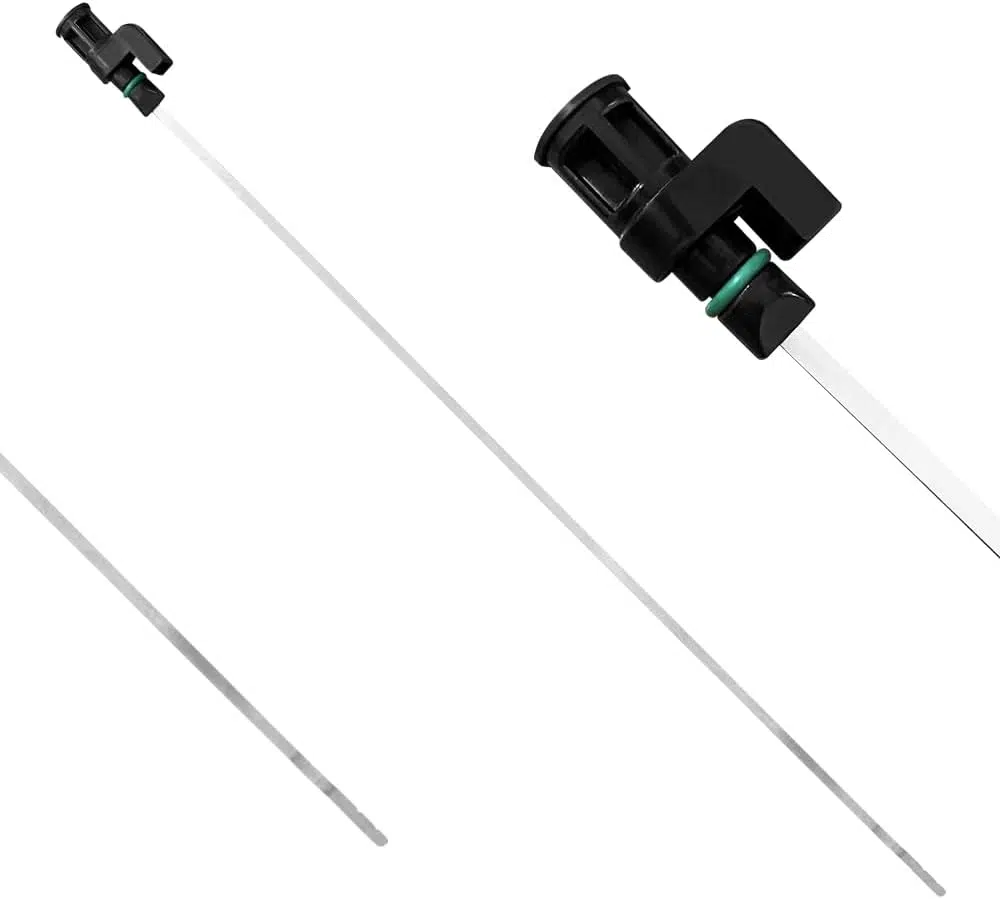
Park on level ground. Start the engine and let it warm up fully, CVT fluid expands with heat and a cold reading gives an inaccurate level. Move through all gear positions slowly, then leave the engine running. Pull the dipstick, wipe it clean with a lint-free cloth, reinsert it fully, then pull it again. The fluid level should fall within the marked range, between the two marks or within the crosshatched area on the dipstick. Not below, not above.
Check the colour and smell at the same time. Clean fluid within the marked range means no action is needed. Fluid outside the range, dark in colour, or burnt-smelling means a workshop visit rather than a top-up.
One important point, always use the exact fluid type specified for your car when topping up. Never substitute standard ATF even if it’s the only thing available. The cost difference between the correct fluid and a CVT repair is significant.
If the level sits within the marked range, the fluid looks clean, and the car is driving without hesitation or noise, no further action is needed until the next scheduled service interval. That’s the whole check.
Sealed CVTs – What “No Dipstick” Actually Means
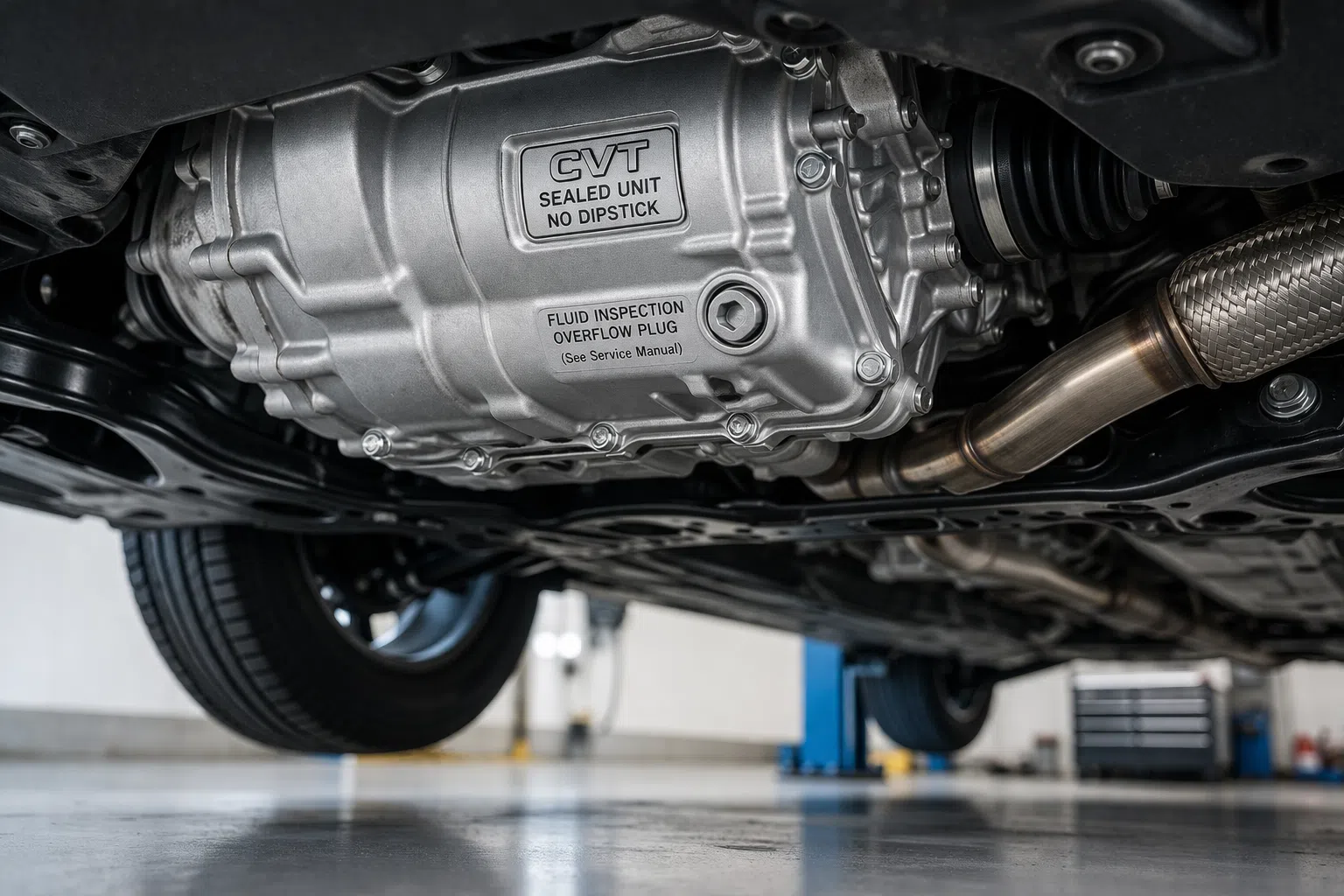
Most modern CVTs are sealed from the factory. This isn’t a design flaw or a missing component — it’s intentional. The manufacturer designed these transmissions to be serviced at specific intervals by a workshop with the correct equipment rather than checked casually by owners.
Checking the fluid on a sealed CVT requires lifting the car safely and keeping it perfectly level, locating the level check plug underneath, and verifying the fluid temperature is within the specific range the manufacturer requires before the reading is valid. An incorrect temperature gives an incorrect reading. These aren’t steps that can be safely improvised without the right equipment.
If your CVT has no dipstick and the car is running normally, the fluid doesn’t need checking between service intervals. If symptoms have appeared, hesitation, shuddering, whining, delayed response — the transmission needs a proper inspection at a workshop rather than an attempted home fluid check.
When symptoms appear on a sealed CVT, tell the mechanic specifically that you want a CVT fluid condition check, not just a visual inspection. A proper check involves lifting the car, accessing the level plug underneath, and verifying fluid temperature is within the correct range before drawing a sample. The fluid is then checked for colour, smell, and contamination. In India this typically costs ₹500–₹1,500 at an independent transmission specialist. In the US expect $50–$100 for the check alone, separate from any fluid change cost. Ask for the old fluid sample to be shown to you, colour and smell tell you more than any verbal description.
Mistakes That Damage CVTs
Most CVT failures that aren’t mechanical in origin trace back to fluid mistakes. Using standard ATF instead of CVT-specific fluid is the most common, it feels like a reasonable substitution and causes gradual internal damage that takes months to show symptoms. Mixing different CVT fluids from different manufacturers is similarly damaging even if both are technically CVT fluid. Overfilling the fluid level causes pressure problems that affect how the belt or chain operates. Checking the fluid cold gives an inaccurate reading that can lead to overfilling. Assuming a sealed CVT has lifetime fluid and never needs servicing — most manufacturers recommend a change between 60,000 and 100,000 kilometres regardless of whether the transmission feels normal.
When to Visit a Mechanic
Visit a workshop rather than checking yourself when the CVT has no dipstick, sealed CVT fluid checks require equipment and temperature monitoring that can’t be improvised. If you don’t know the correct fluid type for your specific car, confirm it with a dealer or specialist before touching anything, getting this wrong is an expensive mistake that costs nothing to avoid. Dark, burnt, or contaminated fluid needs inspection rather than a top-up, adding fluid over degraded fluid delays diagnosis and increases the final repair cost. Cars under warranty should always go to a documented professional service, a self-service fluid check can affect coverage and a workshop record is the safer thing to have.
Most manufacturers recommend a CVT fluid inspection or change between 60,000 and 100,000 kilometres, check the owner’s manual for the exact interval on your specific car.
Last Updated: August 2026
FAQs
On cars with a dipstick, a low reading on a warm engine is the confirmation. On sealed CVTs, you can’t know without a workshop check. Hesitation, shuddering, and whining are symptoms that suggest a problem but don’t confirm low fluid specifically — they can indicate several different CVT issues.
On most cars with a dipstick, yes — the engine should be running and the transmission fully warmed up before checking. A cold check gives an inaccurate reading because CVT fluid expands significantly with heat. Always follow the owner’s manual for the exact procedure on your specific car.
No. Standard automatic transmission fluid is not compatible with CVT transmissions. CVTs require manufacturer-specific fluid that manages the unique pressure and heat requirements of the belt or chain drive system. Using ATF causes internal damage that develops gradually and is expensive to repair.
Most manufacturers recommend between 60,000 and 100,000 kilometres, though some specify longer intervals. The owner’s manual gives the correct interval for the specific transmission. Driving style and conditions affect this — frequent towing, stop-and-go traffic, and hot climates shorten the interval.
No. Sealed CVTs still require fluid changes at manufacturer-specified intervals. The sealed design means it’s serviced at a workshop rather than checked at home — it doesn’t mean the fluid lasts indefinitely. Assuming otherwise is one of the more common causes of preventable CVT failure.
Overfilling causes the fluid to foam under pressure, which reduces its ability to transfer power and lubricate correctly. Too much fluid also creates excess pressure inside the transmission that affects how the belt or chain operates — this can cause slipping, erratic behaviour, and over time accelerates wear. If you’ve added fluid and the transmission feels worse rather than better, overfilling is worth checking before assuming the transmission has a different problem.

Founder of TheCarLane | Automotive Enthusiast
Ayush shares practical automotive knowledge based on real-world ownership and hands-on experience. His work focuses on diagnostics, engine systems, common car problems, and clear explanations that help everyday drivers understand their vehicles better.