
The P2015 fault code (P201500) means the swirl flaps inside the intake manifold aren’t where the ECU told them to be. On VW, Audi, Skoda and SEAT 2.0 TDI engines built from about 2008 to 2015, the cause in around 80% of cases is a snapped plastic lever between the flap motor and the flap shaft. The motor itself is usually fine. Petrol 2.0 TSI and TFSI engines get the same code from a different failure, covered below. A metal repair bracket costs £30-50 in parts and takes one to two hours to fit. A new manifold is £400-700 at an independent garage or £900-1,500 at a dealer, and it’s rarely needed.
You can usually keep driving in the short term. Many owners get the engine light and nothing they can feel; some lose pull low down and get black smoke under load. The light alone fails an MOT, so it needs sorting before the test either way.
Below: how to confirm it’s the lever with nothing more than a T-27 Torx, when the bracket is the wrong answer, and what to say to a garage so you aren’t quoted for the manifold.
P2015 — Quick Verdict
What Does The P2015 Code Mean?
P2015 is a position fault, not a motor fault. The ECU tells the swirl flaps where to sit, the sensor built into the flap motor reports where they actually are, and when the two disagree for long enough the code is logged
This is how the system works usually. The amount of air your engine needs is relative to your speed. Inside the intake manifold are little flaps that open and close on their own to control this. When you drive gently, the flaps close to swirl the air for cleaner, more efficient combustion. When you hit the gas, they open fully for maximum airflow and power. A small electric motor moves them on the computer’s command, and a position sensor confirms they moved.
On VAG diesels the cause is usually the same broken plastic part; the causes section below covers it.
The engine keeps running. What you feel beyond the light depends on where the flaps stuck: often nothing, sometimes a flat spot low down and black smoke under load.
Same fault, three names
Your phone app may show it as EOBD/OBDII P2015. OBDeleven and the dealer call it P201500. Older VCDS logs call it 008213. One fault. If a garage quotes you for “fault 8213”, it’s this.
How the Intake Manifold Swirl Flaps Work
What the flaps do, and what breaks when P2015 triggers
What Are The Symptoms Of P2015?
The check engine light illuminates on your dashboard, usually within a few drive cycles after the actuator fails. On some VAG models, the glow plug warning light also flashes intermittently because the engine control module triggers multiple warnings when it detects this fault.
Symptoms vary more than most guides admit, and how much you feel depends on where the flaps stopped. Plenty of owners get the engine light and nothing they can feel. Others describe a flat spot low down and a car that feels gutless overtaking or on hills, because the engine can’t manage part-load airflow with the flaps stuck.
Fuel economy can drop because the flaps aren’t doing their part-load job. How much depends on driving style and where the flaps stuck, and I haven’t found a figure I’d trust enough to print.
Black smoke can appear under hard acceleration or from cold. The smoke comes from incomplete combustion caused by the wrong airflow patterns through the cylinders.
Some cars drop into limp mode. Limp mode caps engine power at a low level and prevents you from revving above a certain RPM. You can drive the car home in limp mode, but motorway speeds become impossible.
Is It Safe To Drive With The P2015 Fault Code?
Yes, in most cases you can continue driving with P2015 active. The fault doesn’t affect braking, steering, or basic engine operation. Your car will start, run, and stop normally.
What changes day to day depends on where the flaps stuck. Some owners notice nothing beyond the light. Others get less pull at low rpm, worse economy and black smoke under acceleration, especially from cold. Either way it’s an emissions fault, so the light alone fails an MOT.
What Causes The P2015 Fault Code?
Although the P2015 code technically covers any malfunction in the intake manifold runner control system, the actual causes on VAG vehicles fall into a few specific categories. The shares below are based on how cases break down across owner reports and specialist forums rather than official statistics, but the pattern is remarkably consistent.
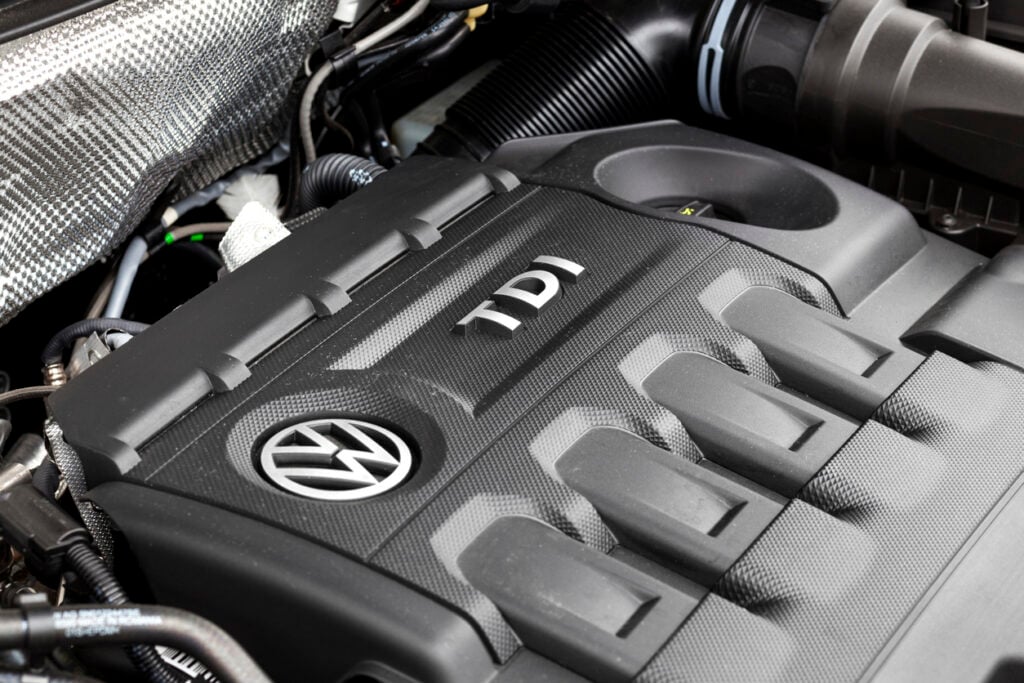
The most common cause is broken plastic lever inside the actuator. roughly 80% of cases. The VAG 2.0 TDI manifold (from about 2008 on) is plastic; its swirl flaps share one shaft, driven by the actuator motor through a small plastic lever. That lever cracks where it grips the shaft, the motor keeps moving but the flaps don’t, and P2015 is logged. TDIClub has tracked “the infamous P2015” for over a decade, and VW extended manifold warranty coverage to 120,000 miles on many cars, an admission of the design defect
The actuator motor itself can fail electrically. Although less common than the plastic lever breakage, electrical failure of the motor accounts for about 10% of cases. When this happens, the motor either won’t move at all or moves erratically.
The position sensor inside the actuator can fail. This represents about 5% of cases. The sensor reports incorrect position data even when the flaps and motor work correctly.
Carbon buildup can prevent the flaps from moving. On high-mileage vehicles that haven’t had the EGR system maintained, carbon deposits accumulate inside the intake manifold and physically prevent the flaps from moving. The actuator tries to move them, fails because of the carbon, and triggers P2015.
Wiring or connector issues at the actuator. Less than 2% of cases involve electrical connection problems. The connector at the actuator can corrode or develop bent pins, but this is rare compared to the mechanical failures.
Software glitches or false readings. Very occasionally, the code triggers without any physical fault. A simple code clear and ECU reset resolves these cases, although they’re uncommon.
P2015 On A 2.0 TDI, 2.0 TSI Or Audi 2.0 TFSI: Which Fix Do You Need?
One code, two different failures. The bracket fix in this guide is for the 2.0 TDI diesel. If your car is a 2.0 TSI or TFSI petrol, the plastic lever isn’t your problem and the bracket won’t fix it.
2.0 TDI, 2008 to 2015. The swirl flaps share one shaft and the flap motor turns it through a small plastic lever. The lever snaps, the motor keeps moving, the flaps don’t, and the ECU logs P2015. The manifold and the motor are fine. A metal repair bracket replaces the lever. This is the 80% case. Don’t confuse it with P2102, which belongs to the throttle valve at the manifold inlet, a different motor a few inches away.
2.0 TSI, 2008 to 2014 (Golf GTI Mk6, Tiguan, Passat CC, Jetta, Eos, Scirocco). Same idea, different part. A plastic stop on the actuator arm wears, the arm over-travels, and the code logs. A TSI-specific metal bracket stops the over-travel; the TDI bracket doesn’t fit. The position sensor is built into the manifold and VW only sells them together, so if the sensor itself has failed, or the manifold is cracked or carboned up, the fix is a new manifold. In the US, check the warranty extension below before you buy either.
Audi 2.0 TFSI, 2008 to 2012 (A4 B8, A5, Q5, engine codes CDN and CAE). These flaps are moved by a vacuum actuator, not a motor. The common failure is the rotating element inside the manifold breaking free of its housing, and that’s also a manifold. Before you order one, check the vacuum hose to the actuator and watch the actuator move with the engine running. A split hose or a stuck solenoid logs the same code and costs a few pounds.
If you’ve fitted a bracket to a diesel and the code came back, the motor or its sensor is the fault, and the motor is sold on its own.
How To Diagnose P2015 Fault Code Step By Step?
Diagnosing P2015 properly helps you confirm the actual cause before spending money on parts. Although the broken plastic lever is the most common cause, ruling out other possibilities saves you from wasted effort.
Where the actuator is
On a 2.0 TDI it’s the small black motor bolted to the end of the plastic intake manifold, on top of the engine where the pipe from the intercooler comes in. One wired plug, held on by Torx screws. On most cars you reach it after lifting the engine cover; on some, the intake pipe comes off first.
Step 1: Read the fault code properly
Plug in your scanner and read everything stored, not just P2015, you can read our on how to use an OBD2 scanner. Write down any other codes that come up with it.
Step 2: Look inside the actuator
Open the bonnet and find the intake manifold, the plastic part on top of the engine where the intake hoses connect. The actuator is the small motor bolted to its side with a wire going to it.
Undo the T-27 Torx bolts and pull the actuator off. Look into the opening. You should see the metal shaft the flaps sit on. If bits of broken plastic are lying in there, that’s your answer, the lever has snapped. Fit the bracket and you’re done.
Step 3: No broken plastic? Test the electrics
The motor should move when you put 12V across it. If it doesn’t, the actuator is dead and needs replacing.
Step 4: Check the connector and wiring
Inspect the electrical connector at the actuator for corrosion, bent pins, or loose connections. Wiggle the connector while monitoring live data on your OBD2 scanner. If the fault clears or worsens with movement, you have a wiring issue rather than an actuator issue.
Step 5: Use VAG-specific diagnostic tools if available
If you have VAG-specific tools like OBDeleven or VCDS, the adaptation values give you additional diagnostic detail, but they aren’t necessary for confirming the broken lever diagnosis.
Can I Fix P2015 Myself or Should A Garage Do It?
The DIY potential for P2015 depends heavily on which repair approach you choose.
Repair bracket installation is genuinely DIY-friendly. Anyone comfortable with basic engine bay work can complete the bracket installation in 1-2 hours. You need a T-27 Torx driver, a flathead screwdriver, pliers, and patience. The job involves removing the actuator, removing the broken plastic lever pieces from inside the manifold, installing the bracket assembly, and reinstalling the actuator. No specialist tools or diagnostic equipment are required beyond an OBD2 scanner to clear the fault code afterwards, the £30 Vgate I tested does that job.
YouTube has numerous walkthroughs specifically for VW 2.0 TDI repair bracket installation. The “ECS Tuning kit” mentioned in various tutorials is one popular option that includes detailed instructions.
Full manifold replacement is significantly more complex. Although still achievable for experienced DIY mechanics, the full replacement involves removing intake hoses, sensor connectors, fuel rail connections, EGR connections, and various other components. The job takes 4-6 hours for someone working carefully and requires more tools, more workspace, and more confidence.
If you’ve never worked on a VAG diesel engine before, the repair bracket approach is the right DIY choice. If you’re comfortable with engine work and want to address potential future issues simultaneously, the full replacement might be worthwhile but takes much longer.
Go to a garage when: there’s no broken plastic and the electrics test fine (they’ll smoke-test and check adaptations), the code returns after a new bracket or actuator, the manifold is heavily carboned inside, or you’d simply rather not pull parts off a diesel, an hour of labour is cheaper than a snapped bolt. If it’s going in, ask a VAG specialist for the bracket repair by name, or you’ll be quoted for the full manifold.
How Do I Reset The P2015 Code After The Repair?
Clear it with your scanner and the light goes off at once. The ECU checks flap position on every drive, so if the repair was right the code stays away. If it’s back within a drive or two, the lever wasn’t the cause; go back to steps 3 and 4 and test the motor and the wiring. Don’t disconnect the battery to clear it. On some cars that wipes the throttle adaptation, and it leaves a garage with nothing to read. Left alone, the light goes out by itself after three fault-free drives.
How Much Does It Cost To Fix P2015?
The repair cost varies dramatically based on which approach you choose.
| DIY bracket (parts) | Garage bracket fit | Independent, new manifold | Dealer, new manifold | |
|---|---|---|---|---|
| UK | £6–50 | £80–190 | £250–550 | £1,000–1,700 |
| US | $8–75 | $150–300 | $550–1,050 | $1,000–1,700 |
| Germany | €5–60 | €150–270 | €450–700 | €1,000–1,500 |
| Australia | AUD 10–110 | AUD 170–350 | AUD 700–1,300 | AUD 1,500–2,300 |
| India | ₹3,500–5,500 | ₹8,000–15,000 | ₹35,000–60,000 | ₹70,000–120,000 |
Prices checked September 2026. The bracket range runs from unbranded copies at the low end to the original Dieselgeek and EU-made kits at the top; they all do the same job, the branded ones just come with better instructions and a warranty. Garage figures assume 1 to 1.5 hours for a bracket and 3 to 4 hours for a manifold, plus a diagnostic read. Independents usually fit an aftermarket manifold, dealers fit the genuine part, which is most of the gap between those two columns. If a garage quotes near the manifold column for a 2.0 TDI, ask for the bracket repair by name before agreeing to anything.
The honest decision factor most owners miss
The full manifold replacement isn’t always necessary. Many independent garages and most dealers default to recommending full manifold replacement because it’s the “official” repair method. However, the repair bracket approach fixes the actual problem in around 80% of P2015 cases, the broken-lever share from the causes section above and saves hundreds of pounds or dollars.
The exceptions where full replacement makes more sense include vehicles with extensive carbon buildup inside the manifold (cleaning it costs almost as much as replacement), cracked or damaged manifold housing, or vehicles where multiple components have failed simultaneously.
For straightforward broken-lever cases, the repair bracket is the smarter financial choice. If a garage refuses to install the bracket and insists on full manifold replacement, get a second opinion from a different garage. VAG specialists are usually more familiar with the bracket approach than general garages.
Is There A P2015 Recall Or Extended Warranty?
There’s no recall for P2015, but if the car is in the US, ring a VW or Audi dealer with the VIN before you spend anything. VW extended the intake manifold warranty on the 2.0 TSI to 10 years or 120,000 miles, and it transfers to later owners. 2009 to 2014 TDIs that had the emissions fix carry an extended emissions warranty; the manifold isn’t named on it, but owners have had it replaced under it, so ask. In the UK and Europe there’s nothing, only goodwill, and only if you ask.
Which VW, Audi, and Skoda Models Get This Code Most Often?
P2015 affects most VAG vehicles with the 2.0 TDI engine built between approximately 2008 and 2015. The fault is essentially engine-specific rather than model-specific, so any vehicle using the affected engine variants shows similar failure rates.
| Brand | Most affected models (2.0 TDI, ~2008–2015) |
|---|---|
| VW | Golf Mk5/Mk6, Passat B6/B7, Tiguan, Touran, Caddy |
| Audi | A3 (8P), A4 (B8), A6, Q3, Q5 |
| Skoda | Octavia Mk2/Mk3, Superb Mk2/Mk3, Yeti |
| SEAT | Leon, Alhambra |
The Octavia vRS and Golf GTD use the same 2.0 TDI and the same manifold, so they get it too. The 2.0 TSI and TFSI petrols get it too, with a different fix, covered above.
Will P2015 Fail My MOT In The UK?
Yes, in most cases P2015 will fail your MOT. The illuminated check engine light alone causes a major defect failure under the emissions monitoring rules introduced in 2018, since P2015 is classified as an emissions-related fault.
If your car produces visible black smoke during the diesel smoke test, you’ll fail that portion of the inspection separately. A car with stuck flaps can smoke under acceleration, and if yours does, that’s a second failure on top of the light. The fault can also cause secondary DPF clogging issues that create their own MOT failure conditions.
Fix the fault before your MOT rather than hoping to pass with it active. The retest fees and urgent repair pressure that come with a failed test aren’t worth the gamble.
FAQs
Install a repair bracket kit. The kit replaces the broken plastic lever inside the actuator with a metal version, fixing the actual problem without replacing the entire intake manifold. The job takes 1-2 hours, costs £30-50 for parts, and works for around 80% of P2015 cases. Only choose full manifold replacement (£900-1,500 at a dealer) if your manifold housing has visible damage or extensive carbon buildup.
Costs range from £30 for DIY to £1,500 at a dealer depending on the approach. DIY repair bracket installation costs £30-50 in parts. Garage repair bracket installation costs £70-130. Independent garage full manifold replacement costs £400-700. Dealer full manifold replacement costs £900-1,500. The repair bracket fixes the same problem for a fraction of the dealer cost.
It can, but not always. Some owners feel nothing beyond the light. Others lose pull at low rpm, use more fuel and get black smoke under hard acceleration, and a few cars drop into limp mode. It depends on where the flaps stopped when the lever broke. The car still drives either way.
Some cars lose power and economy while the fault is active; others just show the light. Leave it for months and a smoking car will load the DPF faster and add carbon in the intake, so get it done, but it isn’t a tow-truck fault
The repair bracket works on most VAG 2.0 TDI engines including engine codes CFFA, CFFB, CFGB, CRBC, CRLB, and CUNA. When ordering, confirm the bracket is specifically listed for your engine code (visible on the engine itself or in your V5C registration document). Bracket designs vary slightly across engine variants, so matching the right kit to your specific engine matters.
Last Updated: September 2026

Founder of TheCarLane | Automotive Enthusiast
Ayush shares practical automotive knowledge based on real-world ownership and hands-on experience. His work focuses on diagnostics, engine systems, common car problems, and clear explanations that help everyday drivers understand their vehicles better.