

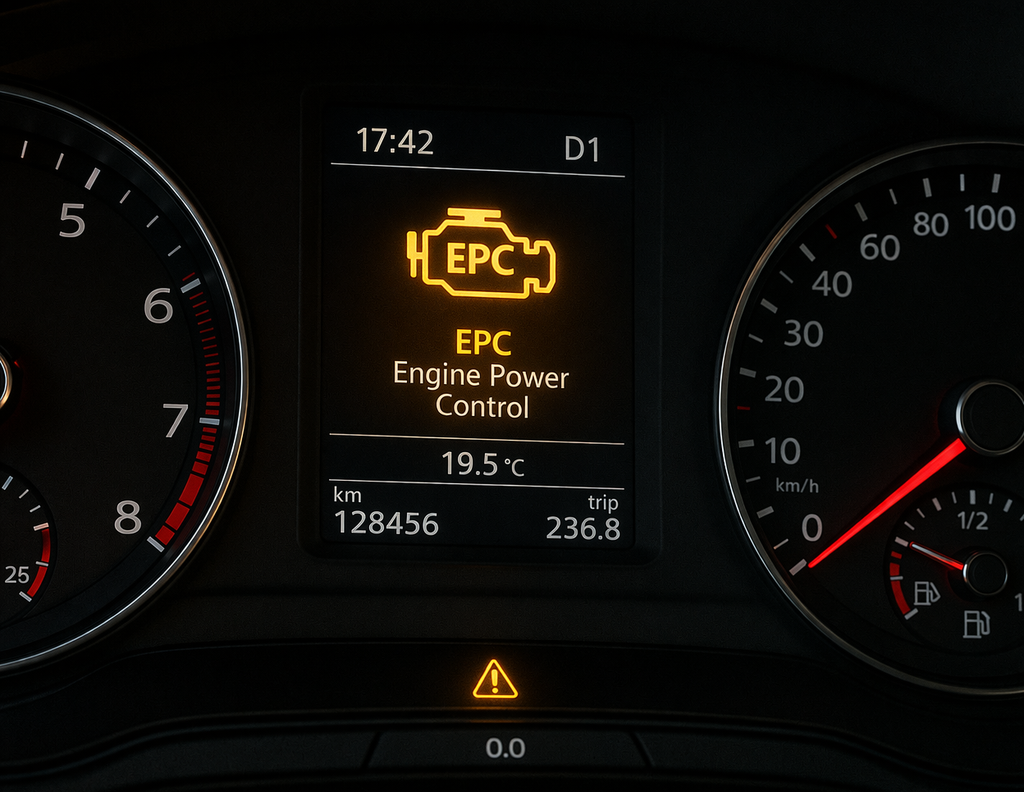
When the EPC light comes on specifically during acceleration, it means a fault in the throttle or engine management chain is revealing itself under load — not at idle, not at startup, but when the engine is working hard.
For a complete explanation of what the EPC system is, all causes, how to diagnose it, and repair costs — see our full EPC guide: What Does EPC Mean in a Car
Should You Keep Driving or Pull Over
Whether to keep driving depends on what the car is doing, not just that the light is on.
Keep driving cautiously if the car still moves normally with mild power reduction, the EPC light stays on steadily without flashing, there are no violent jerks, the engine isn’t shaking badly, and no burning smell is present. In this situation drive calmly, avoid hard acceleration, and plan to get it diagnosed within a day or two.
Stop driving if the car loses most of its power, the engine stalls or struggles to stay running, the EPC light is flashing, a flashing check engine light appears alongside it, or the car lurches badly under acceleration. These indicate the car has entered limp mode or detected a fault serious enough to limit driving. Continuing to accelerate hard in this state risks worsening whatever triggered the fault.
Most Likely Causes
Misfires under load Worn spark plugs or failing ignition coils often behave adequately at idle but fail when acceleration demands more from the ignition system. This is why the EPC light appears during acceleration but not at steady speed — the fault only surfaces under load. Slight shaking, hesitation, or rough acceleration alongside the EPC light points here.
Airflow or boost issues on turbocharged cars On turbo engines, acceleration increases boost pressure and places greater demands on the airflow system. A boost leak, faulty boost control valve, or incorrect airflow readings cause the EPC system to limit power as a protective response. If the EPC light appears specifically at higher revs or under hard acceleration on a turbocharged car, boost and airflow are worth checking.
Loose wiring or sensor connection faults Sometimes the fault isn’t the component — it’s the connection. Loose plugs, moisture ingress, or aging wiring cause intermittent EPC warnings that come and go unpredictably, particularly when the engine shifts under load and slight vibration affects marginal connections. These are among the harder faults to find without proper diagnostic equipment.
The EPC light appearing consistently in heavy traffic, hot weather, or stop-and-go conditions doesn’t mean those conditions caused the fault — it means increased engine temperature and more frequent throttle demands make an existing issue easier for the system to detect.
When the EPC Light Came On in My Skoda Rapid — What Actually Happened
On a return leg of a 175km highway drive, the EPC light came on in my Skoda Rapid around 30km from home. The symptoms hit immediately under acceleration — power loss, limp mode, jerking, and an almost unresponsive accelerator. I pulled over in an empty space and turned off the car for 5 minutes and started again with no EPC light, then as soon as I drove 500 meters, EPC light came again.
The pattern — fine at idle, triggering under acceleration, returning when load increased — pointed toward a pressure or sensor fault rather than a mechanical one. For the full story including how it was resolved, see the main EPC guide.
What You Can Check Without Tools
A few things are worth doing before a workshop visit. Note exactly when the light appears — only during hard acceleration, at a specific RPM range, when the engine is cold or warm, or consistently in certain driving conditions. This information is more useful to a mechanic than a vague description of the warning light. Check whether the check engine light is also on alongside the EPC light — two lights together narrow the cause. Look for obviously loose hoses or disconnected vacuum lines in the engine bay, particularly if the car is turbocharged.
What to avoid: don’t unplug sensors to test whether the light clears, don’t attempt throttle body cleaning without knowing the correct procedure for the specific car, and don’t keep accelerating hard to replicate the fault — modern electronic throttle systems are sensitive to ongoing faults and repeated hard acceleration can worsen the situation.
What to Do Next When EPC Light Comes On When Accelerating
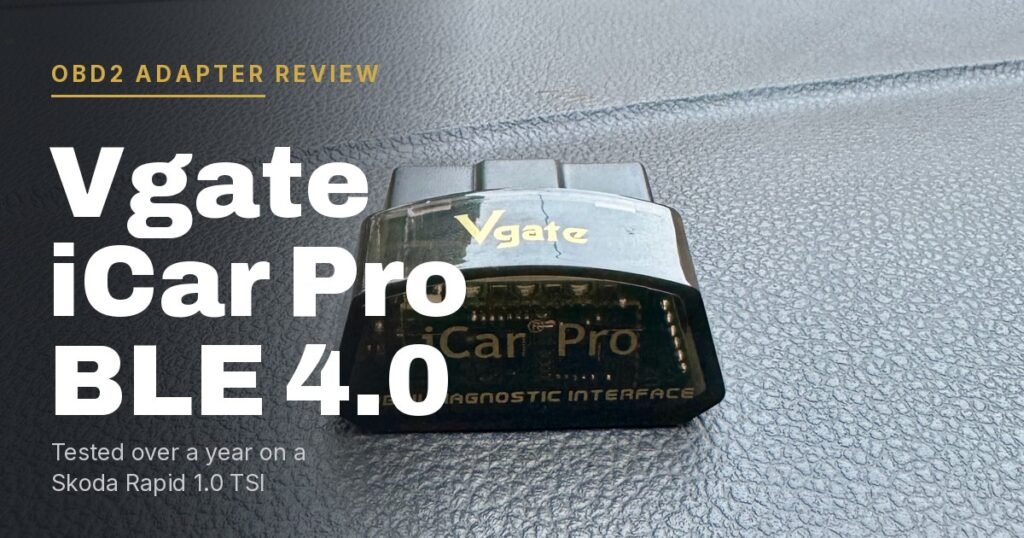
Run an OBD2 scan before anything else — it pulls stored fault codes that point directly toward throttle issues, pedal sensor faults, misfires, or airflow problems. Drive gently and avoid hard acceleration until you have a diagnosis. These codes remove most of the guesswork and prevent unnecessary parts replacement. If you have an OBD2 scanner, run it before the workshop visit and bring the codes with you.
Urgency depends on symptoms. A steady EPC light with mild power reduction and normal drivability can wait a day or two. Heavy power limitation affecting normal driving needs same-day attention. Multiple warning lights together or an unstable engine — stop driving and get it inspected before going anywhere else.
When to See a Mechanic
Book a diagnostic appointment if the EPC light returns repeatedly after restarting, if power loss is affecting normal driving, if multiple warning lights are appearing together, or if the fault code from an OBD2 scan points toward throttle body, sensor, or wiring issues that need proper equipment to confirm and fix. Early diagnosis is consistently cheaper than waiting — EPC faults that start as sensor or connection issues become more expensive when the underlying cause continues to run unaddressed.
Last Updated: April 2026
FAQs
Acceleration puts maximum demand on the throttle and engine management chain. Faults that are too minor to trigger the warning at idle or steady speed reveal themselves under the increased load of acceleration. The system is working as designed — it detected something before it became a bigger problem.
An OBD2 scan for stored fault codes. It identifies whether the fault is throttle-related, sensor-related, a misfire, or an airflow issue — and prevents guesswork and unnecessary parts replacement.
Yes — it’s one of the most common causes. A throttle body that doesn’t respond smoothly creates a mismatch between pedal input and throttle output that the EPC system detects and flags. Cleaning or replacing it resolves the fault in many cases.
Not exactly normal but not always serious. A light that clears once the engine warms up usually points toward a sensor reading outside normal range during cold start. If it happens every startup, scan for stored codes even if the car feels fine — a fault that’s consistently present during startup will eventually stop clearing on its own.