
If you own a Volkswagen Polo, Skoda Rapid, SEAT Ibiza or Audi A1 with the 1.0 TSI engine, the servicing schedule is straightforward once you understand what actually matters. This guide covers the real-world service intervals for stock, Stage 1 remapped, and Stage 2 remapped 1.0 TSI engines — based on my four years of daily ownership in a Skoda Rapid 1.0 TSI.
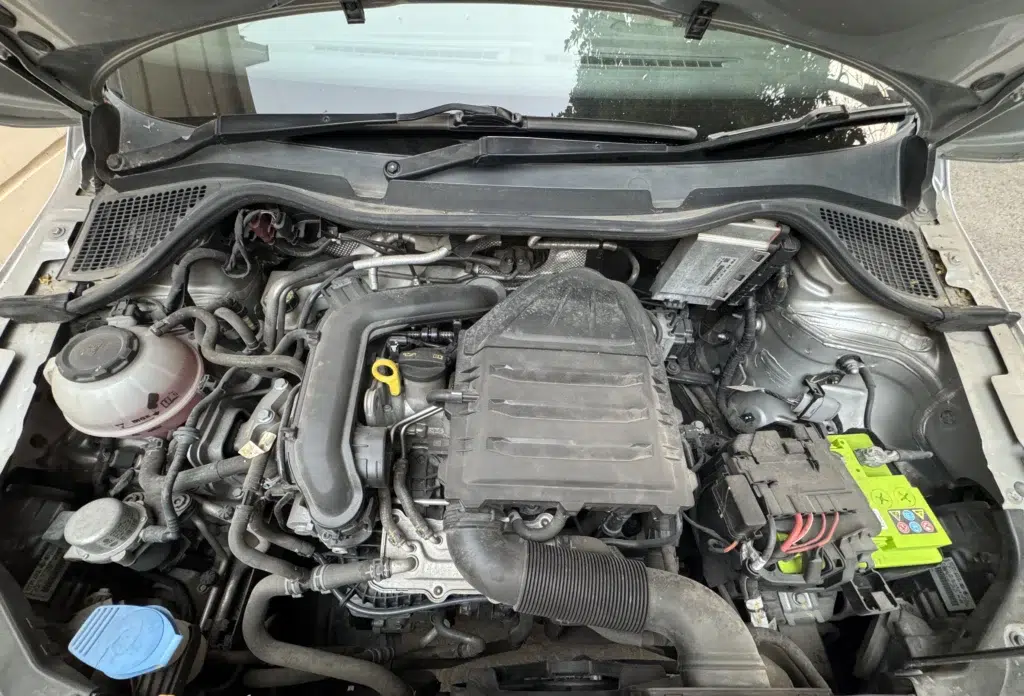
Fixed vs Flexible Servicing — Which One Is Your Car On
Before anything else, confirm whether your car uses fixed servicing or flexible servicing. Fixed servicing follows a set schedule — typically 1 year or a mileage limit, whichever comes first. Flexible servicing uses onboard oil monitoring to extend intervals based on driving conditions.
For most 1.0 TSI owners in the UK and India doing mixed urban and occasional motorway driving, fixed servicing is the safer and more practical choice.
If in doubt, follow fixed servicing. The cost difference between one extra oil change and an engine problem caused by degraded oil is not comparable.
How Driving Style Changes Your Service Needs
The way you use your 1.0 TSI matters as much as the calendar. Frequent short trips, cold starts, stop-start urban driving, and long idle periods put more stress on engine oil than steady motorway driving. The oil never fully reaches operating temperature on a short journey, which allows condensation and fuel dilution to build up over time.
This is why flexible servicing can mislead urban drivers. The onboard monitoring assumes a mix of driving conditions — if your car mostly does short trips around town, the system can be overly optimistic about how long the oil actually lasts. Fixed servicing at 1 year or 15,000 km removes that guesswork entirely.
Interim vs Full Service — What’s the Difference
On the 1.0 TSI, an interim service covers the essentials — oil and filter change, fluid top-ups, tyre check, and a basic safety inspection. A full or major service includes everything in the interim plus spark plugs, air filter, pollen filter, brake fluid assessment, and a thorough inspection of brakes, suspension, and steering. Most 1.0 TSI owners covering under 15,000 km per year need one full service annually — not an alternating interim and major pattern. If you cover more than 20,000 km per year, an interim at 10,000 km followed by a full service at 20,000 km makes more sense.
1.0 TSI Service Intervals — Standard Engine
The factory recommendation for the 1.0 TSI is every 1 year or 15,000 km — whichever comes first. In practice, for most UK and Indian owners doing mixed driving, that means annual servicing.
What happens at the annual service:
Stock 1.0 TSI — Annual Service Checklist
| Service Item | Interval |
|---|---|
| Engine oil & filter | Every service |
| Air filter | 15,000–20,000 km |
| Pollen filter | 15,000–20,000 km or annually |
| Spark plugs | 40,000 km |
| Brake fluid | Every 2 years |
| Coolant | Inspect annually |
| Tyre condition & pressures | Every service |
| Brake inspection | Every service |
| Battery health | Annually |
Based on factory recommendations for the 1.0 TSI on fixed servicing. Low-mileage cars still require annual servicing — oil degrades with time as well as distance.
Low mileage does not mean low maintenance
If you cover only 6,000-7,000 km per year, the engine still needs annual servicing. Oil degrades with time as well as distance. Repeated cold starts, condensation, and short trips age the oil faster than the odometer suggests. An annual oil change on a low-mileage car is never wasted money.
Stretched oil and short trips sit behind four of the five common 1.0 TSI faults, which is why the interval matters more on this engine than most.
What Four Years of Ownership Actually Taught Me

On my Skoda Rapid 1.0 TSI, I service at 1 year or 15,000 km — whichever comes first. In practice that means annual servicing since I cover around 9,000-10,000 km per year. I have kept the same interval since the Stage 1 remap and the engine has stayed clean and responsive throughout.
Two things four years of ownership taught me that no service manual will tell you:
First: Your car tells you when it is ready. Around 10,000-15,000 km or approaching a year, if the engine starts feeling slightly heavier and pickup feels less sharp than usual, that is your signal. Do not wait for the service indicator to flash. The car is communicating that the oil has degraded enough to affect performance.
Second: Do not treat service intervals as a finish line. At 7,000 km, if something feels off — unusual sounds, different throttle response, anything that makes you pause — take it in. Waiting until 10,000 or 15,000 km because the service is not due yet has caught people out. A timely oil change costs very little compared to what ignoring an early warning sign can eventually cost.
Stage 1 Remapped 1.0 TSI — How Service Intervals Change
A Stage 1 remap increases boost pressure, adjusts ignition timing, and raises torque output. The engine runs harder than stock, which puts additional stress on the oil over time. However, for most owners on a Stage 1 map with normal mixed driving, the standard service interval still applies.
Recommended Stage 1 service intervals:
Stage 1 Remapped 1.0 TSI — Recommended Service Intervals
| Service Item | Interval & Why It Changes |
|---|---|
| Engine oil & filter | 1yr / 10,000–12,000 km Do not stretch to 15,000 km — the remap increases combustion stress on the oil. |
| Oil specification | VW 508.00 only Not optional. Wrong spec causes gradual internal damage that takes months to show. |
| Spark plugs | 20,000–25,000 km Half the stock interval. Higher ignition load accelerates electrode wear — worn plugs cause misfires and P0301–P0303 codes. |
| Air filter | Check at 10,000 km / replace at 15,000 km More air through the engine means faster filter loading. |
| Brake fluid | Check annually / replace every 2 years Higher performance driving that often follows a remap increases brake usage. |
| DSG fluid | 40,000 km (if applicable) Down from 60,000 km — the remap increases torque through the gearbox. |
Intervals based on real Stage 1 ownership experience on a Skoda Rapid 1.0 TSI. If you cover more than 12,000 km per year on a remapped engine, bring the oil interval in to every 7,500 km.
Does a Stage 1 Remap Void My Service Plan
A Stage 1 remap does not automatically void a Skoda or VW manufacturer service plan, but it creates a grey area that dealers are not obliged to overlook. If a dealer identifies the remap during servicing they may raise questions about warranty coverage on related components — throttle body, turbo, and fuelling system in particular.
Two years into running a Stage 1 map on my Rapid and the authorised Skoda workshop has not flagged anything suspicious — the car goes in for its scheduled service, gets stamped, and comes out without any warranty or service plan complications. Stage 1 is a software-only change and in practice dealers rarely detect it during a routine service. Stage 2 is a completely different situation — hardware changes, upgraded components, and physical modifications are visible during inspection. At that point the warranty is gone and the service plan becomes void regardless of what you paid for it. If you are on Stage 2 or planning to go there, an independent VAG specialist is not just the cheaper option — it is the only realistic one.
Stage 2 Remapped 1.0 TSI — Service Intervals
Stage 2 is a fundamentally different situation. You are no longer driving a factory car with adjusted software — you have changed hardware, increased boost significantly, and the engine is operating well beyond its original design parameters. The standard service schedule does not apply.
Think of a Stage 2 engine like a performance athlete. The harder they train, the more recovery and care they need. Skip the recovery and performance drops fast.
Recommended Stage 2 service intervals:
Stage 2 Remapped 1.0 TSI — Recommended Service Intervals
| Service Item | Interval & Why It Changes |
|---|---|
| Engine oil & filter | 5,000–6,000 km — no exceptions Oil degrades significantly faster under Stage 2 operating conditions. |
| Oil specification | VW 508.00 — high temp stability Do not compromise on oil quality at Stage 2. Premium spec protects under sustained high boost. |
| Spark plugs | 15,000–20,000 km Higher boost and more aggressive ignition timing accelerate wear considerably. |
| Air filter | 10,000 km Performance air filter recommended at Stage 2. |
| Coolant system | Check every 6 months Stage 2 increases thermal load significantly — heat management becomes a genuine concern. |
| Turbo | Inspect every service Check oil feed and return pipes for seepage. Allow 90 seconds idle before switching off after hard driving. |
| DSG fluid | 30,000 km (if applicable) Down from 40,000 km on Stage 1 — higher torque output increases gearbox stress further. |
| OBD2 monitoring | Essential — not optional Regular scanning for pending fault codes, oil temperature monitoring, and boost pressure checks should become part of your routine. |
Stage 2 demands daily awareness, not just periodic servicing. The engine is operating beyond its original design parameters — treat maintenance as non-negotiable, not optional.
See our best OBD2 app guide for what to use on a VAG engine for scanning of pending fault codes and more.
Service Interval Comparison — Stock vs Stage 1 vs Stage 2
Service Interval Comparison — 1.0 TSI
| Service Item | Stock | Stage 1 | Stage 2 |
|---|---|---|---|
| Engine oil & filter | 1yr / 15,000km | 1yr / 10–12,000km | 5,000–6,000km |
| Spark plugs | 40,000km | 20–25,000km | 15–20,000km |
| Air filter | 15–20,000km | 15,000km | 10,000km |
| Coolant check | Annual | Annual | Every 6 months |
| Brake fluid | Every 2 years | Every 2 years | Annual |
| DSG fluid | 60,000km | 40,000km | 30,000km |
| OBD2 monitoring | Optional | Recommended | Essential |
Intervals are based on real 1.0 TSI ownership experience. Always verify timing belt intervals against your specific engine code and VIN.
What to Expect at the 60,000 km Service
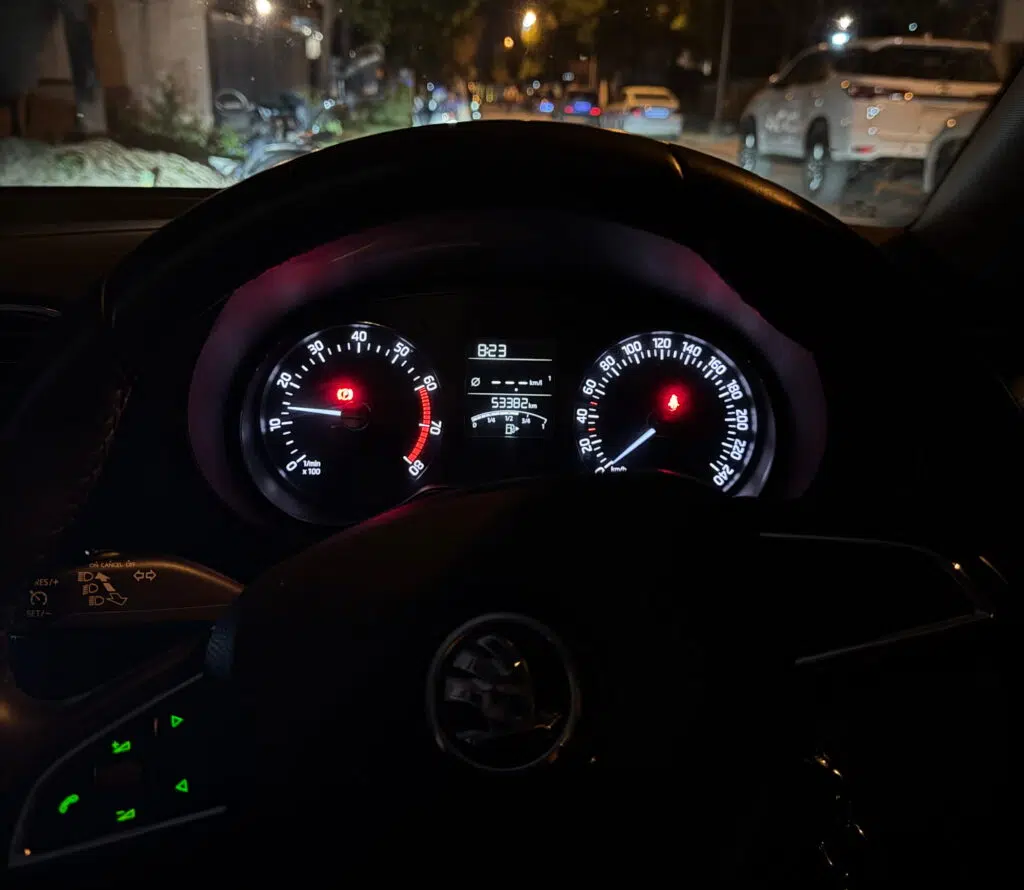
60,000 km is the first major convergence point on the 1.0 TSI where several items fall due simultaneously. Spark plugs reach their stock replacement interval, the timing belt should be inspected even if replacement is not yet required, and DSG fluid is due if applicable. On a Stage 1 remapped engine, this service is also the right point to assess intake valve carbon build-up — direct injection means no fuel washing the valves, and by 60,000 km deposits are forming, particularly on cars used mainly for short urban journeys. Approaching this milestone on my own Skoda Rapid now, the next service will cover timing belt inspection, intake valve assessment, and turbo actuator condition check alongside the standard items.
1.0 TSI Timing Belt Interval — Belt or Chain and When to Replace
The 1.0 TSI uses a timing belt — not a timing chain. The belt drives the camshaft and must be replaced at the correct interval to prevent catastrophic engine damage if it snaps.
The 1.0 TSI’s belt design is part of VAG’s EA211 family architecture, which replaced the older EA111 generation in 2014. The EA111 used both chains and belts depending on the variant, and the 1.4 TSI EA111 chain in particular has a well-documented failure problem on pre-2014 examples. If you’re considering an older VAG car or comparing engine generations, our EA111 timing chain or belt guide explains which engines used which timing system and what to watch for.
The official Skoda and VW recommendation for the 1.0 TSI timing belt is every 5 years or 90,000 km — whichever comes first on most variants. However this varies by engine code and market so always verify against your specific VIN using Skoda or VW’s official service data.
On a Stage 1 remapped engine the timing belt interval remains the same — the remap does not significantly affect belt wear. On Stage 2 with significantly higher boost and performance driving, inspect the belt at 60,000-70,000 km as a precaution even if replacement is not yet due.
The Oil Specification
The 1.0 TSI requires VW 508.00 specification oil — a fully synthetic long-life formula. This is mandatory regardless of whether the car is stock or remapped.
Common oils meeting this specification include Castrol Edge 0W-20, Mobil 1 ESP 0W-20, and Shell Helix Ultra ECT 0W-20. Using a cheaper oil that does not meet VW 508.00 spec — even if it claims to be suitable for petrol engines — causes gradual wear that becomes visible only after significant damage has occurred.
On a remapped engine, prioritise oil quality over interval length. A premium 508.00 spec oil changed at 10,000 km protects better than a budget oil changed at 15,000 km.
Common Mistakes 1.0 TSI Owners Make
Waiting for the service light instead of following a planned schedule is the most common mistake. The service indicator supports the schedule but does not replace it — especially on flexible servicing where the system can be overly optimistic about interval length.
Assuming all 1.0 TSI engines share identical intervals is another. The engine family spans multiple variants across VW, Skoda, SEAT and Audi with different engine codes and market specifications. Always verify against your specific engine code and VIN.
Using the wrong oil specification is the most damaging mistake. VW 508.00 is not a suggestion — it is an engineering requirement for this engine.
How to Find the Right Interval for Your Exact Car
Start with the owner’s manual and full service history. These show what the manufacturer intended and what previous owners actually did.
Use your engine code and VIN when checking timing belt, spark plug, and oil change intervals. VIN-level verification filters out the misleading advice that comes from mixing different 1.0 TSI variants in forum discussions.
For UK owners, the DVSA MOT history checker also shows annual mileage readings which can help you understand whether the car has been serviced appropriately relative to actual use.
Skoda and VW 4-Year Service Plans — Are They Worth It
Skoda and Volkswagen both offer fixed-price service plans covering scheduled maintenance over 4 years, giving owners predictable costs and guaranteed OEM parts. For a stock engine on standard driving the plan offers genuine value — fixed pricing protects against labour rate increases and ensures the correct oil specification is used throughout.
I purchased a Skoda Maintenance Plan in 2021 and my Rapid is still covered under it — meaning I have not paid separately for any annual service since purchase. The plan covers scheduled servicing at Skoda authorised workshops at a fixed price agreed at purchase. For a stock engine owner this represents genuine value and complete peace of mind. The complication only arises if you modify the car — which is why I would approach renewing differently now that the car is remapped.
For a remapped engine the calculation changes — manufacturer plans are designed around factory vehicles, and servicing at a main dealer with a modified car carries complications that an independent specialist simply avoids. Price an independent VAG specialist against the plan cost before committing — on a remapped 1.0 TSI the independent route almost always wins financially and practically.
Key Takeaways on 1.0 TSI Service Intervals
Match the interval to how the engine is actually used, not the longest number in the brochure. Stock engines need 1 year or 15,000 km — whichever comes first — even on low mileage. Stage 1 keeps the same annual structure but tighten the oil interval to 10,000-12,000 km. Stage 2 means 5,000-6,000 km between changes without exception. Across all three, VW 508.00 fully synthetic oil is non-negotiable — the wrong specification causes damage that only shows up once it is already expensive. And if the car starts feeling heavier and less responsive as the service approaches, that is your signal. Do not wait for the dashboard to tell you what the engine is already communicating.
Last Updated: April 2026
FAQs
It has a timing belt. Replacement interval varies by engine code but is typically every 5 years or 90,000 km on most variants. Always verify against your VIN.
Stock engines need servicing every 1 year or 15,000 km whichever comes first. Stage 1 tightens the oil interval to 10,000-12,000 km, Stage 2 requires every 5,000-6,000 km without exception.
Not dramatically for most owners. The oil interval should be shortened slightly and spark plugs replaced more frequently. The annual service structure remains the same.
VW 508.00 specification fully synthetic oil — typically 0W-20 grade. This applies to both stock and remapped engines. Do not substitute standard 5W-30 even if it is the only oil available.
No. A remapped engine runs harder than stock. Extending oil intervals beyond 12,000 km on a Stage 1 car increases wear risk. On Stage 2 the maximum interval is 6,000 km.
Gradual internal wear that develops slowly and becomes expensive. The 1.0 TSI is an engineered system designed around a specific oil specification. Using the wrong grade or spec compromises lubrication, increases friction, and shortens engine life.

Founder of TheCarLane | Automotive Enthusiast
Ayush shares practical automotive knowledge based on real-world ownership and hands-on experience. His work focuses on diagnostics, engine systems, common car problems, and clear explanations that help everyday drivers understand their vehicles better.