
A DSG service is a gearbox oil change, with a new filter on the 6-speed, and only the wet-clutch DSGs get one. The dry-clutch 7-speed (DQ200) has no oil service in Volkswagen’s schedule. Volkswagen Group UK’s trade guidance puts the 6-speed DQ250 at 40,000 miles for oil and filter, the DQ500 at 40,000 miles for oil, and the 7-speed DQ381 at 80,000 miles for oil. The level is set with the oil between 35 and 45 °C and the engine running. Expect about £280 in the UK at a dealer or an independent, $280 to $440 at a US dealer, and under $100 in parts if you do it yourself.
Do I need one? Only if your gearbox is a wet-clutch DSG (DQ250, DQ381, DQ500). The dry-clutch 7-speed DQ200 behind the smaller engines has no oil service.
How often? DQ250 and DQ500 every 40,000 miles; DQ381 every 80,000 miles, in VW Group UK’s trade guidance and in Volkswagen of America’s schedule.
What is done? About 5.5 litres of oil out and in through the overflow tube, a filter on the 6-speed, the level set at 35 to 45 °C with the engine running, adaptations reset.
Cost: about £285 average quote in the UK and £279 at a VW authorised repairer; $280 to $440 at US dealers; under $100 in parts yourself.
If I skip it? Clutches and the mechatronic wear in old oil, and that repair bill runs to four figures.
Can I do it myself? Yes, with a fill adapter, a scanner that reads gearbox temperature and a torque wrench. Setting the level is the part people get wrong.
Does Your Car Need a DSG Service?
Which gearbox you have decides it, not the badge or the age of the car. Volkswagen built three wet-clutch DSGs whose clutches run in oil, and one dry-clutch DSG whose clutches do not. The oil in a wet box is a service item; the dry box has no oil service in VW’s schedule. The gearbox code is on the data sticker and in the gearbox module’s identification screen on a scanner; the DSG gearbox problems guide shows three ways to find it.
| Gearbox | Clutches | Service | Interval | Fluid |
|---|---|---|---|---|
| DQ200 (0AM, 0CW), 7-speed | Dry | None in VW’s schedule | No service interval | G 055 512 A2, fill only |
| DQ250 (02E, 0D9), 6-speed | Wet | Oil and filter | 40,000 miles | G 052 182 A2 |
| DQ381 (0GC), 7-speed | Wet | Oil only | 80,000 miles | G 055 529 A2 |
| DQ500 (0BH, 0DL), 7-speed | Wet | Oil; filter in specialist kits | 40,000 miles | G 052 182 A2 |
The intervals and fluid numbers are Volkswagen Group UK’s, published for the trade, and Volkswagen of America’s maintenance schedule gives the same two intervals. The Audi longitudinal S tronic (DL382, DL501) follows the same logic with its own fluids and is not covered here. The hybrid DQ400e is a high-voltage job for a certified technician.
One thing the table cannot tell you: whether the car’s last owner did it. A wet box with no service stamp at 60,000 miles is due now, whatever the schedule says.
How Often Should a DSG Be Serviced?
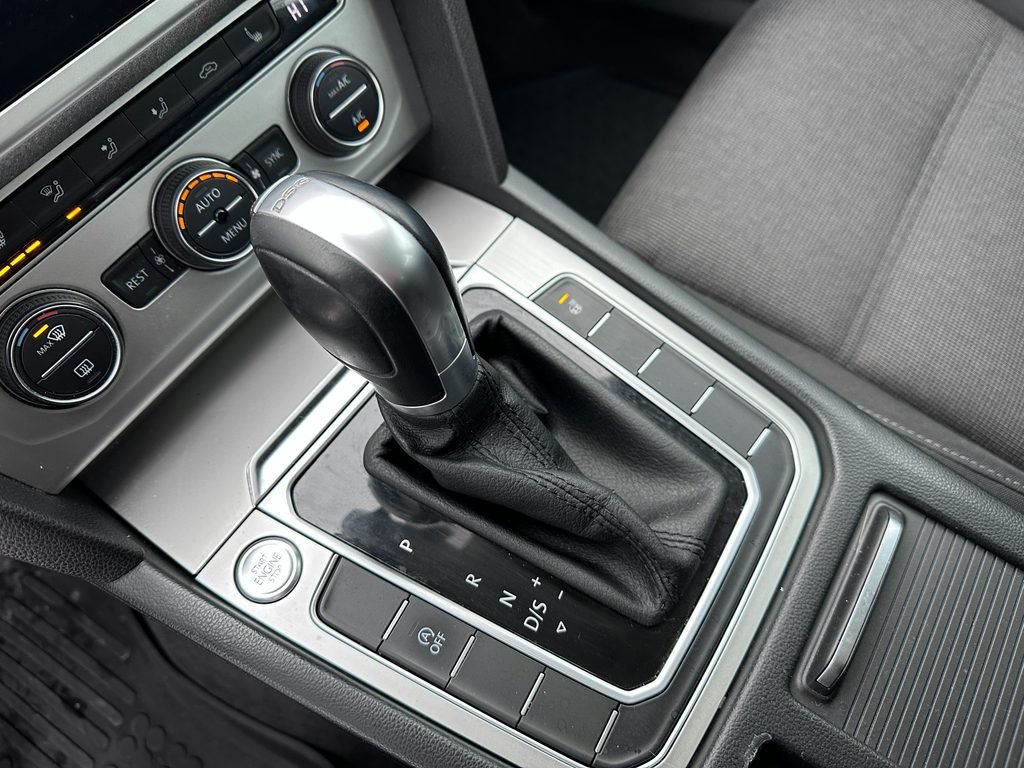
Every 40,000 miles for the DQ250 and DQ500, every 80,000 miles for the DQ381, in Volkswagen Group UK’s trade guidance. Volkswagen of America’s 2019 maintenance schedule says the same in two lines: “6-Speed DSG automatic transmission: change fluid and filter, every 40,000 miles” and “7-Speed DSG automatic transmission: change fluid (Golf GTI, Jetta GLI, Golf R only), every 80,000 miles”.
You will see six different numbers for this job. Each comes from somewhere:
- 40,000 miles: VW’s figure for the 6-speed and the DQ500, repeated by every garage and dealer.
- 80,000 miles: VW’s figure for the DQ381, which almost nobody passes on, so DQ381 owners are sold the 40,000-mile job twice as often as the schedule asks.
- 60,000 miles: a Manchester VAG specialist’s figure for the DQ381, and a fair compromise on a hard-driven car.
- 37,000 miles: what Transporter T6.1 owners say VW UK dealers have quoted for the DQ500 since mid-2026, which is 60,000 km. An owner report, so check your own schedule before you argue with a dealer.
- 20,000 to 30,000 miles: a parts retailer’s “best performance” interval, which sells more oil.
- Half the schedule: the tuner’s rule for remapped cars, towing and track days. Reasoning rather than a VW figure, and sensible for a Stage 1 Golf R.
VW’s published intervals are in miles. A four-year rule appears on some garage pages, not in the schedules.
What Does a DSG Service Include?
Five things, and a garage that does all five has done the job.
The Five Steps
- The old oil is drained through the overflow tube in the bottom of the gearbox. About 5 litres of the 5.5-litre change quantity come out; the rest stays in the clutches and the hydraulics, which is why the word “flush” is wrong for this job. Nothing is pumped through; the oil is drained and the level is re-set.
- On the 6-speed the filter cartridge is replaced with a new O-ring, the housing torqued to 20 Nm. However, the DQ381 has no filter change, because Volkswagen describes its filter as a lifetime part. Both VW schedules also list that service as fluid only. The DQ500 is likewise listed as fluid only. Still, a genuine filter exists for it and specialist kits include one, so ask what your garage fits.
- The gearbox is filled with the fluid for its code, by part number, through the overflow hole with Volkswagen’s filling adapter or an equivalent pump.
- The level is set by temperature. To begin with, Volkswagen’s instruction puts the car level and idling in P. The oil must also read 35 to 45 °C on a diagnostic tester. Then oil goes in until it runs from the overflow. Finally, once that slows to a drip, the plug goes back with a new seal at 45 Nm. Volkswagen’s note on the same page is the whole reason the temperature matters: too little or too much oil will impair the transmission.
- After that, a diagnostic tool resets the clutch adaptations, so the mechatronic relearns the bite points in fresh oil. Specialists list it; some garages skip it.
The DQ381, and What Is Not Included
The DQ381 is a different job. Volkswagen’s procedure for it drains the gearbox and the mechatronic through separate plugs, the mechatronic plug going back at 10 Nm plus a 45-degree turn, refills with 6 litres, and sets the level the same way at 35 to 45 °C with a note that overfilling damages the gearbox. A garage that services a DQ381 like a DQ250 leaves old oil in the mechatronic.
Not part of a DSG service: the clutches, the mechatronic unit, or any diagnosis of a fault. If the car judders or loses drive, that is a repair question, and the problems guide is where it is answered.
How Much Does a DSG Service Cost?
| What you pay for | UK | US |
|---|---|---|
| Garage does it: independent specialist | £285 | $300 to $450 |
| Garage does it: VW dealer | £279 | $280 to $340 |
| You do it: oil and filter kit, 6-speed DSG (DQ250) | £191 | $87 |
| You do it: oil kit, 7-speed wet DSG (DQ381) | £98 to £118 | $177 to $273 |
| You do it: oil fill adapter, bought once | £27 | $48 |
UK garage prices are a quote-site average and a Volkswagen authorised repairer’s fixed price. US garage prices are one independent’s and one dealer’s listed prices, so read them as examples. Checked November 2026.
Most of a garage bill is labour. A published 2016 US dealer invoice of $440 split into $240 labour, $125 of fluid, a $28 filter, an $11 gasket and $35 of disposal fees.
What pushes a quote up: a filter charged on a gearbox that does not take one, a “flush” instead of a drain and refill, and three hours of labour for a job a national fast-fit chain times at one to two. What a missed service leads to is on the DSG replacement cost page.
Signs the Service Is Overdue
Old oil can show in the way the car drives. First, the shifts become harsher or slower than they used to be. A wet box with no service stamp in the book may also shudder as you pull away. In addition, the gearbox temperature warning can come on in slow traffic, even though the car never showed it before. These signs point at old oil rather than a fault, so fresh oil is the cheapest first step. It is also the step the schedule asks for anyway.
Anything beyond that, a flashing PRNDS, lost drive, no reverse, a bang into gear, is a fault with a code behind it, and it belongs on the problems guide, not on a service invoice.
DIY or Garage?
To do it yourself you need a fill adapter that screws into the overflow hole (Volkswagen’s is the VAS 6262A; aftermarket pumps do the same job), a scanner that reads the gearbox oil temperature from the transmission module, a torque wrench for the 45 Nm plug and the 20 Nm filter housing, and the fluid for your gearbox code. With those, a 6-speed is an afternoon on a level drive with the car raised at all four corners.
A home job goes wrong in three places. The level comes first, because setting it with the oil cold or too hot leaves it wrong. The window is 35 to 45 °C, and Volkswagen also says the gearbox must not be above 45 °C when you start. Next comes the oil, since only the part number for your gearbox code is right. Finally, the DQ381 is not a one-plug gearbox: it has two drain plugs, and both have to come out. A garage can make the first two mistakes as well, so the next section lists what to ask.
So leave it to a garage if the car has the DQ381 gearbox or 4Motion. Likewise, book it in if you cannot raise the car level, or if you have no way to read the gearbox temperature. When you do, choose a VAG specialist rather than a general garage, because the job depends on the right fluid and the temperature window. A specialist also has the fill adapter on the shelf.
What to Ask the Garage
Five questions, before you book and again on the invoice:
- Which fluid part number went in, and does it match my gearbox code?
- Does my gearbox take a filter, and was it changed with a new O-ring?
- Was the level set with the oil between 35 and 45 °C and the engine running?
- Were the clutch adaptations reset afterwards?
- Is the gearbox code written on the invoice?
A garage that answers all five has done the job as Volkswagen describes it. One that calls it a flush, or quotes a filter for a DQ200, has not read the schedule.
The Dry-Clutch 7-Speed: What Service Means for It
If your car has the DQ200, the dry-clutch 7-speed behind the smaller engines, there is no oil service to book: the gear oil has no service interval in Volkswagen’s schedule. The mechatronic unit has its own small reservoir of hydraulic oil, and that oil was the subject of Volkswagen’s 2013 recalls in China and Hong Kong, covered on the problems guide. A “DSG service” quote for a DQ200 can fairly contain a fault-code read, a clutch adaptation and an inspection for leaks; it cannot contain a gearbox oil and filter change, because the gearbox has neither to change.
Sources
- TPS (Volkswagen Group UK trade parts), DSG servicing: intervals and fluid part numbers by gearbox.
- Volkswagen workshop manual, 02E DSG transmission oil level, checking and filling: the 35 to 45 °C window, engine running in P, 45 Nm plug, the overfill and underfill warning.
- Volkswagen workshop procedure, 0GC (DQ381) gear oil change: separate gearbox and mechatronic drain plugs, 6 litres, 35 to 45 °C, the overfill warning.
- Volkswagen self-study programme 850183 on the DQ381, as summarised by Kfz-Dietrich, a German master workshop: the lifetime filter.
- febi bilstein technical tip, DSG filter and oil servicing: 5.5 litres, 20 Nm filter housing, 3 Nm overflow tube, 45 Nm drain plug.
- Volkswagen of America, 2019 maintenance schedule, all models (NHTSA document MC-10168645): 6-speed DSG fluid and filter every 40,000 miles; 7-speed DSG fluid every 80,000 miles.
- FixMyCar, DSG gearbox service and oil change: quote averages, November 2026.
- Swansway Volkswagen (authorised repairer), fixed-price DSG oil change £279, 2025 programme.
- Volkswagen Clarksburg (US dealer), DSG service pricing, March 2026.
- Cox Motor Parts, genuine DSG oil and filter kit and genuine transmission fluid G 055 512 A2; Heritage Parts Centre, 7-speed DSG oil service kit; idparts, DSG service kit 40k.
- cars.com, long-term 2013 Jetta TDI, DSG service invoice, 2016.
- Halfords DSG servicing page (interval wording and job time) and Awesome GTI’s DSG service page (the 60,000-mile DQ381 figure and the halving rule).
- Owner reports: the r/GolfGTI “What I paid for DSG service” and “To DSG service or not” threads; the T6 Forum thread on the 2026 DQ500 interval change.
FAQs
It replaces about 5.5 litres of the gearbox oil that the wet clutches and the mechatronic run in, changes the filter on the 6-speed, and sets the level at 35 to 45 °C so the clutches get the right amount of clean oil. It does nothing for a dry-clutch 7-speed, which has no oil service.
They are the same job. About £280 in the UK, with dealers and independents within a few pounds of each other; $280 to $440 at US dealers. Parts for a home job are £100 to £190 in the UK and about $87 in the US.
On a wet-clutch DSG, yes: Volkswagen schedules it, and old oil is what wears the clutches and the mechatronic. On the dry-clutch DQ200 there is no oil service, so there is nothing to pay for.
The one Volkswagen specifies for your gearbox code: G 052 182 A2 for the DQ250 and DQ500, G 055 529 A2 for the DQ381. Any brand that meets that specification is fine; the wrong specification is what damages the gearbox.
Direct Shift Gearbox, Volkswagen’s name for its dual-clutch automatic: two clutches, one for the odd gears and one for the even, so the next gear is already selected when you shift. Audi calls the same thing S tronic.
The dry-clutch 7-speed built from 2008 to about 2013 carries most of the reputation, for reasons that have nothing to do with servicing; the problems guide covers the years, the faults and the fixes.
Last Updated: November 2026

Founder of TheCarLane | Automotive Enthusiast
Ayush shares practical automotive knowledge based on real-world ownership and hands-on experience. His work focuses on diagnostics, engine systems, common car problems, and clear explanations that help everyday drivers understand their vehicles better.