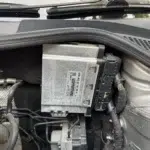

A Stage 1 remap on the 1.0 TSI delivers 20 to 26 percent more torque, removes throttle lag immediately, and transforms mid-range pull without any hardware changes. This stage 1 remap review is based on two years and 25,000 km of daily driving on my Skoda Rapid 1.0 TSI with a Quantum Red map, the same engine I’ve reviewed in full here. At ₹22,000 to ₹28,000 in India or £250 to £350 in the UK, Stage 1 is the highest-value upgrade I’ve made to this car, and this page shows the two years of data behind that claim.
Stock vs Stage 1: Actual Numbers from My Skoda Rapid 1.0 TSI
| Parameter | Stock | Stage 1 (Quantum Red) | Gain |
|---|---|---|---|
| Power | 110 PS (109 bhp) | 130–135 PS (132–134 bhp) | +25 PS |
| Torque | 175 Nm | 210–220 Nm | +45 Nm |
| 0–100 km/h | ~10.8 s (manual) | ≈ 9.2 s | −1.5 s |
That’s roughly a 20–26% torque increase.
Figures from the Quantum Red map on my India-spec 1.0 TSI, real OBD data, not dyno estimates. Note for UK and EU readers: the Indian 110 PS engine is factory-rated at 175 Nm; the European version of the same engine is rated 200 Nm stock and typically tunes to around 240 Nm, so your before/after numbers will sit higher than mine while the percentage gain stays similar.

Real OBD Logs: Boost, AFR, Trims, IAT
OBD Live Log Clip – RPM, MAP, AFR (1.0 TSI Stage 1)
Recorded using OBD2 scanner during a 3rd-gear pull on a 1.0 TSI Stage 1 remap. Shows RPM rise, MAP boost pressure, and AFR changes under acceleration.
I’ve broken this exact pull down frame by frame, boost, trims and timing through the whole run in my Stage 1 remap before and after data article.
Reading The OBD2 Clip
| Parameter | What it shows | What to look for |
|---|---|---|
| MAP (psi) | Boost pressure inside the intake manifold | Rises as the turbo spools under acceleration |
| AFR | Air-to-fuel ratio, 14.7 is the stoichiometric ideal | Drops rich (lower number) under hard acceleration |
| IAT (°C) | Temperature of air entering the engine | Slight rise during pulls is normal, cooler is better |
| RPM | Engine speed in revolutions per minute | Climbs quickly during acceleration pulls |
| Power (hp) | Estimated output based on fuel consumption | Not dyno-accurate but shows relative engine load |
All data logged using the Vgate iCar Pro Bluetooth OBD2 scanner paired with Car Scanner on iPhone. The clip shows real-time boost buildup, AFR dropping rich under acceleration, and MAP climbing as the turbo spools, exactly what a healthy Stage 1 map looks like under load. AFR alone tells you what’s happening in the moment, but short term fuel trim (STFT) readings reveal whether the ECU is having to correct for it, which matters more for long-term health on a remapped engine.
What Stage 1 Actually Changes

Stage 1 immediately removes throttle lag. The car responds earlier, pulls with less hesitation, and feels noticeably lighter at low speeds. Engine vibration at idle also reduced slightly after the remap. The rest of the difference lives in the mid-range and I’ve covered exactly how that feels, road by road, in the daily usability section below.
Is Stage 1 Tune Safe?
Yes, Stage 1 is safe on a stock, well-maintained turbocharged engine when the map is written for your exact engine code and you run the fuel it requires. Two years and 25,000 km on my own Stage 1 Skoda Rapid: no fault codes, no turbo issues, no unusual oil consumption.
For the full safety picture, engine life, the real risks, and long-term ownership, read my dedicated guide: is a Stage 1 remap safe?
Real-World Clip – 20 to 80 km/h Acceleration (2nd Gear)
Here is a real 2nd-gear 20–80 km/h pull after Stage 1, so you can see the actual difference instead of reading theory.
In 2nd gear the turbo begins spooling around 1,700 RPM and comes on full boost past 2,000 RPM. This pull was made at roughly 70% throttle, at full throttle the car reaches 100 km/h considerably quicker.
Before You Remap: The 10-Minute Checklist
A remap amplifies whatever condition your engine is already in, a healthy engine gets a great map, a neglected one gets its weaknesses turned up. Before booking, check these:
- Service history current. Oil and filter fresh, or done at the same time as the remap. The turbo works harder under boost and clean oil is what protects it.
- Spark plugs within interval. Old plugs that cope at stock boost start misfiring at Stage 1 pressures.
- No stored fault codes. Scan the car before you remap, a £20 adapter does it. A pending code that’s harmless stock can become a real problem tuned, and you want to know it existed before the map, not argue about it after.
- Clutch healthy. No slipping, no juddering. Stage 1 adds around 45 Nm and a worn clutch is where you’ll feel it first.
- Budget for better fuel permanently. The map assumes 95+ octane every tank, not just on weekends.
And four questions to ask the tuner before paying: Is the file written for my exact engine code, not a generic 1.0 TSI file? Do you keep a backup of my stock map? What aftercare do you provide if something feels off? Can you flash back to stock before dealer visits, and what does that cost? A good tuner answers all four without hesitation. A tuner who dodges any of them just answered a fifth question you didn’t ask.
Stage 1 Remap Cost in India & UK
Stage 1 Remap Cost — India & UK
| Tuner | Approx Price | Notes |
|---|---|---|
| 🇮🇳 India | ||
| Quantum Tuning India | ₹22,000 – ₹28,000 | Upper-tier map, lifetime backup |
| Code6 Tuning | ₹18,000 – ₹25,000 | Linear, mild mid-range |
| Wolf Moto | ₹20,000 – ₹25,000 | Popular in South India |
| Pete’s Performance | ₹25,000+ | Premium after-sales support |
| 🇬🇧 United Kingdom | ||
| Quantum Tuning UK | £250 – £350 | Remote or mobile, VAG specialist |
| Revo | £350 – £500 | Dealer network, switchable maps |
| Bluefin (Superchips) | £300 – £400 | Handheld device, DIY flash — easy to revert to stock |
| Independent VAG tuner | £200 – £350 | Varies by region and tuner experience |
Prices are approximate and vary by city, tuner, and whether the remap is done remotely or in-person. Always choose a tuner with specific experience on your engine code — a map written for the 1.0 TSI EA211 will perform and protect better than a generic file.
Reliability & Maintenance
After nearly two years and ~25,000 km of Stage 1 use, this has been my experience from a reliability and maintenance perspective:
- No check engine lights or ECU-related errors so far
- Clutch has remained healthy in my usage, without unusual slipping or issues
- Engine oil changes done at regular service intervals
- Spark plugs replaced as part of routine maintenance based on recommended intervals
- Consistent use of good-quality fuel to keep injectors clean
For the exact service intervals recommended for a Stage 1 remapped 1.0 TSI, see our 1.0 TSI service intervals guide.
One thing that has mattered consistently is fuel quality. Lower-octane fuel can lead to timing pull or knock correction in tuned cars, so I’ve personally avoided regular 91 RON and stuck to higher-octane fuel (XP95 / 97) wherever available.
Turbo health has also remained normal after two years and 25,000km. No unusual noises, no boost irregularities, and oil consumption has stayed within the expected range. Regular oil changes at the correct intervals matter more for turbo longevity on a remapped car than anything else, the turbo runs harder under boost and clean oil is what protects it.
Popular Stage 1 Tuners Worldwide
In the UK and Europe, Quantum Tuning, Revo, and Bluefin are well-established options with strong reputations for VAG engines specifically. In the US, APR and Unitronic are the most respected names for VW Group cars. Gains vary by tuner and engine code, expect 15-30% torque increase on a 1.0 TSI regardless of who does the map, provided the tune is written specifically for your engine rather than a generic file.
Daily Usability: City, Highway, Hills
The numbers tell you the engine makes more torque. They don’t tell you how the car actually behaves. After 25,000 km, here’s what changes and what doesn’t.
City and stop-go traffic. Stage 1 fixes the 1.0 TSI’s lazy throttle below 2,000 RPM. The car holds 2nd without judder, pulls cleanly from 1,900 RPM, and responds to small pedal inputs predictably instead of in the rubber-band way stock 1.0 TSIs sometimes do. Less shifting, less throttle modulation, less tiring overall.
Highways. This is where Stage 1 transforms the car. Half-throttle overtakes that needed a downshift now happen in the same gear with room to spare. The engine wakes up around 1,800 RPM and pulls cleanly to 6,000. Cruising at 100-120 km/h needs noticeably less throttle.
Hills and twisties. Short corners in 2nd are easier you ride torque instead of chasing revs. The strong-pulling band widens from stock’s narrow 2,500-4,000 RPM to roughly 1,900-4,500 RPM.
Fuel efficiency
| Driving condition | Stock | Stage 1 |
|---|---|---|
| City (calm) | 11–12 km/l | 10–11 km/l |
| Highway (under 2,000 RPM) | 18–21 km/l | 15–18 km/l |
| Aggressive | — | drops 3-5 km/l further |
The remap doesn’t burn more fuel on its own. Driven calmly, mileage stays within 1-2 km/l of stock. Push it consistently and expect a 3-5 km/l drop.
Stock, the car is adequate. Remapped, it’s eager but it remains easy to drive calmly when you want to.
It’s always recommended to use good tyres on a remapped car for better handling and performance on highways and cities, I am using Bridgestone Sturdo tyres on my Skoda Rapid which gives the car a smooth ride and stability.
Stage 1 Remap Pros & Cons (For All Cars)
Pros
- Strong mid-range
- Faster overtakes
- Better throttle mapping
- More usable torque
- Smoother power delivery
Cons
- Slightly more heat
- Lower mileage when driven hard
- 95 RON recommended
- Warranty void
Risks & Precautions
| Risk | What it means | How to avoid it |
|---|---|---|
| Warranty void | ECU checksum change is detectable by dealer diagnostics | Flash back to stock before dealer visits, but know that VAG dealer tools can log flash counters, so reverting reduces the chance of detection rather than guaranteeing it |
| Knock on poor fuel | Low-octane fuel causes detonation and timing retard | Use XP95 or higher, avoid 91 RON wherever possible |
| Higher EGT | Turbo heat rises under sustained boost | Idle for 1 minute after any spirited run before switching off |
| Clutch stress | +45 Nm of extra torque load on the stock clutch | Avoid aggressive launches, use correct gear oil |
| Insurance disclosure | An ECU modification is a declarable mod | Declare it, in the UK an undeclared ECU remap can invalidate a claim entirely, not just raise your premium |
For a daily driver, Stage 1 remains within safe hardware limits.
Is Stage 2 Worth the Upgrade Over Stage 1?
| Parameter | Stage 1 (Quantum Red) | Stage 2 (typical setup) |
|---|---|---|
| Power | 130–135 PS | 150–160 PS |
| Torque | 210–220 Nm | 240–260 Nm |
| Hardware | Stock, no changes needed | Downpipe + intake + intercooler |
| Cost | ₹22,000–₹28,000 | ₹70,000–₹1.2 L |
| Reliability | High | Moderate, heat management needed |
Pick Stage 1 if you daily the car, drive mixed city/highway, and want effortless mid-range with stock-like manners. Go Stage 2 only if you’re willing to add a high-flow downpipe, intake and preferably a better intercooler, plus budget for extra maintenance and heat management. The upgrade shines during repeated highway pulls or track days, not in bumper-to-bumper traffic. Still undecided? Run Stage 1 for six months, you’ll learn exactly what, if anything, you still miss.
If you’re wondering whether it’s worth moving to Stage 2, I’ve covered a complete guide to car tuning stages with power, cost, and reliability differences.
Most Commonly Remapped Engines for Stage 1
The 1.0 TSI, 1.4/1.5 TSI and 2.0 TSI are among the most remapped VAG engines globally because the factory maps are notably conservative and the turbo hardware has significant headroom. Results are consistent and well-documented across thousands of cars. Beyond VAG, Stage 1 tuning is also popular on BMW B47 and B57 diesel engines, Ford EcoBoost units, and Renault turbocharged petrols, all platforms where the stock ECU calibration leaves measurable performance untapped.
Supporting Mods That Enhance Stage 1 Remap
- BMC / K&N Panel Filter – improves airflow.
- VW 508.00 fully synthetic 0W-20 – mandatory for the 1.0 TSI whether stock or remapped
- Turbo Muffler Delete – louder, sportier turbo whistle. No measurable performance or spool change; it’s a sound modification, not a power one.
- OBD2 Monitor – track boost, IAT, timing.
- XP95 fuel only – ensures consistency and smooth timing advance.
My Take – Is Stage 1 Worth It?
Yes, on any modern turbocharged petrol engine, and especially on the 1.0 TSI where the factory map is conservative enough that gains are felt immediately in daily driving.
For under ₹30,000 in India or £350 in the UK, you get 20-25 PS, 35-45 Nm of additional torque, and a fundamentally different throttle character, without touching any hardware. Two years and 25,000 km on the same Quantum Red map have produced no fault codes, no turbo issues, no clutch wear beyond normal.
| Aspect | Score | Notes |
|---|---|---|
| Performance gain | 4.8 / 5 | Mid-range kick is addictive. Strongest improvement in daily driving. |
| Reliability | 4.5 / 5 | Two years on, none of the 1.0 TSI’s known problems have shown up either, mapped or not. |
| Fuel efficiency | 4.0 / 5 | Slight drop of 3–5 km/l if driven hard. Calm driving stays close to stock. |
| Value for money | 5.0 / 5 | ₹25,000 for the transformation. Best-value performance upgrade on the 1.0 TSI. |
Will Stage 1 be worth it for you?
- Daily commuter / weekend driver: Yes. The mid-range is felt in every drive.
- Highway tourer: Yes. Safer overtakes, calmer cruising. Probably the biggest day-to-day benefit.
- Track or autocross: Stage 1 alone hits heat-management limits. You’ll want Stage 2 with cooling upgrades.
- Stop-go urban traffic only: Smaller benefit. You’ll feel the smoother low-RPM response but won’t access the mid-range Stage 1 most transforms.
The only case where Stage 1 isn’t worth it is if you never access the mid-range. For everyone else, it’s the highest-value performance modification available on a turbocharged car. Two years in, I’d do it again without hesitation.
Owner Profiles: Will You Enjoy It?
- Commuter with weekend runs: Yes – less shifting, easy overtakes.
- Highway tourer: Yes – safer, shorter passes and calmer cruising.
- Track/autocross: Consider Stage 2 + cooling.
- Fuel-price watcher: Drive gently and economy stays close to stock.
Last Updated: July 2026 – updated with 2nd gear pull clip , turbo health observations, long-term fuel efficiency data, pre-remap checklist and OBD log clips from two years of Stage 1 use.
Note
ECU tuning affects warranty, emissions compliance, and road legality depending on your location. This article is based on personal experience and is for informational purposes only. Always consult a qualified tuner and check local regulations before modifying your vehicle.
FAQs
Yes, Stage 1 is worth it on any modern turbocharged petrol engine. On the 1.0 TSI it delivers 20 to 25 percent more torque, removes throttle lag, and improves mid-range pull for under ₹30,000 in India or £350 in the UK. After two years and 25,000 km the reliability picture is identical to stock.
Yes, provided the map is calibrated for your specific engine code, you use the tuner’s recommended minimum octane fuel, and you maintain regular oil change intervals. Thousands of VAG owners run Stage 1 for 100,000 km or more without mechanical issues.
Detection depends on the manufacturer, diagnostic depth, and service procedures. While some remaps may not be immediately flagged during routine servicing, ECU modifications are technically detectable.
Driven calmly, fuel economy stays within 1 to 2 km/l of stock. Driven hard consistently, expect a 3 to 5 km/l drop. The remap does not burn more fuel on its own, your driving style determines the outcome.
Low risk when the map is written specifically for your engine code and you use the recommended minimum octane fuel. Stage 1 operates within factory hardware limits. The main risks are warranty voiding and knock on low-octane fuel, both avoidable.
ECU remapping sits in a legal grey area in India. No law explicitly prohibits it but modifications altering type-approved specifications technically require RTO approval under the Motor Vehicles Act. Enforcement is rare in practice but check your insurance policy before remapping.

Founder of TheCarLane | Automotive Enthusiast
Ayush shares practical automotive knowledge based on real-world ownership and hands-on experience. His work focuses on diagnostics, engine systems, common car problems, and clear explanations that help everyday drivers understand their vehicles better.