

The P20EE code indicates “SCR NOx Catalyst Efficiency Below Threshold (Bank 1).” Basically, your diesel’s AdBlue system isn’t removing enough nitrogen oxide from the exhaust, so the car has flagged it. On VW, Audi, Skoda and SEAT diesels, though, the name is a bit misleading: it points at the catalyst, but the real cause is usually something far cheaper, such as old AdBlue, a NOx sensor or the dosing system. The catalyst itself is rarely the problem.
You can usually keep driving in the short term, although it helps to understand the few situations where you shouldn’t leave it. So this guide explains what the code means in plain terms, what might be behind it, what you can sensibly check or note down yourself, and what to expect when you take the car in. That way, you arrive understanding the problem instead of guessing.
What Is The P20EE NOx Catalyst Efficiency Below Threshold Code?
The P20EE fault code is described as “SCR NOx Catalyst Efficiency Below Threshold (Bank 1).” It’s a technical name but it makes sense when you understand how the system works.
Modern VW, Audi and Skoda diesels use a system called SCR – Selective Catalytic Reduction – to keep their exhaust within legal emissions limits. The car injects a fluid called AdBlue into the exhaust. This fluid reacts with the harmful nitrogen oxide gases in the catalyst and turns them into harmless nitrogen and water. Two sensors monitor this process, one before the catalyst and one after, and the car’s computer compares their readings to determine how well the cleaning is working.
If this judgement remains below the level that the car expects for some time, the car will record P20EE and illuminate the engine management light. So – in layman’s terms – the car is telling you that the emissions cleaning is below par. What it can’t tell you is why. And figuring out that gap is the key to not overpaying later.
What’s The Difference Between P20EE and P20EE00?
If you read the fault with OBDeleven, VCDS, Carista or a garage’s dealer system, you’ll see it written as P20EE00 rather than plain P20EE. This catches a lot of people out and makes them think they have something different, or worse. They don’t.
VAG diagnostic tools add a two-digit number to the end of every code to describe the type of failure. The 00 on the end simply means a general failure with no extra detail. So P20EE and P20EE00 are exactly the same thing, and the longer version is just how Volkswagen Group software writes it. You may also see it spelled out in full as “SCR NOx Catalyst Efficiency Below Threshold Bank 1,” which describes the same fault again.
Which VW, Audi, Skoda and SEAT Models Get The P20EE Code?
P20EE only shows up on diesels that have an SCR system and an AdBlue tank. Across the VW Group, that mainly means the EA288 family of 1.6 and 2.0 TDI engines fitted to Euro 6 cars built from roughly 2014 onwards. You’ll sometimes see these engines written as engine codes such as CRLB, DFGA, DELB or CFFB on your service paperwork or in a diagnostic readout.
| Brand | Models commonly affected |
|---|---|
| Volkswagen | Golf Mk7/Mk8, Passat B8, Tiguan, Touran, Polo, T-Roc, Transporter T6/T6.1, Caddy, Crafter |
| Audi | A1, A3, A4, A5, A6, Q2, Q3, Q5, Q7 TDI |
| Skoda | Octavia Mk3/Mk4, Superb, Kodiaq, Karoq, Fabia, Scala |
| SEAT | Leon, Ibiza, Ateca, Arona, Tarraco, Alhambra |
Van owners know this code especially well, since the Transporter, Caddy and Crafter cover high mileages that bring out AdBlue and sensor wear sooner. Petrol cars and older diesels without an AdBlue system can’t produce this code at all. The petrol version of the same judgement, two sensors either side of the catalytic converter, is the P0420 code. And if your diesel dates from before about 2014, it may use a different emissions setup, so it’s worth checking whether it even has an AdBlue tank.
Can You Drive With A P20EE Code?
In the short term, yes. P20EE is an emissions fault rather than a mechanical one, so the engine isn’t in danger and you can usually keep driving to a garage without trouble. That said, get the car seen sooner if it drops into reduced power, if a dashboard message starts counting down to “engine start not possible,” or if you have a roadworthiness or emissions test coming up.
In most countries a warning light that stays on, or a faulty emissions system, will fail that test, that’s the UK MOT, the German TÜV, the French contrôle technique, or a US state emissions check, depending on where you are.
Symptoms Of P20EE Fault Code On VAG Diesels
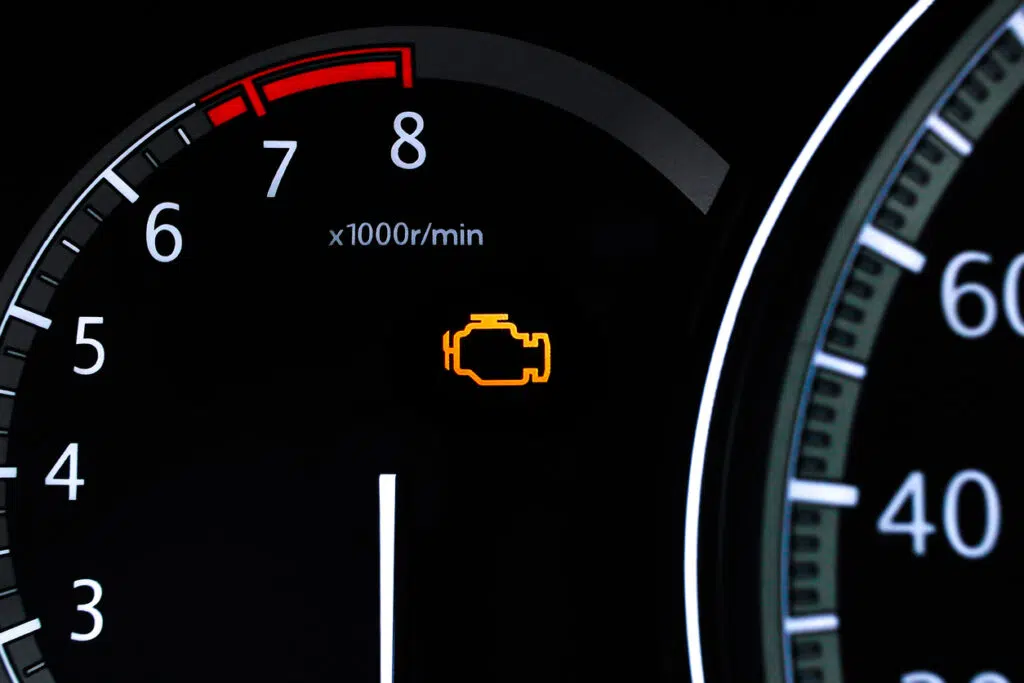
P20EE rarely turns up by itself. Depending on what’s behind it, you might also notice:
- The engine management light on the dashboard
- An AdBlue warning light or a range countdown message
- A drop in power on longer drives
- The car using more AdBlue than usual
- The fault coming back after motorway runs or hilly routes, but not after short trips around town
That last point is normal, not a glitch. The car only completes its emissions check over longer drives, so the fault often shows up after a motorway run but stays quiet during short local trips that never finish the check.
What Causes The P20EE Code On A VW, Audi or Skoda?
The code names the catalyst, but on VAG diesels the catalyst is rarely the real cause. Here’s what usually sits behind it, from cheapest to most serious:
- Old or poor-quality AdBlue: The simplest cause. Degraded or non-certified fluid cleans the exhaust less effectively.
- AdBlue dosing problems: A faulty pump, valve, or crystallised injector stops the fluid being delivered properly. A common real cause.
- A NOx sensor fault: The sensor may have failed, or it may be working fine and correctly reporting a genuine system problem. Only testing tells which.
- A companion fault code: P20EE often appears with other codes, and usually it’s that other code that points to the real issue. On a diesel with a loaded filter that’s typically P2463, the soot-accumulation code, or P2002; check the soot load before you chase the SCR system.
- The SCR catalyst itself does wear out at high mileage, but it’s the least likely cause and the last thing a good garage confirms.
The key thing to understand: you can’t tell which of these it is from the code alone, and neither can anyone else without testing. That’s why it’s worth having the car checked before any part gets replaced.
What To Check Before Going To A Mechanic
You don’t need any tools or experience to do a few sensible things that make your garage visit quicker, cheaper and easier to follow. Think of this as gathering information, not fixing anything.
Note down all the fault codes, not just this one
If you have a basic scanner or a phone app, or if a garage or breakdown service reads the codes for you, write every code down before any get cleared.
P20EE usually travels with other codes, and those companion codes are often the real clue. That short list becomes the single most useful thing you can hand to whoever looks at the car.
Think back over your AdBlue
When did you last top it up, and was it a sealed, certified product rather than something that had been sitting open for a while? Just have the answer ready, because it helps a garage rule things in or out quickly.
Notice the pattern
Does the light come back after long or hilly drives? Did it first appear right after an AdBlue top-up or some other work? These small details help a garage aim their testing instead of starting from scratch.
Know what a good diagnosis looks like
A garage handling this well will read all the stored codes, look at what the NOx sensors report in live data, and check the AdBlue and dosing system. It will also see whether a software update exists for your car, and only look hard at the catalyst once the rest is ruled out.
Knowing that sequence means you can follow what they’re doing and ask sensible questions.
Avoid replacing parts on a guess
Owner forums are full of P20EE stories where someone changed one part, then another, then another, with the bill climbing each time, when testing first would have found the answer once.
How Much Does It Cost To Fix A P20EE Code?
Because P20EE can come from several different places, the cost depends entirely on what testing actually finds. A diagnosis usually costs around an hour of labour, and it’s worth it, since it’s the difference between fixing the real problem and paying for a guess.
| Possible outcome | UK | US | Europe (€) |
|---|---|---|---|
| Diagnosis | £50–120 | $80–180 | €60–140 |
| Fresh certified AdBlue | £10–25 | $15–35 | €12–30 |
| Software update (where available) | £50–150 | $80–200 | €60–180 |
| AdBlue dosing or injector work | £100–300 | $150–450 | €120–360 |
| NOx sensor (each, fitted) | £250–550 | $350–700 | €300–650 |
| SCR catalyst | £1,000–2,500+ | $1,500–3,500+ | €1,200–3,000+ |
Note: All prices above are rough estimates only, not quotes. Actual costs vary by model, region, garage and currency rates, so always get a written quote for your specific car before any work is done.
If a garage quotes for a catalyst straight away without showing test results, it’s reasonable to ask whether the AdBlue, dosing system and sensors have been checked and ruled out first.
How To Clear A P20EE Code (and why it comes back)
Any scanner can clear P20EE00 and switch the light off, even the ₹2,000 Vgate I use, and it’s tempting to do exactly that. The catch is that the car keeps checking its emissions cleaning as you drive. So if the cause is still there, the car re-runs the check over the next few hundred miles. The code then comes straight back. Clearing it on its own doesn’t change anything underneath.
There’s one normal exception. If the cause has genuinely been dealt with, the system can take several drives to confirm everything is working again. Clearing the code at that point is just part of the process, not a fix in itself.
You may also come across services online offering to “delete” the AdBlue or SCR system to make the code go away for good. Removing or disabling emissions equipment is illegal for road use in the UK and EU. It also fails the MOT and can cause problems with insurance and resale. Beyond that, it doesn’t address what the car was actually trying to tell you. In most cases, a proper diagnosis finds something far simpler and cheaper than people fear.
FAQs
That depends on how you drive. The car only completes its emissions check after longer or faster drives, so if the cause is still there, the light often comes back within a few hundred miles, usually after a motorway run rather than short trips around town. If it stays off for weeks then whatever has caused that might have sorted itself out, like a tank of better AdBlue working through.
No, you don’t. Adding only helps if the real root cause was low or bad quality AdBlue. If the problem is a sensor or the dosing system you can add more fluid and the code will still be there. The cheap first step is to try fresh, certified AdBlue but it’s not a guaranteed fix.
Not exactly. This is an emissions fault, not a mechanical one, so the engine in the short term isn’t being harmed. The risk is more about the car reducing power or, on some models, eventually refusing to restart if the fault is ignored for a long period. It will not do the same kind of damage to the engine as an oil or cooling fault would.
It can. Some owners notice the car using more fuel or more AdBlue than usual while the fault is active, because the emissions system isn’t working efficiently. It’s not always obvious, though, and a small change is easy to miss. If your fuel use jumps noticeably alongside the code, mention it to the garage, as it can help point to the cause.
Yes, and it’s common. P20EE often shows up alongside other diesel codes, including ones for the AdBlue system or the diesel particulate filter, because these parts all work together to clean the exhaust. When that happens, the other code usually points to the real problem, which is why it helps to note down every code rather than just this one.
Last Updated: September 2026

Founder of TheCarLane | Automotive Enthusiast
Ayush shares practical automotive knowledge based on real-world ownership and hands-on experience. His work focuses on diagnostics, engine systems, common car problems, and clear explanations that help everyday drivers understand their vehicles better.

This is a really helpful article; it’s perfect for you if you want to do things yourself.