
P0300 code on a VW, Audi or Skoda means your engine is misfiring, the code’s official name is “Random or Multiple Cylinder Misfire Detected.” One or more cylinders are skipping their turn instead of firing cleanly, and the engine computer has noticed.
Before you read anything else, look at your engine light. If it is flashing, park the car. That is the one version of this fault you do not drive on, and the next section explains why in one line. If the light is steady, take a breath. You have time to sort this properly.
Your scanner may show the code as P0300, DTC P0300, or the five-digit VAG versions P030000 or P03000. Older VAG tools log it as 16684. They all point to the same fault.
P0300 — The 20-Second Verdict
P0300: What To Do Right Now
Flashing check engine light: stop driving as soon as it is safe. A flashing light means raw, unburned fuel is passing into the exhaust and burning inside the catalytic converter. Every minute of that shortens the converter’s life, and a converter costs more than every other fix on this page put together. Pull over, switch off, and let the engine sit. If it restarts with a steady light and runs smoothly, a short, gentle drive to a garage is reasonable. If it flashes again or the engine shakes, arrange recovery instead.
Steady light: you have a mystery, not an emergency. Now check how the car actually feels. Smooth idle, normal pull, no smell of petrol? Then the misfire is mild or intermittent, and you can make short, easy trips while you work through this guide. Rough shaking, a strong fuel smell, or the car struggling to pull away? Treat it like a flashing light and keep the driving to a minimum.
And the money question, since it is probably the loudest one in your head right now: most P0300 cases on these engines end with spark plugs or a single ignition coil. That is a £30–120 job, not a four-figure one. The expensive causes exist, but they are the exception and there is a free test further down that tells you which side you are on.
What Does The P0300 Code Actually Mean?
Each cylinder in your engine takes a turn: air and fuel go in, the spark plug fires, the mixture burns, the crankshaft gets a push. A misfire is a missed turn: the mixture did not burn properly, so that cylinder gave no push, and the engine stumbles for a fraction of a second.
P0300 specifically means random or multiple misfires. The computer saw cylinders skipping but could not pin the pattern on one of them. That is why P0300 often arrives with friends: P0301 means cylinder 1 is misfiring, P0302 means cylinder 2, and so on. Those companion codes are useful. They narrow the search and the diagnosis section below shows you how to read the combination you got.
What Are The Symptoms Of P0300?
Sometimes, almost nothing. A mild, occasional misfire can trigger the code before you feel anything from the driver’s seat, so don’t doubt the scanner just because the car seems fine.
When the misfire is stronger, the usual signs are:
- A rough or shaky idle, like the engine is trembling at traffic lights
- A stumble or hesitation when you accelerate
- Harder starting, especially on cold mornings
- The engine light flashing under load, then going steady
- Worse fuel economy
One symptom changes everything: a strong smell of petrol from the exhaust. That means unburned fuel is getting through, and it is your cue to stop driving and get the car looked at, whatever the light is doing.
Can You Drive With P0300?
Yes, for short, gentle trips, as long as the light is steady and the engine feels smooth. No, the moment the light flashes, the engine shakes, or you smell petrol.
Here’s the line between those two. With a steady light and a smooth-running engine, keep the revs modest, avoid motorway slogs and full-throttle pulls, and don’t let “I’ll deal with it next month” happen. A mild misfire left alone tends to become a strong one, and the catalytic converter pays the bill.
With a flashing light, a shaking engine, or a fuel smell, stop. That is not caution for caution’s sake; it is the difference between a £50 coil and a £600+ converter.
What Usually Causes P0300 On VW, Audi & Skoda?
Every generic list on the internet gives you a dozen possible causes in no particular order, which helps nobody. Here is the honest, weighted version for VAG petrol engines, from most likely and cheapest to rarest and dearest:
Ignition — coils and spark plugs. The clear front-runner. Coils on these engines work hard and fail one at a time; plugs simply wear out. If your P0300 came with one cylinder code, this is where the diagnosis below will almost certainly land.
Air — vacuum leaks and the PCV valve. Unmetered air leans the mixture out, and a lean mixture misfires. A failing PCV valve is the classic VAG version of this, and it usually causes misfires across several cylinders at once rather than one.
Fuel — injectors and fuel pressure. A partially clogged injector starves one cylinder; weak fuel pressure starves all of them. Less common than ignition, and worth testing before replacing anything.
Mechanical — compression. Worn rings, a tired valve, a stretched timing chain. The rare, expensive end of the list, and the reason the compression test sits last in the diagnosis ladder, not first.
The causes are the same across VW, Audi, Skoda, SEAT and Cupra. What changes with the engine is which cause tends to come up first, so find your engine below, then head into the diagnosis ladder knowing what your engine’s usual suspect is.
1.0, 1.2, 1.4 and 1.5 TSI (EA211)
On the small TSI engines, ignition leads by a wide margin. Coils sit on top of the engine, one per cylinder, and they are a five-minute swap, which makes the coil-swap test in the next section especially easy here. This is my own engine: my Skoda Rapid 1.0 TSI has covered 51,000 km, and its per-cylinder misfire counters (step 5 below) have stayed at zero throughout, that is what healthy looks like on live data. If your EA211 logs P0300, start at step 3 of the ladder. If your EA211 logs P0300, start at step 3 of the ladder. If the coils pass, the other of the engine’s five known faults that misfires is carbon on the intake valves, which no coil swap will fix.
1.8 and 2.0 TSI (EA888)
Golf GTI, Octavia vRS, Leon Cupra and friends. Coils and plugs still lead, but this engine has a famous imposter: the PCV valve. When its diaphragm tears, it leans the mixture and causes misfires across multiple cylinders, often alongside the lean code P0171. So on an EA888 showing P0300 with several cylinder codes, or P0300 with P0171, check the PCV before buying any ignition parts. Start at step 2 of the ladder and read your code pattern carefully.
Direct-injection engines on cold mornings (TSI / FSI)
Direct injection keeps fuel off the backs of the intake valves, so carbon slowly builds there. The signature: the engine stumbles and misfires for the first minute or two on a cold morning, then smooths out completely once warm. If that describes your car, the cause is likely carbon rather than coils — a garage job called a walnut blast, priced in the cost table below. The coil-swap test won’t move this one, which is itself a useful clue.
Older 1.8T and high-mileage engines
On older turbo engines and anything deep into six figures, add the timing side to your list. A stretched chain or lazy tensioner upsets valve timing and misfires the engine, often with a rattle on cold start. If your high-miler rattles for a second or two before settling, mention it to the garage before anyone sells you coils.
How To Diagnose P0300
The steps below are the same whatever badge is on the bonnet. Work from the top, the ladder runs from free and easy to specialist and expensive, so the odds are you never reach the bottom.
Step 1: Read everything, not just the code. Scan the car and write down every code present, plus the freeze frame, the snapshot the computer saves of the moment the fault happened (revs, temperature, load). If you haven’t used a scanner before, our step-by-step scanning guide gets you there in ten minutes.
Step 2: Read the pattern. This is the shortcut most people skip.
- P0300 with one cylinder code (say P0302): the problem lives in that cylinder, its coil, its plug, or its injector. Go straight to step 3.
- P0300 alone, or with several cylinder codes at once: something shared is upsetting all the cylinders, a vacuum leak, the PCV valve, fuel pressure, or timing. Steps 3 and 4 still come first because they’re free, but keep step 6 in mind.
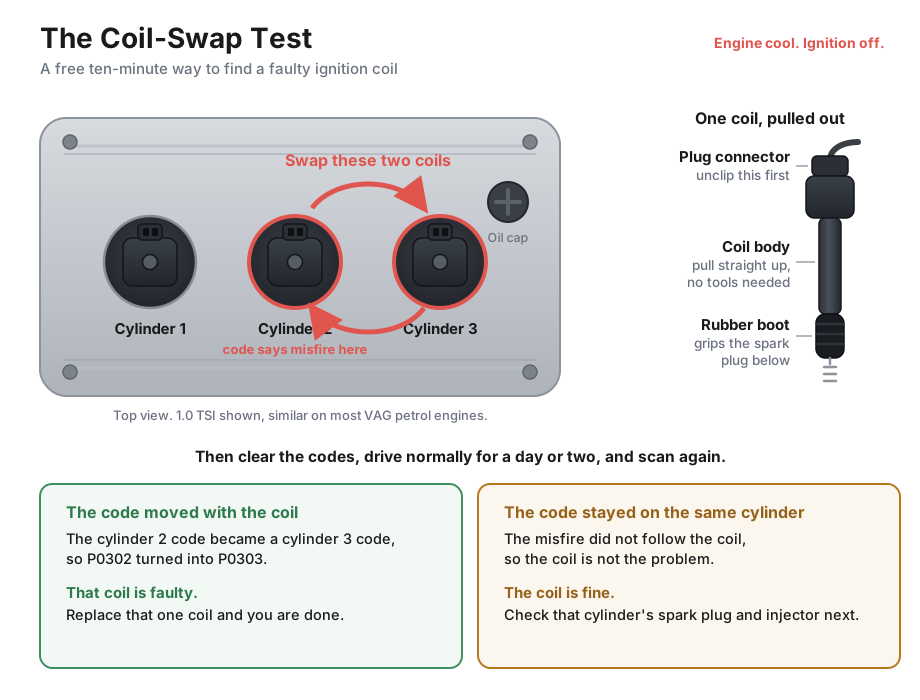
Step 3: The coil-swap test. Free, ten minutes, and it settles most P0300 cases on its own.
- Let the engine cool and switch the ignition off.
- Find the coils, on most VAG petrols they sit on top of the engine, one per cylinder, under the plastic cover. Unclip the connector on the suspect cylinder’s coil and the one next to it, and lift each coil out.
- Swap the two coils over, refit, and reconnect.
- Clear the codes with your scanner and drive normally for a day or two.
- Re-scan. If the misfire followed the coil, say P0302 has become P0303, you have just diagnosed a faulty coil for free. Replace that one coil and you are done. If the misfire stayed on the same cylinder, the coil is innocent; look at that cylinder’s plug and injector.
Step 4: Look at the plugs while you’re in there. With the coils out, the plugs are one socket away. A worn plug has a rounded, eroded tip; a sooty black plug points at a rich mixture; an oily plug points at a deeper engine issue. If the plugs haven’t been changed in the last 40–50,000 km, a fresh set of the correct spec is cheap insurance whatever else you find.
Step 5: Open the misfire counters. Your scanner’s live data has a page most owners never find: misfire counters, one per cylinder, counting every skip in real time. Watch them at idle and on a gentle drive. If one cylinder’s counter climbs while the others sit still, you have found your cylinder without touching a spanner. If all of them creep up together, that is the shared-cause pattern from step 2 confirming itself. I use a Vgate iCar Pro with the Car Scanner app for this; any adapter that reads VAG live data will do.
Step 6: If ignition checks out, hunt for air and fuel. Listen around the intake and PCV area with the engine idling, a sharp hiss is a vacuum leak announcing itself. On an EA888, pull the oil cap at idle: if it takes real force against suction, the PCV diaphragm is suspect. Fuel-pressure testing and injector testing are garage territory for most owners, and that is fine, you’ll arrive knowing exactly what has already been ruled out. Watching short term fuel trim on live data helps here too: a big positive number backs up the air-leak theory.
Step 7: Compression test, last. Only if everything above comes back clean. Low compression in one cylinder means a mechanical conversation. Before any big engine work, get a second opinion.
What You Can Do Yourself And When To See A Garage
Reading the codes, the coil-swap test, checking plugs, and watching the misfire counters, all of that is safe, free-or-cheap, and yours to do with basic tools. For many owners, the job ends at step 3 with one new coil.
Go to a garage when: the pattern points at fuel pressure or injectors, you suspect the PCV or a vacuum leak but can’t find it (a smoke test finds it in minutes), the cold-morning carbon signature fits, or compression is in question. And here is how to walk in strong: tell them what you tested. “The misfire follows cylinder 2, and it did not move when I swapped coils” is a sentence that saves you an hour of diagnostic labour and marks you as someone who cannot be sold a parts cannon.
And one honest third option: if the code is stored, the light is off, and the car runs smoothly, clear it and watch. A single logged misfire from one bad tank of fuel or a soaked morning is not a project. If it returns, you know it is real, and the ladder is waiting.
How To Fix P0300
Fix what the diagnosis found:
A coil that failed the swap test: replace that coil. Minutes of work, and there is no need to replace all of them unless yours are original, in which case doing the set at once saves repeating the job.
Worn plugs: fit a full set of the correct specification for your engine code. On a tuned car especially, don’t economise here.
PCV valve: replace it, on the EA888 this is a common, well-documented job, and it often clears a multi-cylinder misfire completely.
A suspect injector: have it tested or cleaned before buying a new one.
Carbon on the intake valves: a walnut-blast clean at a garage that does them regularly. Ask directly whether they have the kit; not every garage does.
Low compression: slow down, get the finding confirmed independently, and decide with full information. This is the one branch where second opinions pay for themselves.
After any repair, clear the codes and drive a normal mix of roads for a few days. If the light stays off and the counters stay flat, you are done. If it returns, read the next section before you re-diagnose anything.
Fixed It But The Code Came Back?
On the EA888 engines especially, the computer keeps a learned profile of how the engine runs, its misfire adaptations. After a real repair, that old profile can linger, and the ECU keeps flagging misfires that are no longer happening. The result is a car that runs fine but throws P0300 or a cylinder code again within a day or two of a correct fix. Volkswagen documented this themselves in a technical tip: a false misfire indication, sometimes with a flashing light, right after a proper misfire repair.
The documented reset is simple: with the ignition on and the engine off, clear all the fault codes three times in a row. That forces the ECU to relearn its crankshaft sensor profile and lets the misfire monitor start fresh. Then drive normally for a couple of days and re-scan. If the counters stay at zero and the light stays off, your original repair was good all along, the computer just needed to let go of the past.
If the code returns even after the reset, then the misfire is real and still present. Go back to the ladder, starting from the pattern in step 2, and treat what you already replaced as ruled out.
Cost To Fix The P0300 Code
| Repair | UK | US | India |
|---|---|---|---|
| Coil-swap test (DIY) | Free | Free | Free |
| Spark plug set | £30–70 | $40–90 | ₹1,200–3,000 |
| Single ignition coil | £25–60 | $30–80 | ₹1,500–3,500 |
| Full coil set | £80–200 | $110–280 | ₹5,000–12,000 |
| PCV valve (EA888) | £40–90 | $60–130 | ₹3,000–7,000 |
| Injector test / clean | £60–150 | $80–200 | ₹2,500–6,000 |
| Walnut-blast carbon clean | £250–450 | $350–650 | ₹15,000–30,000 |
| Garage diagnosis | £40–100 | $60–130 | ₹1,000–2,500 |
Approximate prices, parts quality, engine and location all move them, so treat these as sanity-check ranges rather than quotes. In India, confirm part prices on Boodmo against your engine code before ordering.
Will P0300 Fail An Emissions Test, MOT Or PUC?
US: In most states that test, yes, modern checks plug into the OBD port, and a lit engine light is an automatic fail. Clearing the code just before the test doesn’t work either: it resets the readiness monitors, and “not ready” also fails. Fix first, drive a few days, then test.
UK: Yes, an illuminated engine management light is a major defect and an automatic MOT fail on petrol cars first used from July 2003. A strong misfire can also push the emissions test over on its own.
India: The PUC test measures what leaves the exhaust, and a misfiring engine sends unburned fuel out of the tailpipe, exactly what the test catches. Sort the misfire, then test.
P0300 On A Remapped Or Stage 1 Car
A healthy remap does not create misfires. But a tune does ask a little more of the ignition system, so worn plugs show themselves sooner on a remapped engine, usually as a stumble under full boost before any code appears. If your tuned car logs P0300, start at the plugs, and make sure any replacements match the correct heat range for your map.
For what it is worth as a data point: in 51,000 km on my own Quantum Red Stage 1, the misfire counters have never left zero. A tuned engine in good health runs as cleanly as a stock one. And the usual note if a dealer visit is coming, they will spot the map before they spot anything else, so walk in ready for that conversation.
Cold Mornings Make Misfires Show Up First
If your P0300 arrived with the first cold snap, that is not a coincidence. Cold, dense air demands more from the ignition system, condensation finds the cracks in an ageing coil, and carbon-coated valves on direct-injection engines disturb the mixture most when everything is cold. A coil or plug that copes fine in August fails first on a frosty morning. The diagnosis does not change, the ladder above still finds it, but if your misfire is strictly a cold-start event that vanishes when warm, read the carbon section again before buying ignition parts.
Last Updated: August 2026
FAQs
On VW, Audi and Skoda petrol engines, ignition, a failing coil or worn spark plugs, leads by a wide margin. The free coil-swap test in this guide confirms or clears it in ten minutes.
Clearing removes the record, not the cause. If the misfire was a one-off, bad fuel, a soaking-wet morning, it may stay away. If the cause is real, the code returns within a few drives, and that return is itself useful information: now you know to work the ladder.
Usually not. Most cases end with plugs or a single coil, well under £120. The expensive outcomes, carbon cleaning, injectors, mechanical work, are the minority, and the diagnosis steps in this guide exist exactly so you never pay for them by guesswork.
Indirectly, yes. A faulty oxygen sensor feeds the computer bad mixture information, and a wrong mixture can misfire, but a failing sensor almost always brings its own codes along with P0300 rather than appearing alone.
A cheap Bluetooth adapter with a good app covers this whole guide, codes, freeze frame, live data and the misfire counters. The VAG-specific tools add per-cylinder detail and adaptation resets, and they’re the easy route for the three-clears reset if the code returns after a repair. Start cheap; upgrade only if the ladder sends you deeper.

Founder of TheCarLane | Automotive Enthusiast
Ayush shares practical automotive knowledge based on real-world ownership and hands-on experience. His work focuses on diagnostics, engine systems, common car problems, and clear explanations that help everyday drivers understand their vehicles better.